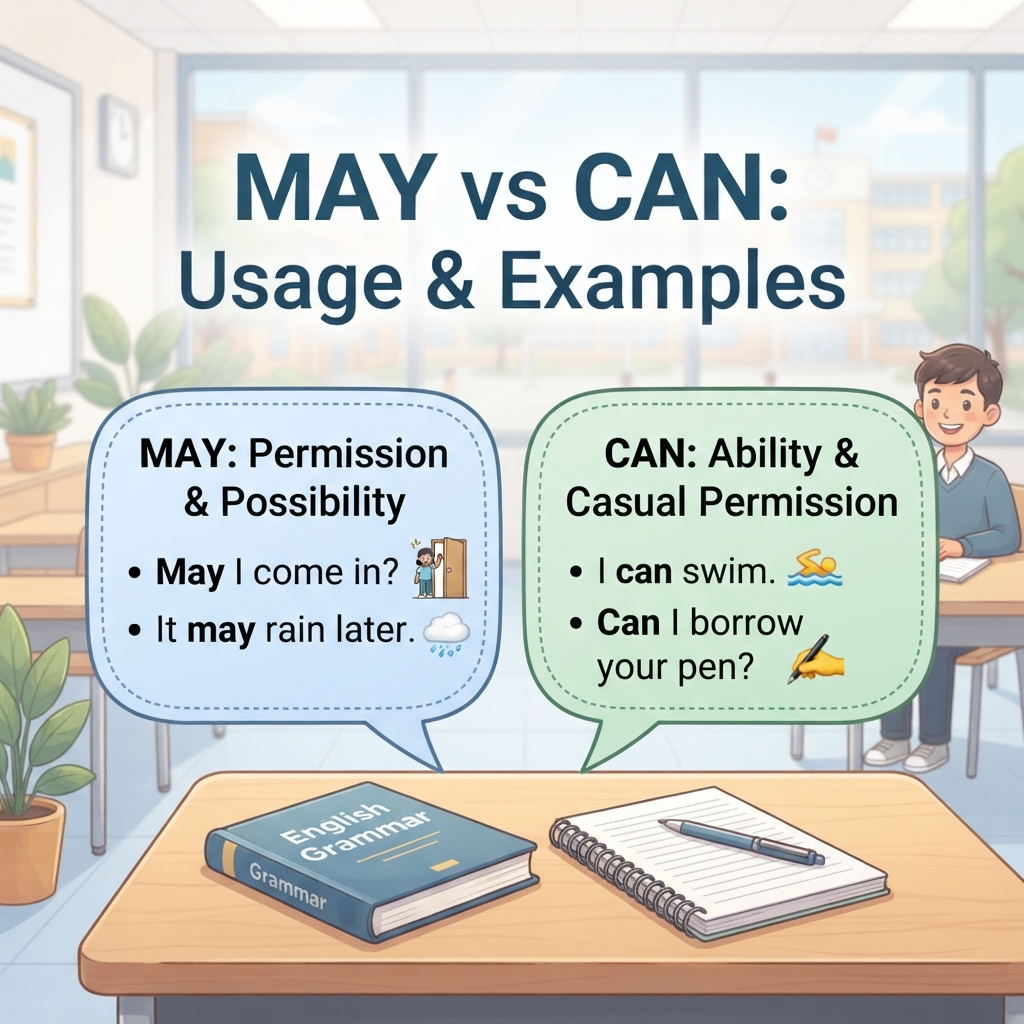
“May” and “can” have different primary uses: “may” commonly expresses possibility or permission, while “can” usually expresses ability or general possibility.
May or Can: Which Word Is Correct?
Should you say “May I ask?” or “Can I ask?” Both can sound correct, but there is an important difference in how they are traditionally used. Can usually talks about ability or something that is generally possible, while may is commonly used for permission or an uncertain possibility.
For example, “I can drive” means you have the ability to drive, while “It may snow tonight” means snow is possible. For permission, “May I come in?” is traditionally more formal, whereas “Can I come in?” is extremely common in everyday English.
So, may or can is not simply a matter of choosing one “correct” word. The right choice depends on what you want your sentence to mean and how formal the situation is. Understanding this small distinction can make your English clearer and help you avoid one of the most common grammar confusions.
In this guide, you’ll learn the difference between may and can, when to use each word, how permission and possibility change their meaning, and which choice works best in formal and everyday English. You’ll also see simple examples that make the difference easy to remember.
May or Can meanings
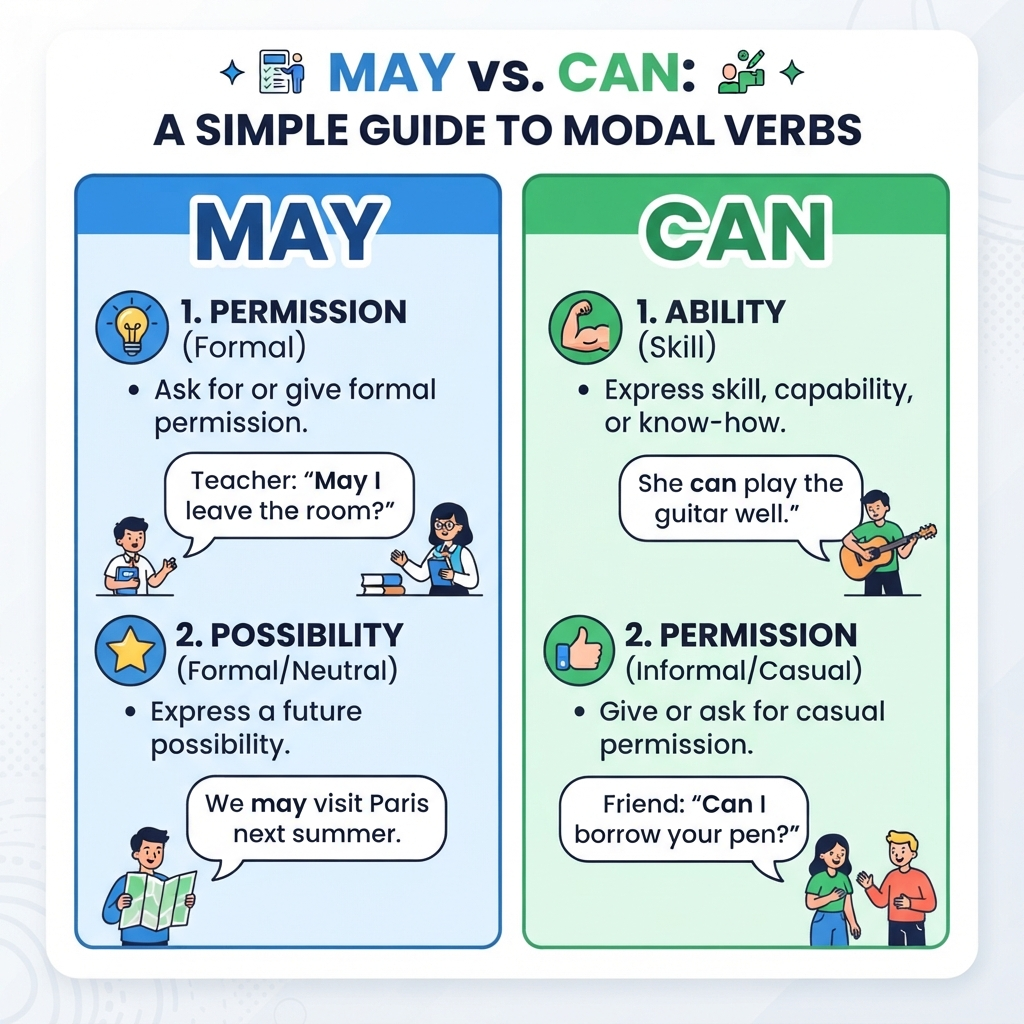
The easiest rule is:
- Can = ability or informal permission
- May = permission or possibility
Can for Ability
Use can when someone has the ability to do something.
Examples:
- I can swim.
- She can speak Spanish.
- He can drive a car.
- We can finish the work today.
Here, can means someone is able to do something.
May for Permission
Use may when asking for or giving permission.
Examples:
- May I come in?
- May I use your phone?
- You may leave now.
- Students may use calculators.
Can for Informal Permission
In everyday English, can is also used to ask for permission.
- Can I go outside?
- Can I borrow your pen?
- Can we watch TV?
This is normal in casual conversation.
May for Possibility
May can also mean that something is possible.
- It may rain tonight.
- She may visit us tomorrow.
- The package may arrive today.
So, remember:
Can = ability
May = permission or possibility
The Origin of May or Can
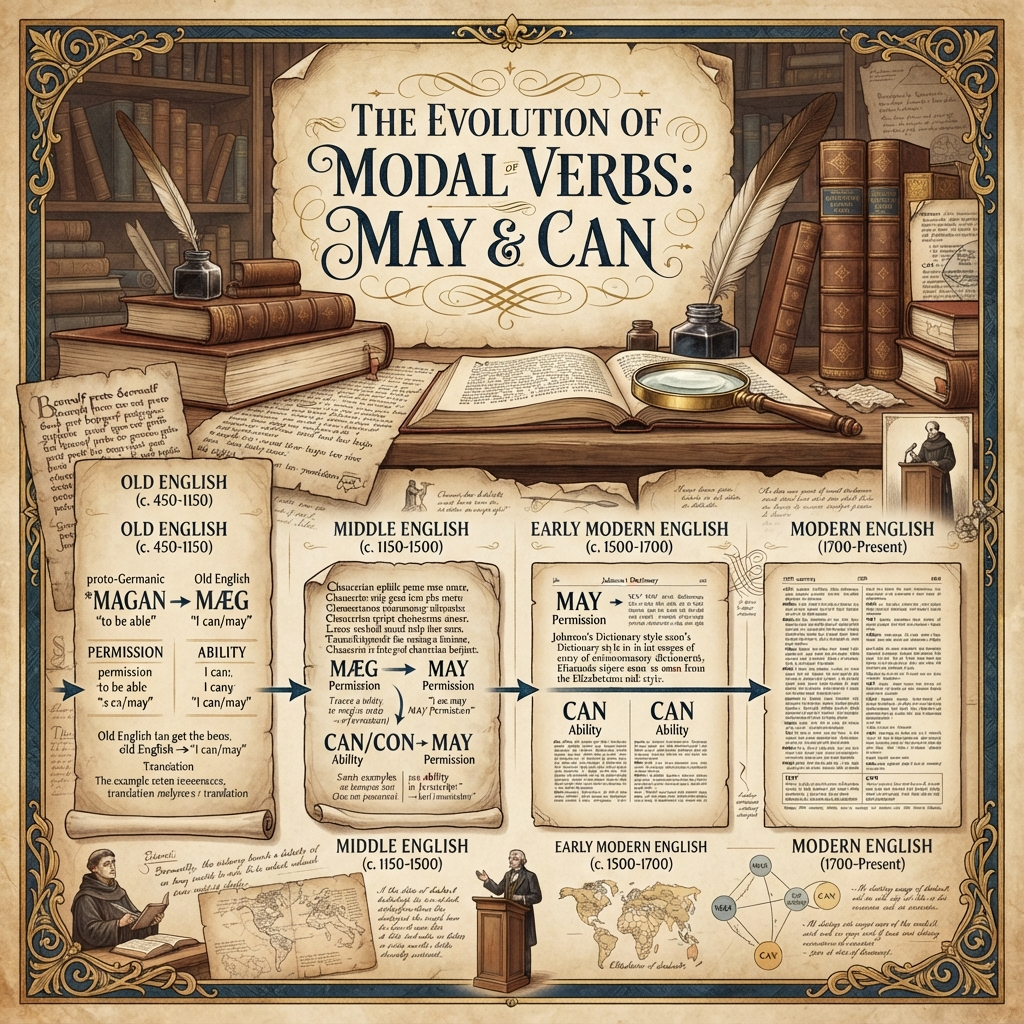
May and can are both old English modal verbs. They have been used for hundreds of years, but their meanings have changed over time.
The word can comes from an old Germanic word linked to knowing or being able to do something. Over time, its meaning became strongly connected with ability.
For example:
I can read.
This tells us that the person has the ability to read.
The word may also comes from an old Germanic root. It was connected with having power, ability, or permission. Later, may became strongly associated with permission and possibility.
This history helps explain why the two words can sometimes feel similar.
English also changes through everyday use. Can became common in informal requests for permission, even though traditional grammar rules often taught that may should be used for permission.
That is why you may hear:
Can I leave early?
and:
May I leave early?
Both are clear, but may sounds more formal.
British English vs American English Spelling
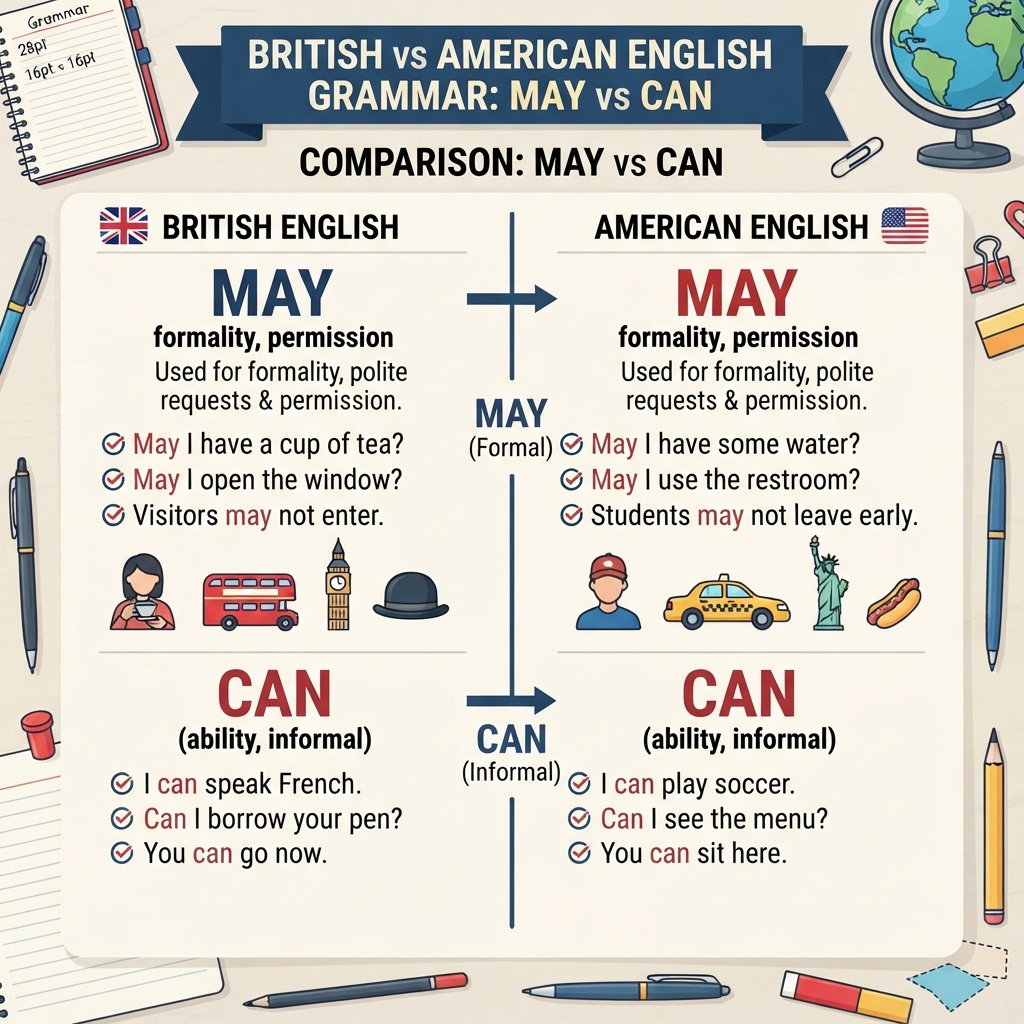
There is no spelling difference between may and can in British English and American English.
Both varieties spell the words in exactly the same way:
- may
- can
The main difference is often style and context, not spelling.
| Meaning | British English | American English |
|---|---|---|
| Ability | I can swim. | I can swim. |
| Casual permission | Can I leave? | Can I leave? |
| Formal permission | May I leave? | May I leave? |
| Possibility | It may rain. | It may rain. |
| Formal writing | May I ask a question? | May I ask a question? |
Why Does “Can I?” Sound Normal?
In modern English, “Can I?” is very common when asking for permission.
For example:
Can I open the window?
This is especially natural in casual conversations.
Traditional grammar teaching may prefer:
May I open the window?
The second sentence sounds more formal. However, the first is widely used by native speakers.
Does the Meaning Change?
Sometimes it can.
Compare:
Can I use your laptop?
This may mean, “Am I allowed to use your laptop?”
It can also be understood as asking whether the person is able to use it, depending on context.
May I use your laptop?
This clearly asks for permission.
Which Spelling Should You Use?
You do not need to choose a different spelling for may or can based on your country. The spelling stays the same in British and American English.
Instead, choose the word based on meaning and level of formality.
For Ability
Use can.
I can solve this problem.
She can play the piano.
For Casual Permission
Use can.
Can I sit here?
Can I take a break?
This is common in everyday speech.
For Formal Permission
Use may.
May I speak with the manager?
May I enter the room?
This works well in formal situations, schools, workplaces, and polite requests.
For Possibility
Use may.
The meeting may start late.
He may come tomorrow.
For Global English
If you write for an international audience, use the word that clearly matches your meaning.
Can is best for ability.
May is best for formal permission and possibility.
Common Mistakes with May or Can
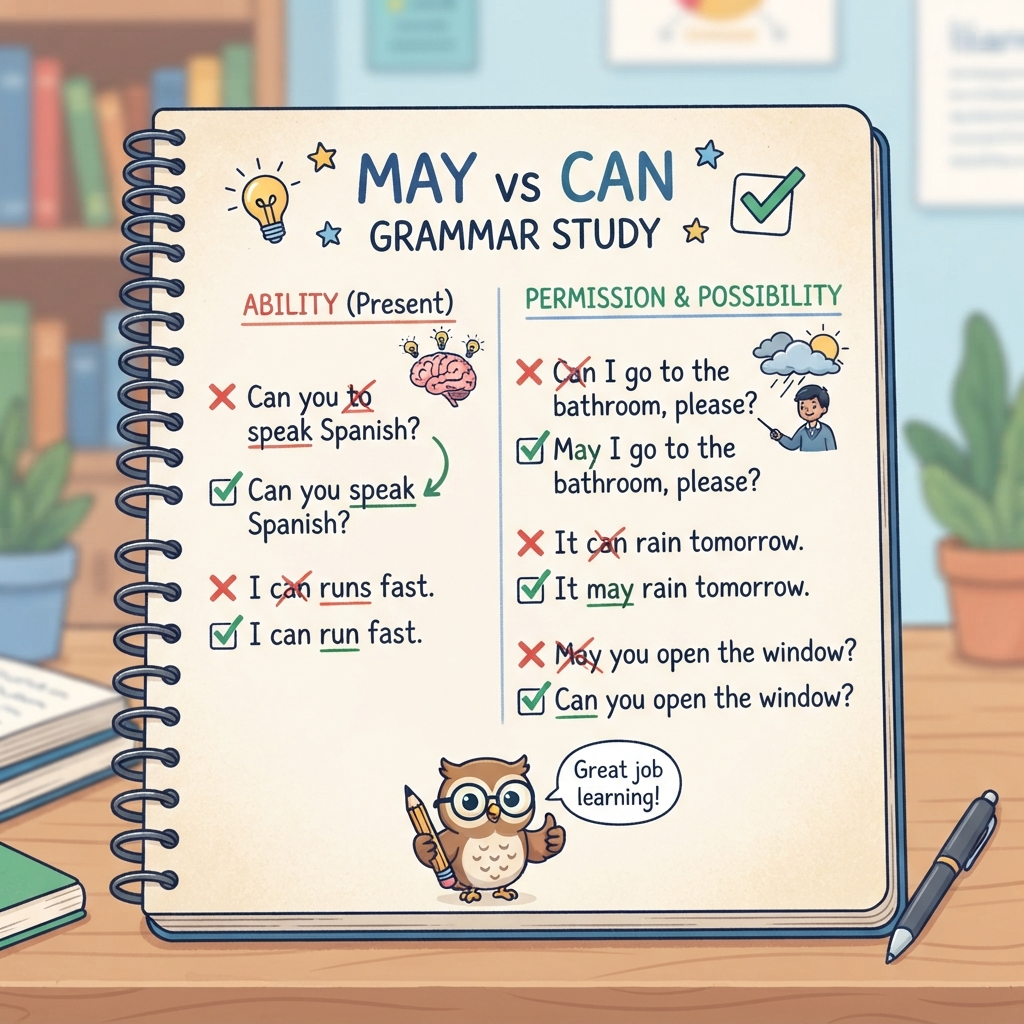
Many learners use these words incorrectly because they seem interchangeable.
Mistake 1: Using May for Ability
❌ I may swim very well.
If you mean that you have the ability, use can.
✅ I can swim very well.
However, “may” can be used if you mean possibility:
I may swim tomorrow.
Here, it means swimming is possible.
Mistake 2: Thinking Can Is Always Wrong for Permission
Some learners are taught that can should never be used for permission.
That is too strict for modern everyday English.
❌ Can I go? — “Always wrong.”
This is not how modern English works.
✅ Can I go?
This is perfectly normal in casual conversation.
For a more formal tone:
✅ May I go?
Mistake 3: Using May When You Mean Ability
❌ She may speak three languages.
This usually means there is a possibility that she speaks three languages.
If you mean she has the ability:
✅ She can speak three languages.
Mistake 4: Confusing Permission and Possibility
Look at these sentences:
You may leave now.
This means you have permission.
You may leave tomorrow.
This can mean it is possible that you will leave tomorrow.
The context tells us which meaning is intended.
Mistake 5: Writing “May You” for Ability
❌ May you drive?
If you want to ask about someone’s ability, use can.
✅ Can you drive?
If you want to ask for permission, use may:
✅ May I drive?
May or Can in Everyday Examples
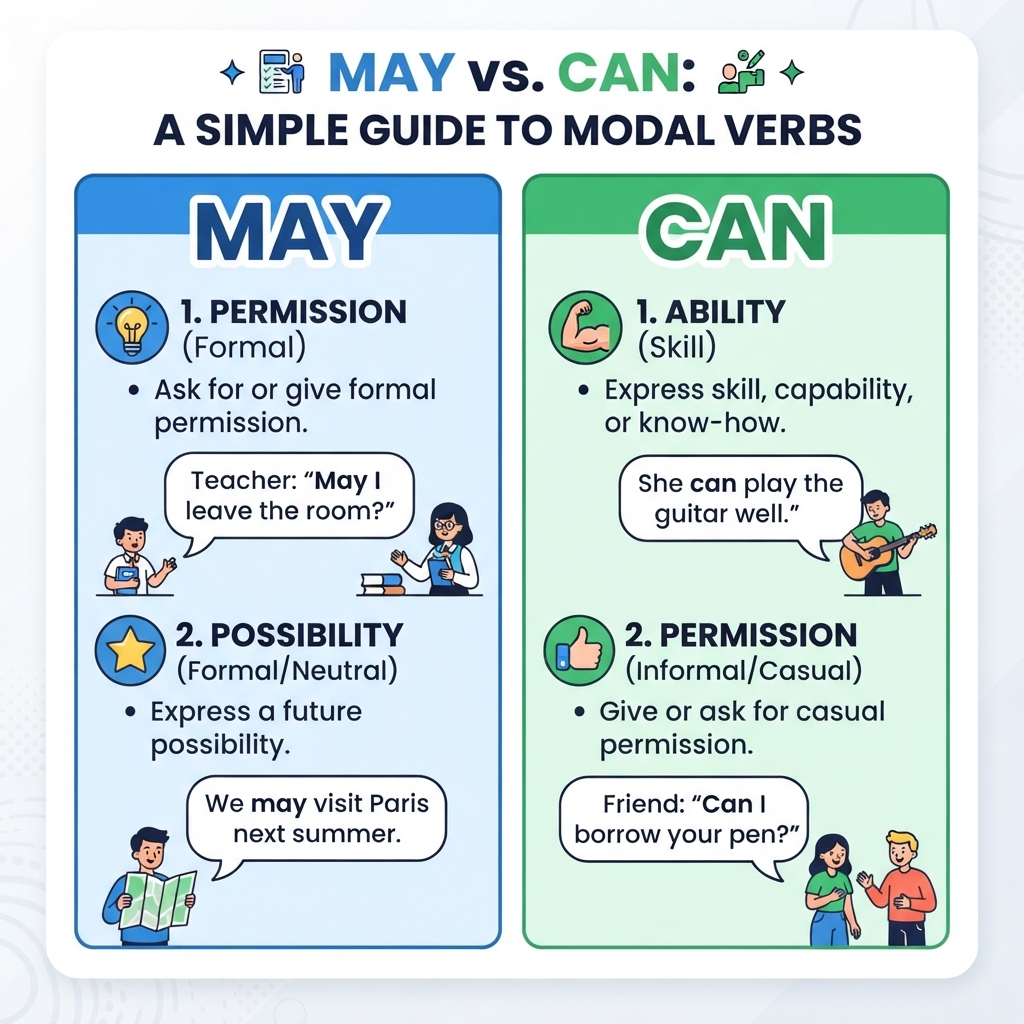
Knowing the rule is useful, but seeing the words in real situations makes the difference easier to understand.
In Emails
For a casual email:
Can I send the file tomorrow?
For a formal email:
May I request an extension?
May can make a request sound more formal.
In News Writing
News writing often uses may when discussing possibility.
The storm may affect travel.
The company may announce changes soon.
Here, may does not mean permission. It means something is possible.
Can is also common when describing ability or general possibility.
The new system can process thousands of requests.
Here, can describes what the system is capable of doing.
On Social Media
Social media usually uses simple, casual English.
Examples:
Can I get a little help?
Can we do this again?
Can I join?
These sound natural and friendly.
May can also appear, especially when someone wants to sound playful, formal, or polite:
May I ask one tiny question?
In Formal Writing
May is common in formal requests and official language.
Examples:
Visitors may enter through the main door.
Employees may request additional leave.
May I ask for further information?
Can is more common when discussing ability:
This software can save your files automatically.
The machine can operate for eight hours.
May or Can – Google Trends & Usage Data
Search interest for “may or can” often comes from English learners who want to understand the difference between these two modal verbs.
The topic is especially useful in countries where English is widely studied as a second language. Students often search for the difference when preparing for school, exams, writing tasks, or English-language communication.
The two words themselves are extremely common in English. Their popularity also changes according to context.
Can appears frequently in everyday conversation because it is used for:
- Ability
- Casual requests
- Informal permission
- General possibilities
May is common in:
- Formal writing
- Polite requests
- Rules and notices
- Possibility statements
- Academic and professional contexts
Searches for “Can I or may I?” are also common because learners want to know which form sounds more polite.
Modern English generally accepts “Can I?” for casual permission. “May I?” remains a useful choice when you want a more formal or respectful tone.
May vs Can: Comparison Table
| Feature | Can | May |
|---|---|---|
| Ability | Yes | Usually no |
| Permission | Yes, especially casual | Yes, especially formal |
| Possibility | Yes, in some contexts | Yes |
| Formal requests | Less formal | More formal |
| Casual speech | Very common | Less common |
| Rules and notices | Common | Very common |
| Spelling | Can | May |
Simple Examples
| Situation | Correct Example |
|---|---|
| Ability | I can cook. |
| Ability | She can dance. |
| Casual permission | Can I leave? |
| Formal permission | May I leave? |
| Possibility | It may rain. |
| General capability | This phone can record videos. |
| Formal rule | Visitors may enter after 9 a.m. |
FAQs About May or Can
1. Is “Can I?” grammatically correct?
Yes. “Can I?” is widely used in modern English to ask for permission, especially in casual conversation.
2. Is “May I?” more polite than “Can I?”
Usually, yes. “May I?” often sounds more formal and polite, while “Can I?” sounds more casual.
3. Should I use can for ability?
Yes. Use can when you mean that someone has the ability to do something.
I can swim.
4. Should I use may for permission?
May is a strong choice for formal permission.
May I enter the room?
But can is also normal for casual permission.
Can I enter the room?
5. Can may mean possibility?
Yes. May is often used to show possibility.
She may arrive late.
6. Can and may have the same spelling in British and American English, right?
Yes. Both words are spelled the same in British and American English.
7. Which is better: “Can I go?” or “May I go?”
It depends on the situation. “Can I go?” is natural and casual. “May I go?” is more formal.
Conclusion
Understanding may or can is easier when you focus on meaning instead of trying to memorize many grammar rules. Can usually describes ability, while may commonly expresses permission or possibility.
Use can when someone is able to do something:
I can drive.
Use may when you want to show possibility:
It may rain.
Use may for formal permission:
May I come in?
But remember that can is also widely used for permission in everyday English:
Can I come in?
There is no British-versus-American spelling difference between these words. Both are spelled may and can in both forms of English.
The best choice depends on your meaning and audience. For casual conversation, can sounds natural. For formal requests, may can sound more polite. Once you understand this small difference, choosing between may and can becomes much easier.

Storm Jameson writes engaging English captions for funcaptionz.com, sharing creative wording, short ideas, and expressive lines for modern readers online Today.









