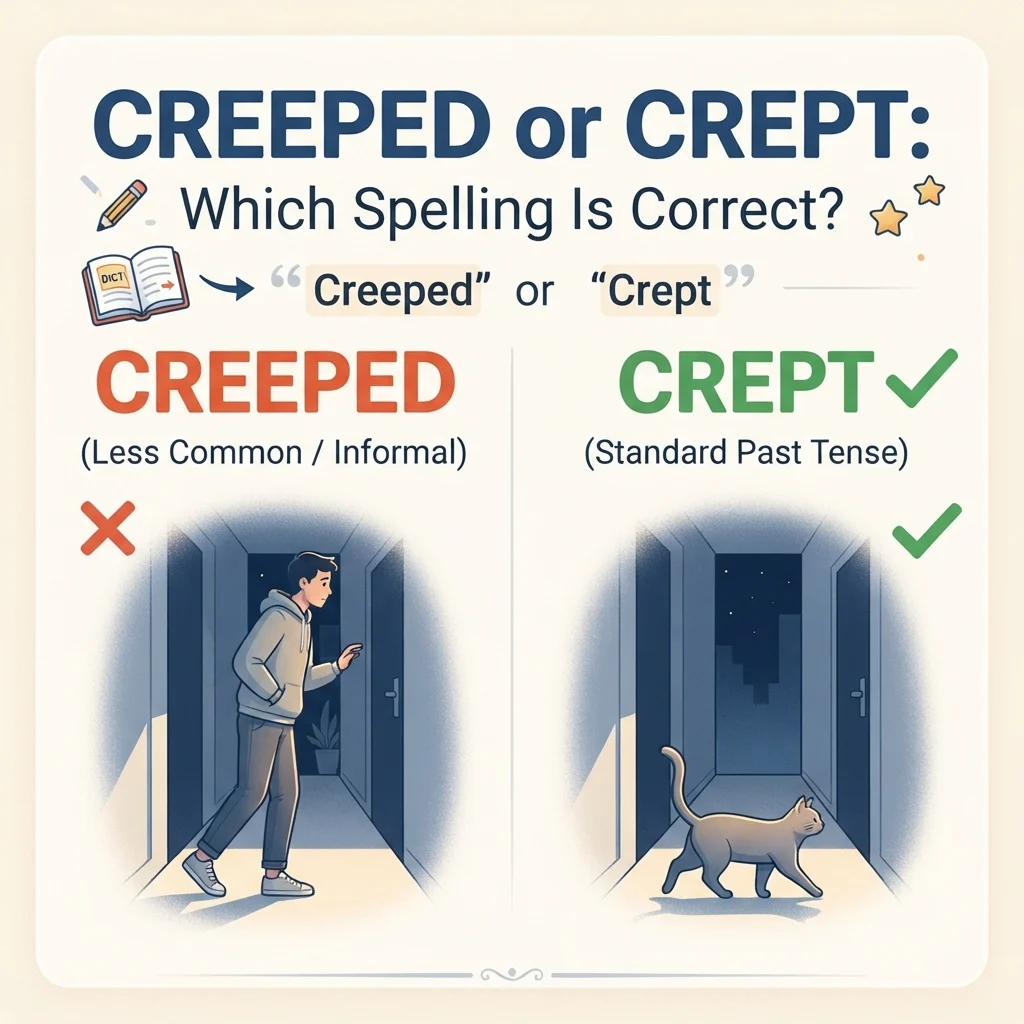
“Crept” is the usual past tense and past participle of “creep,” while “creeped” is mainly used in expressions such as “creeped me out” to describe something that made you feel uncomfortable or frightened.
Creeped or crept—which one is correct? This small difference can easily trip up even confident English writers. Although both forms come from the verb creep, they are generally used in different situations. Crept is the traditional and standard past form when someone or something moves slowly, quietly, or carefully. For example, “The cat crept across the room.” Creeped is most commonly found in expressions such as “creeped me out” or “I was creeped out,” where it describes a feeling of discomfort, fear, or uneasiness.
The good news is that choosing between creeped and crept becomes much easier once you know this simple distinction. If you are describing slow or quiet movement, crept is usually the word you need. If you are describing something that made you feel uncomfortable or scared, creeped is often the natural choice. Knowing this difference can help you avoid an awkward grammar mistake and make your writing sound much more natural.
But there is more to this word pair than simply memorizing two spellings. Their usage can change depending on the meaning and structure of the sentence, which is why writers sometimes hesitate before choosing the correct form.
In this guide, you’ll discover the exact difference between creeped vs crept, their meanings, grammar, correct forms, common expressions, clear examples, common mistakes, and easy rules for remembering which one to use. By the end, you’ll be able to choose creeped or crept confidently whenever you write or speak.
Creeped or Crept meanings
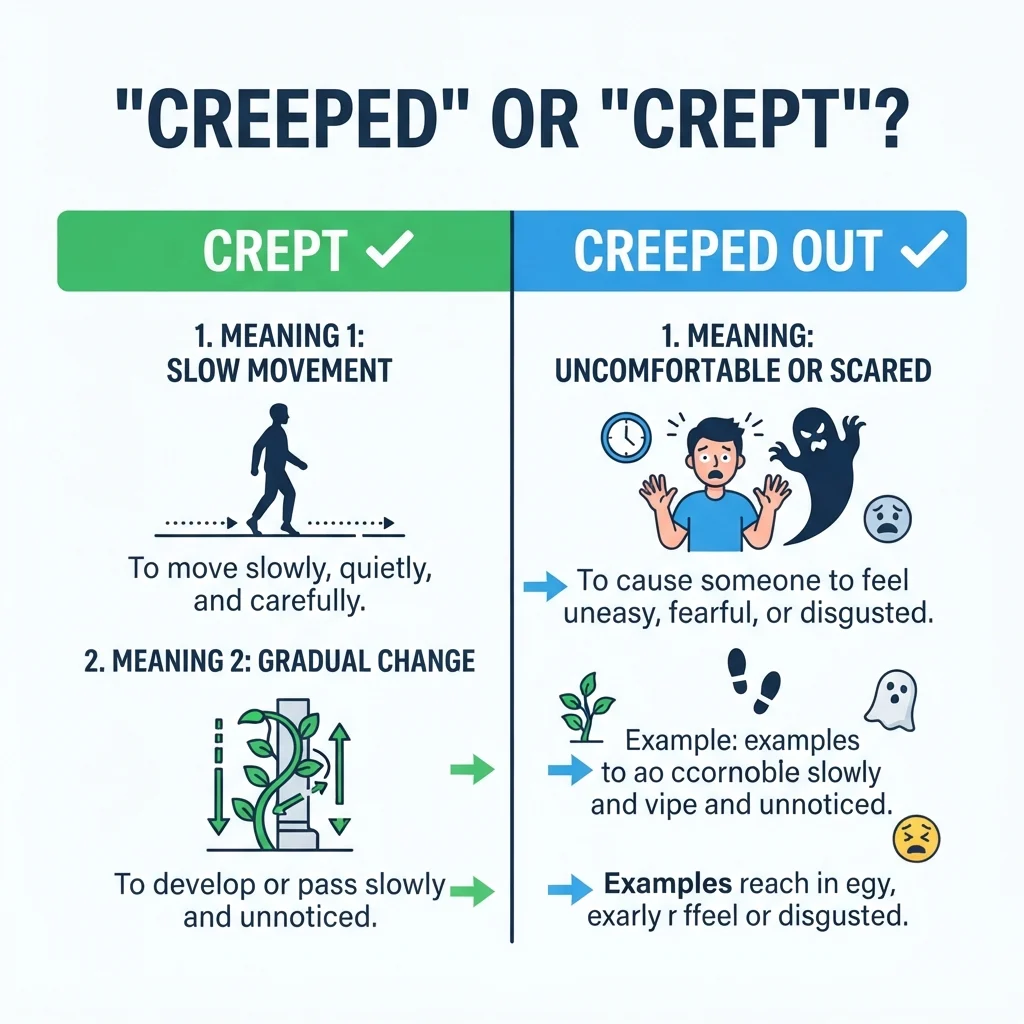
Crept is the standard past tense and past participle of creep.
- The cat crept into the room.
- He crept quietly down the stairs.
- The fog crept across the road.
Creeped is also used, but it has a more limited use.
For example:
- That horror movie creeped me out.
- The strange sound creeped her out.
Quick rule
Use crept when someone or something moves slowly and quietly.
Use creeped mainly in the expression “creeped out”, meaning made someone feel scared, uncomfortable, or uneasy.
The Origin of Creeped or Crept
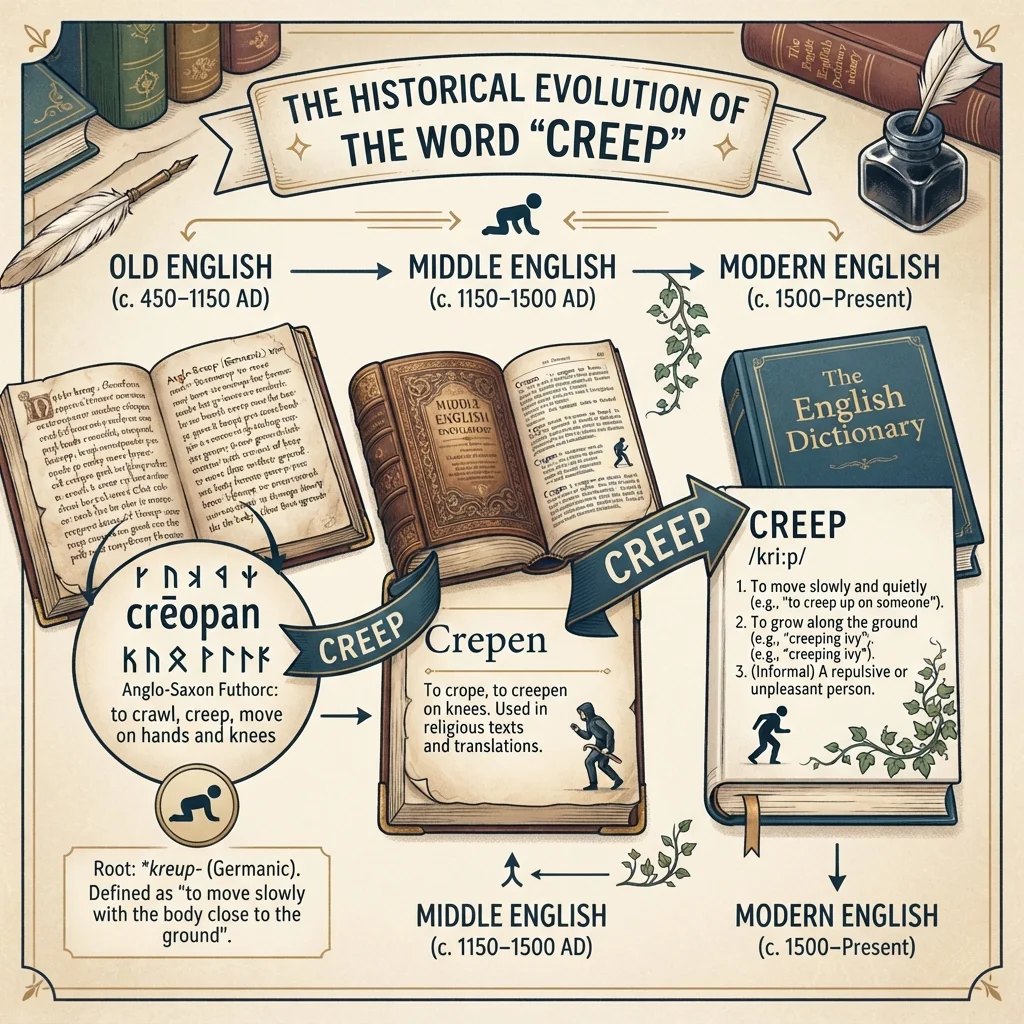
The word creep is very old. It comes from Old English crēopan, which meant to move slowly or crawl.
Over time, the word developed into the modern English verb creep.
Unlike regular verbs, creep has an irregular past form:
creep → crept → crept
This pattern is similar to other irregular verbs:
- sleep → slept
- keep → kept
- feel → felt
- leave → left
- creep → crept
The form crept has been used for centuries. It is the traditional past tense.
Creeped follows the regular -ed pattern. It became useful in newer or special meanings of creep, especially in phrases such as creeped out.
This is why people may see both forms and wonder which one is correct.
British English vs American English Spelling
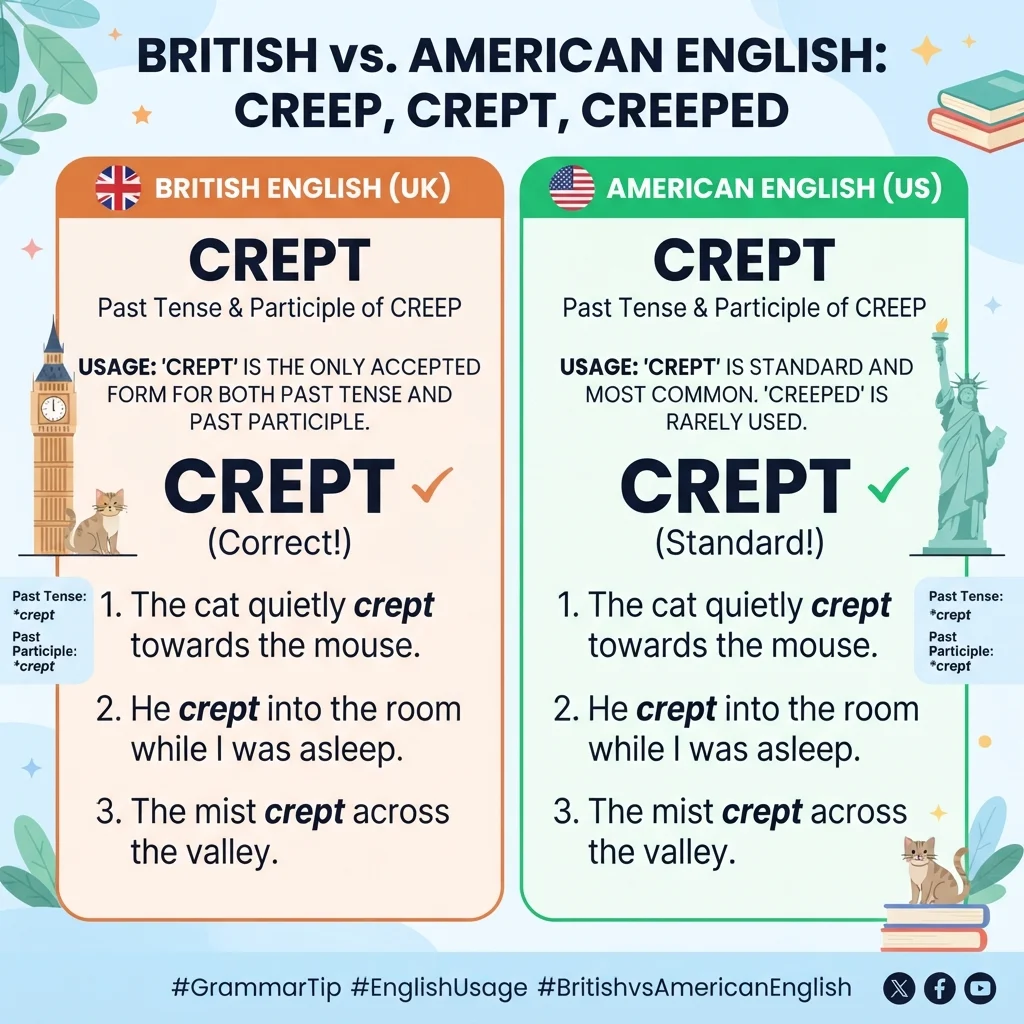
There is an important point here: British English and American English generally use “crept” in the same way.
The difference is not mainly about country-based spelling. Instead, it is about meaning and verb use.
| Form | British English | American English | Main Use |
|---|---|---|---|
| crept | Correct | Correct | Past tense of creep |
| creeped | Correct in some uses | Correct in some uses | Special meanings, often “creeped out” |
| creeping | Correct | Correct | Present participle |
| creep | Correct | Correct | Base verb |
Examples
British English:
The child crept quietly into the room.
American English:
The child crept quietly into the room.
Both sentences are correct.
For normal movement, crept is the safer choice in both varieties of English.
Soundbyte or Soundbite: Which Is Correct? Meaning & Usage 🎙️
Which Spelling Should You Use?
The best choice depends on what you mean.
For slow or quiet movement
Use crept.
She crept toward the door.
The cat crept under the table.
For gradual movement
Use crept.
The sun crept above the hills.
The price crept higher during the year.
For making someone feel uncomfortable or scared
Use creeped out.
That strange message creeped me out.
The dark room really creeped him out.
For professional writing
Crept is usually the better choice when you mean slow or quiet movement.
For global readers, it is also helpful to write the full phrase clearly. For example:
The noise slowly crept through the house.
This avoids confusion.
Common Mistakes with Creeped or Crept
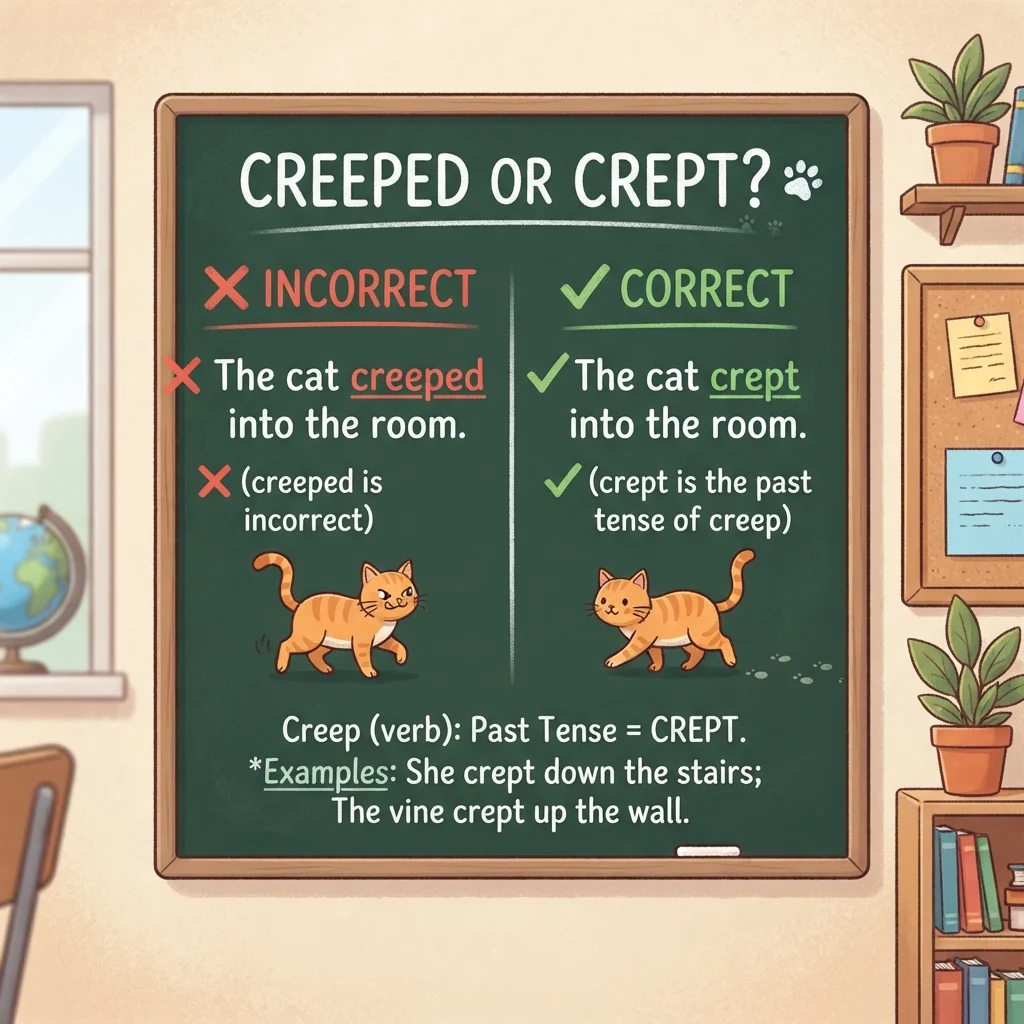
Here are some common errors.
Mistake 1: Using “creeped” for normal movement
❌ The cat creeped into the kitchen.
✅ The cat crept into the kitchen.
Mistake 2: Using “crept” for “made me uncomfortable”
❌ The strange man crept me out.
✅ The strange man creeped me out.
Mistake 3: Treating “creep” as a regular verb
❌ She creep-ed quietly upstairs.
✅ She crept quietly upstairs.
Mistake 4: Confusing “crept” with present tense
❌ Yesterday, he creep into the room.
✅ Yesterday, he crept into the room.
Easy memory trick
Think:
Creep → Crept
If you mean moved slowly or quietly, choose crept.
If you mean made someone feel uneasy, creeped out is often the right phrase.
Creeped or Crept in Everyday Examples
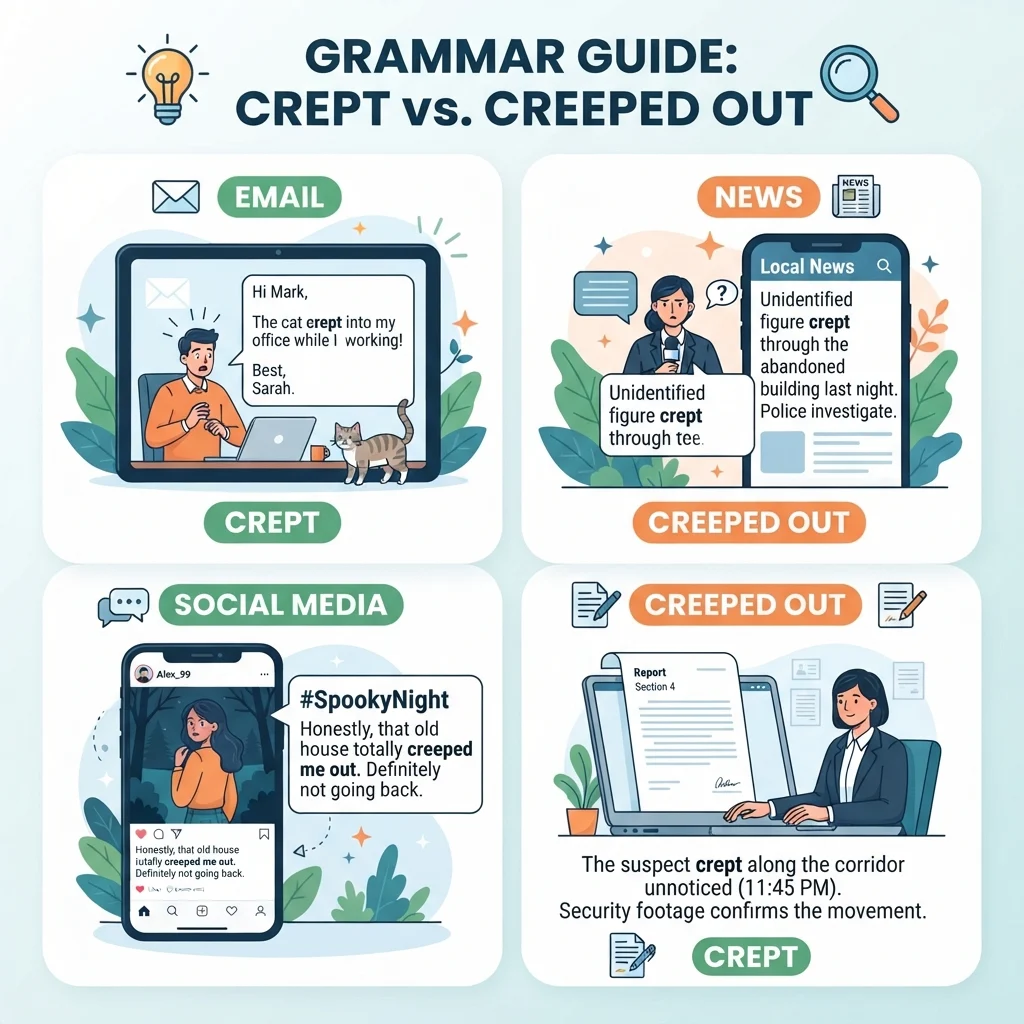
In Emails
Correct:
The issue has slowly crept into several parts of the project.
This sounds natural in professional writing.
In News Writing
Costs have crept higher over the past year.
Here, crept means increased gradually.
On Social Media
That video totally creeped me out!
Here, creeped is natural because the meaning is emotional or informal.
In Formal Writing
A sense of doubt slowly crept into the discussion.
This is a natural formal use of crept.
In Stories
He crept through the dark hallway without making a sound.
This is one of the most common uses of crept.
Creeped or Crept – Comparison Table
| Word or Phrase | Meaning | Example |
|---|---|---|
| creep | Move slowly or quietly | I creep through the room. |
| crept | Past form of creep | I crept through the room. |
| creeped | Made someone uneasy | The movie creeped me out. |
| creeping | Moving slowly | The fog is creeping closer. |
| creeped out | Felt scared or uncomfortable | I felt creeped out. |
The key difference is simple: crept is the normal past form of creep, while creeped is commonly used when creep means to cause an uncomfortable or frightened feeling.
Creeped or Crept – Google Trends & Usage Data
Search interest for creeped or crept can vary because people search the phrase when checking grammar, spelling, and past-tense forms.
Crept has a much broader use. It appears in books, news stories, formal writing, conversations, and descriptions of movement.
Creeped has a narrower use. It is often seen in informal phrases such as “creeped me out” and “creeped out.”
Usage can also vary by context. Writers are more likely to use crept when describing slow movement or gradual change. Social media users may use creeped when talking about something strange, scary, or uncomfortable.
So, if your question is simply “What is the past tense of creep?”, the safest answer is:
Creep → Crept
FAQs About Creeped or Crept
1. Is “crept” or “creeped” correct?
Both can be correct, but crept is the standard past tense of creep. Creeped is commonly used in phrases such as “creeped out.”
2. Is “crept” the past tense of creep?
Yes. The main past tense is crept.
She crept into the room.
3. Can I say “creeped”?
Yes. Creeped is used in certain meanings, especially “creeped me out.”
That story creeped me out.
4. Is “creeped” grammatically wrong?
No. It is not always wrong. Its correct use depends on the meaning of creep.
5. Which is better: “crept out” or “creeped out”?
For the meaning made someone feel uncomfortable or scared, use creeped out.
The movie creeped me out.
6. What is the past participle of creep?
The traditional past participle is crept.
He has crept into the room.
7. How can I remember creeped vs crept?
Remember this simple rule:
Slow movement = crept.
Made someone uncomfortable = creeped out.
Conclusion
The difference between creeped or crept is easier once you focus on meaning. Crept is the standard past tense and past participle of creep. Use it when someone or something moves slowly, quietly, or gradually.
For example, you can say, “The cat crept into the room” or “Prices crept higher.” This form works naturally in both British and American English.
Creeped is also a real word, but it has a more limited role. It is especially common in the phrase “creeped out,” which means that something made a person feel uncomfortable, nervous, or scared.
For everyday and professional writing, remember the simple rule: creep → crept for normal past-tense movement. Use creeped when the meaning calls for it, especially with “out.” When in doubt, choose crept for the standard past form.

Robert Walser creates meaningful English captions for funcaptionz.com, delivering creative wording, short ideas, and expressive lines for everyday inspiration..









