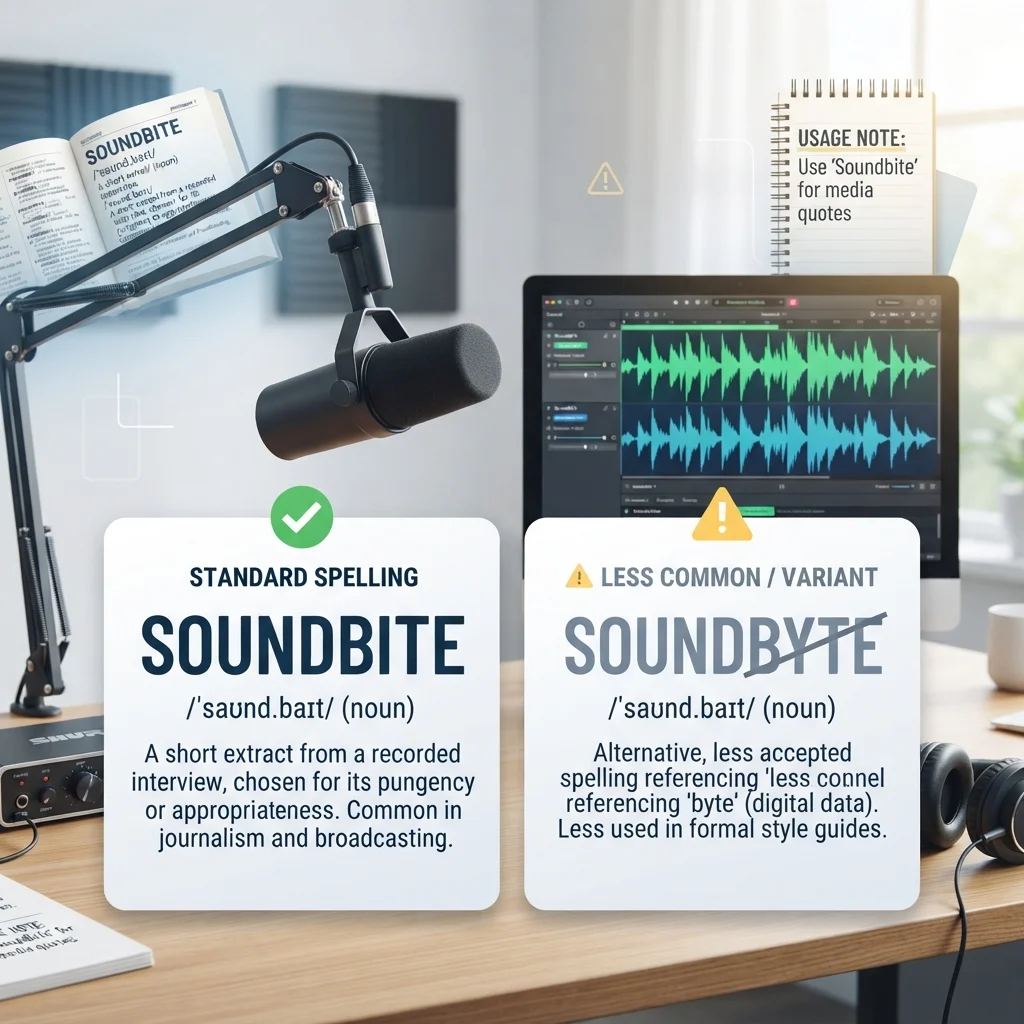
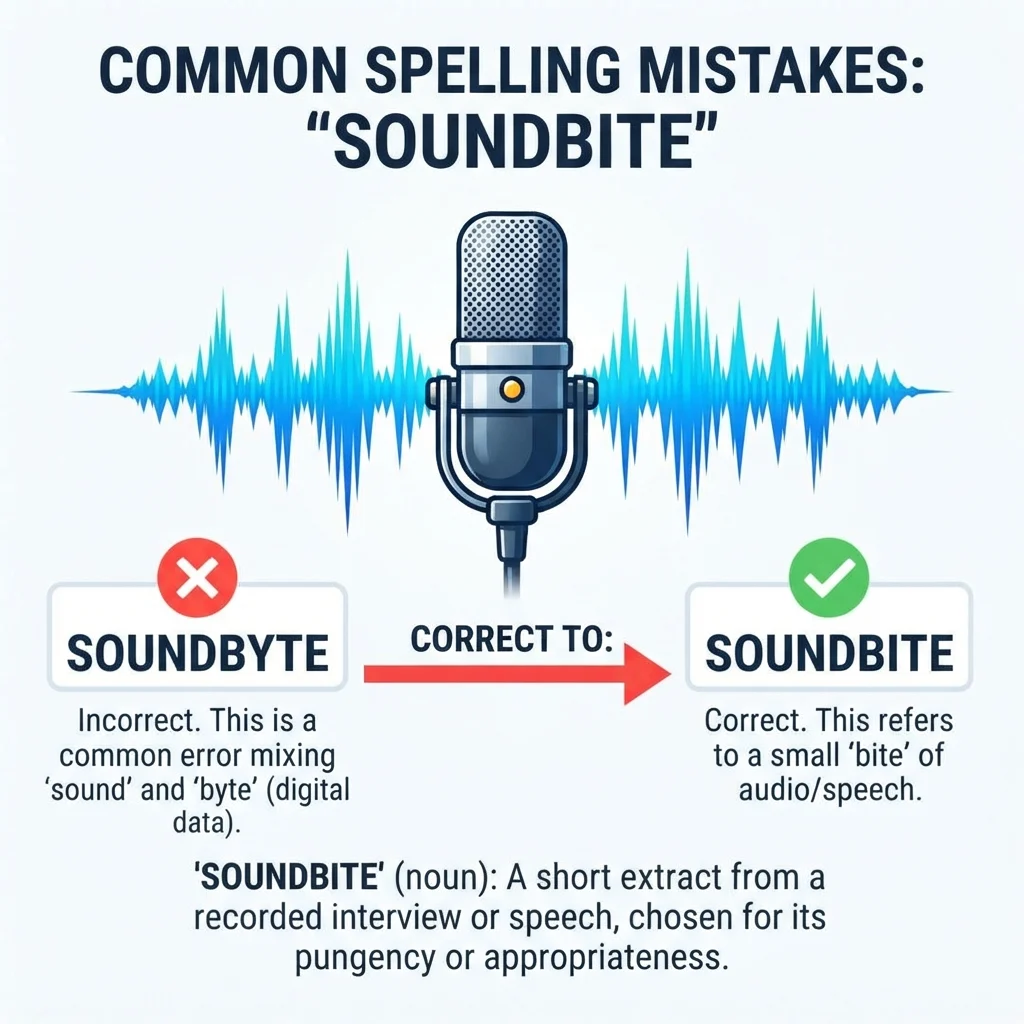
Soundbite is the correct standard spelling for a short, memorable piece of speech, while soundbyte is a nonstandard spelling.
Soundbite is correct. Soundbyte is generally nonstandard.
Soundbyte or soundbite—which spelling should you use? It is an easy mix-up because both versions look and sound almost identical. However, if you’re writing an article, blog post, essay, report, or professional content, soundbite is the spelling you should choose.
A soundbite is a short, memorable excerpt from a speech, interview, news report, podcast, or other recorded conversation. For example: The journalist used a memorable soundbite from the interview.
You may occasionally see soundbyte online, but it is not the standard spelling. The confusion likely comes from the familiar technology-related spelling byte, but the word soundbite uses bite.
So, if you’re wondering “soundbyte or soundbite?”, remember this simple rule: soundbite = standard English spelling. Choosing soundbite keeps your writing accurate, polished, and professional.
Soundbyte or Soundbite meanings
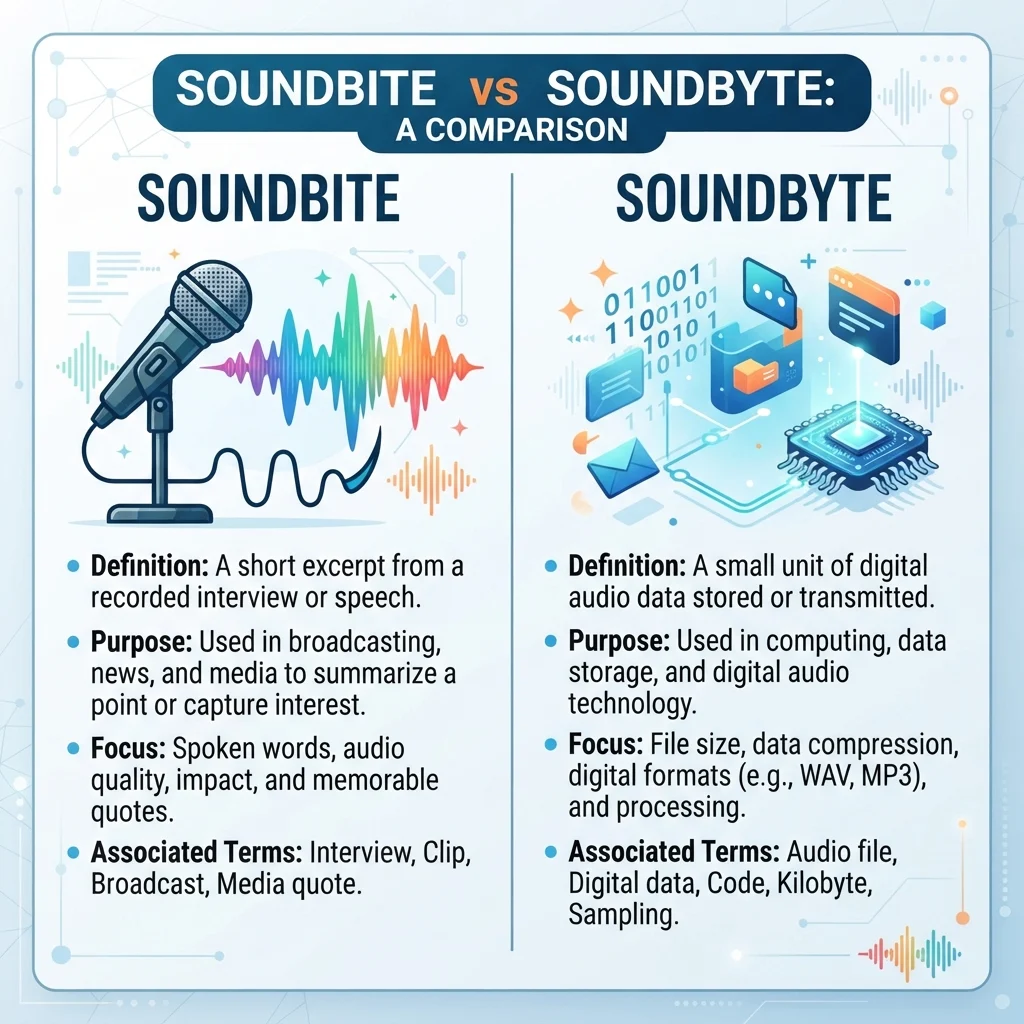
Soundbite is the correct standard spelling for the common media and communication term.
A soundbite is a short part of a speech, interview, recording, or broadcast that is selected because it is clear, memorable, or useful.
Correct:
- The reporter used a short soundbite from the interview.
- Her speech included a powerful soundbite.
- The news channel played a soundbite from the interview.
Usually incorrect:
- The reporter used a soundbyte from the interview.
Soundbite is normally written as one word.
Quick comparison
| Spelling | Standard use | Example |
|---|---|---|
| soundbite | Correct standard term | The interview included a short soundbite. |
| sound byte | Rare, usually playful or technical | The article made a joke about a sound byte. |
| soundbyte | Nonstandard for the media term | Avoid this spelling in formal writing. |
So, if you are writing an email, article, report, news story, school paper, or professional document, use soundbite.
The Origin of Soundbyte or Soundbite
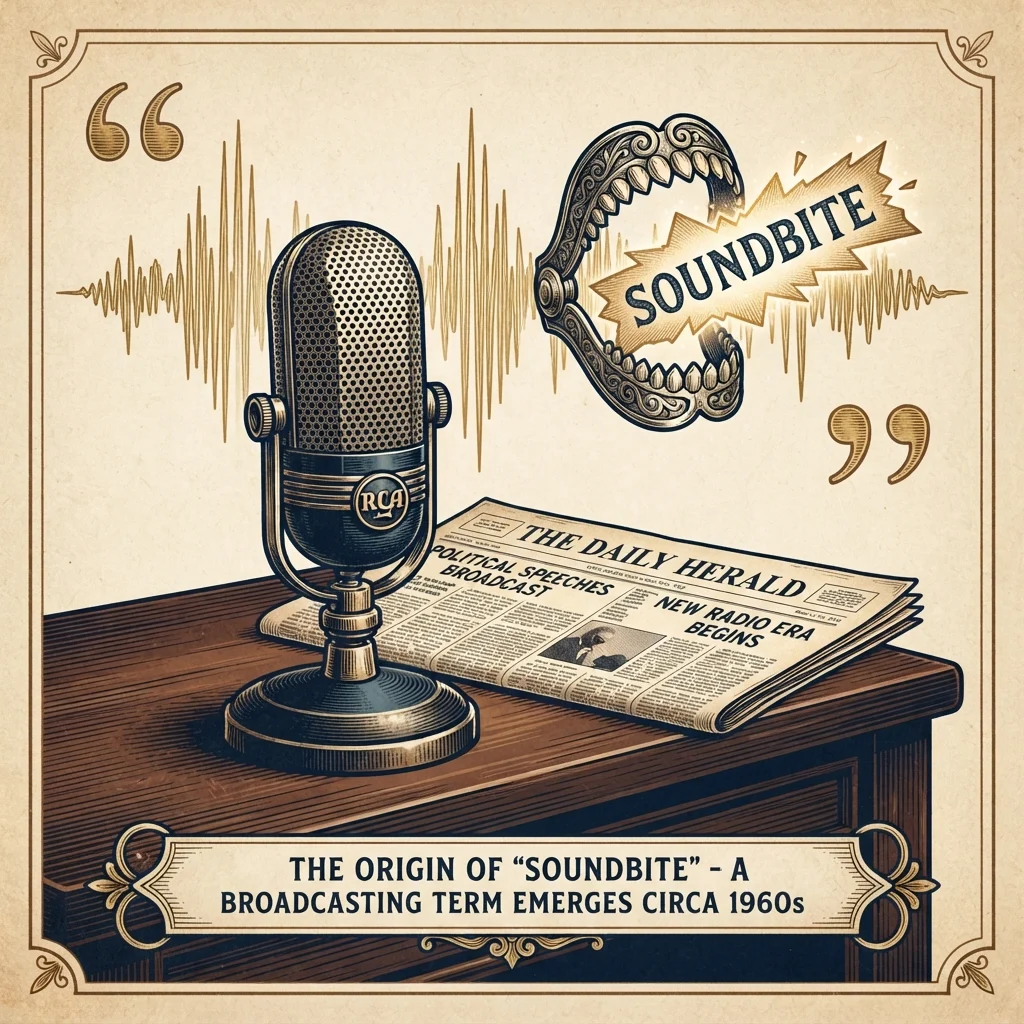
The word soundbite comes from the words sound and bite.
The word sound refers to something that can be heard. The word bite suggests a small piece or portion of something.
Together, soundbite means a small “piece” of sound.
The term became widely used in journalism and broadcasting. Reporters often need short sections of interviews or speeches that can fit into television, radio, or news reports.
A long speech may contain many minutes of information. A reporter may choose one short sentence that clearly expresses the main idea. That short section becomes a soundbite.
Why does “soundbyte” appear?
The spelling soundbyte is influenced by the computer word byte.
A byte is a unit of digital information. Because modern sound is often stored and shared digitally, some people connect audio with computer terminology. This can make soundbyte look logical.
However, the standard English media term is soundbite, not soundbyte.
The two words sound alike, which adds to the confusion.
Soundbite vs byte
- bite = a small piece or portion
- byte = a unit of digital information
The media term uses bite because the idea is a short “piece” of audio or speech.
British English vs American English Spelling
There is an important point here: British English and American English generally use the same spelling, soundbite.
Unlike words such as colour/color or centre/center, this word does not normally change spelling between British and American English.
Comparison
| English variety | Preferred spelling | Example |
|---|---|---|
| American English | soundbite | The reporter chose a strong soundbite. |
| British English | soundbite | The reporter chose a strong soundbite. |
| Canadian English | soundbite | The interview produced a memorable soundbite. |
| Australian English | soundbite | The journalist included a short soundbite. |
| General international English | soundbite | The video contains a useful soundbite. |
So, you do not need to change soundbite based on whether your audience uses American or British English.
What about “sound byte”?
You may see sound byte written as two words. This is usually not the standard form when discussing a short media quotation.
For professional writing, soundbite is the safer choice.
Shall or Should: What’s the Difference and When to Use Each? ✍️
Which Spelling Should You Use?
Your choice should depend on what you mean.
For US readers
Use soundbite.
The candidate gave a short soundbite to reporters.
For UK and Commonwealth readers
Use soundbite.
The programme included a soundbite from the interview.
For global audiences
Use soundbite.
It is widely understood in journalism, media, marketing, and everyday English.
For technology writing
Be careful with byte.
If you are specifically discussing digital data, the word byte is correct.
For example:
A byte is a unit of digital information.
But when you mean a short recorded statement or audio clip, use:
soundbite
Simple rule
If you mean a short piece of speech or audio, choose soundbite.
Common Mistakes with Soundbyte or Soundbite
The spelling confusion creates several common errors.
1. Writing “soundbyte”
Incorrect for the standard media term:
The journalist selected a powerful soundbyte.
Correct:
The journalist selected a powerful soundbite.
2. Writing “sound byte” in formal media writing
You may occasionally see this form, but it is not the normal spelling of the established media term.
Preferred:
The reporter used a short soundbite.
3. Confusing “bite” with “byte”
These words are pronounced the same, but they have different meanings.
Bite can mean a small piece.
Byte is a digital information unit.
The standard media word is soundbite.
4. Using “soundbite” for any complete interview
A soundbite is usually a short selected part of a longer recording.
For example:
The interview lasted 30 minutes.
This does not mean the entire interview is a soundbite.
A short sentence taken from that interview can be called a soundbite.
5. Using the word when “audio clip” is clearer
Sometimes audio clip may be easier for a general audience.
For example:
Click here to hear the audio clip.
This can be clearer when the audience may not know the term soundbite.
Soundbyte or Soundbite in Everyday Examples

The word soundbite appears often in media, journalism, marketing, and online content.
In an email
Please send me the final soundbite from the interview.
In a news article
The reporter included a short soundbite from the mayor’s speech.
On social media
That soundbite from the podcast was shared thousands of times.
In a video
The editor added a soundbite from the guest interview.
In formal writing
The report examines how short political soundbites influence public discussion.
In journalism
The journalist selected a soundbite that captured the main point of the interview.
In marketing
The campaign used a memorable soundbite in its video.
In everyday conversation
That was the best soundbite from the whole interview.
These examples all use soundbite as one word.
Soundbyte or Soundbite – Google Trends & Usage Data
Search interest for soundbyte or soundbite usually comes from two different types of users.
Some people search because they want to check the spelling. Others search because they want to understand what soundbite means.
The standard word soundbite is strongly connected with:
- Journalism
- News
- Interviews
- Television
- Radio
- Podcasts
- Political speeches
- Marketing
- Social media
- Video editing
The spelling soundbyte can appear online because of technology-related language, brand names, usernames, and informal writing.
Search context matters
Someone searching “soundbyte or soundbite” is usually trying to solve a spelling problem.
Someone searching “what is a soundbite” is looking for a definition.
Someone searching “soundbite meaning” wants the word’s meaning and usage.
Someone searching “soundbite example” wants examples from media or communication.
Because search results can change over time, exact popularity numbers should not be treated as permanent. Search interest can also vary by country and by the context in which the word is used.
For normal English writing, however, the spelling choice remains simple:
Use soundbite.
Soundbyte or Soundbite – Comparison Table
| Variation | Meaning | Standard? | Best use |
|---|---|---|---|
| soundbite | Short piece of speech or audio | Yes | General and professional writing |
| sound byte | Literal or playful combination of sound + digital byte | Limited | Special technical or creative contexts |
| soundbyte | Alternative spelling seen online | No, for the standard media term | Avoid in formal writing |
| audio clip | Short piece of recorded audio | Yes | General audiences |
| quote | Words taken from someone’s speech or writing | Yes | Text-based contexts |
The important distinction is between soundbite and soundbyte.
If you are referring to a short statement taken from an interview or speech, soundbite is the standard choice.
FAQs About Soundbyte or Soundbite
1. Is soundbite or soundbyte correct?
Soundbite is the standard spelling for a short piece of speech, audio, or recorded material used in media.
2. Is soundbite one word?
Yes. Soundbite is normally written as one word.
3. Is soundbyte a real word?
You may see soundbyte online, but it is not the standard spelling of the common media term. It can also be used informally or as a name.
4. Why is soundbite spelled with “bite”?
The word combines sound with bite, suggesting a small piece of sound or speech.
5. Is soundbite the same in British and American English?
Yes. Soundbite is generally spelled the same in both British and American English.
6. What is a soundbite?
A soundbite is a short, selected part of a speech, interview, recording, or broadcast that communicates an idea or message.
7. Can I use soundbite in formal writing?
Yes. Soundbite is suitable for formal writing, including journalism, reports, academic discussions, and professional communication.
Conclusion
When choosing between soundbyte or soundbite, the answer is simple: soundbite is the standard spelling for the common media term.
A soundbite is a short and useful piece of speech, audio, an interview, or a recording. The word comes from the idea of taking a small “bite” of sound. The spelling soundbyte often appears because people connect the word with the computer term byte, but that does not make it the standard spelling for this meaning.
British English and American English generally use soundbite in the same way. The safest choice for websites, news articles, emails, reports, school work, social media, and professional writing is therefore soundbite.
Remember the easiest rule: audio or speech = soundbite; digital information = byte. When you mean a short memorable piece of an interview or recording, choose soundbite.

Walter de la Mare writes creative English captions for funcaptionz.com, sharing short ideas, thoughtful wording, and expressive lines for modern readers.









