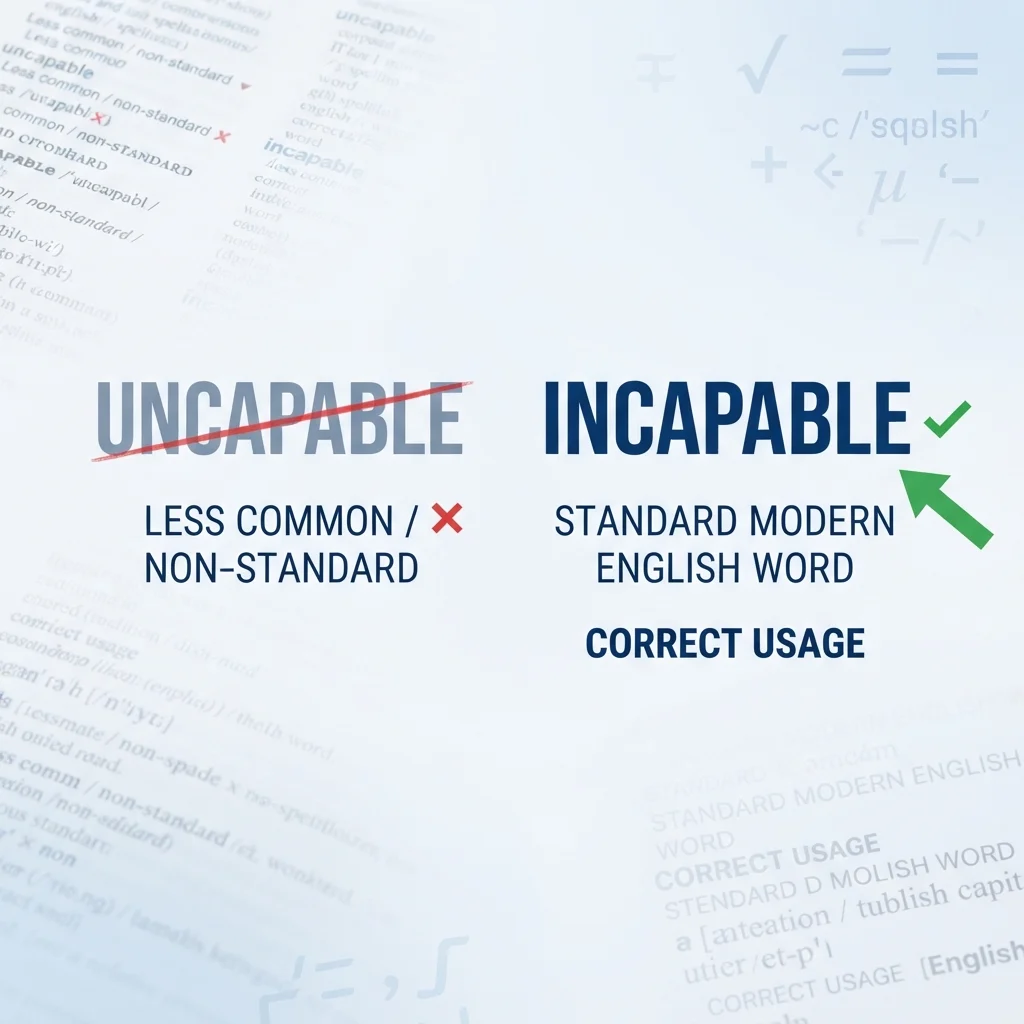
“Incapable” is the correct and standard English word; “uncapable” is generally considered nonstandard. Use “incapable” when you mean unable to do something or lacking the ability to do it.
Uncapable or incapable—which one is correct? This small spelling choice can make a big difference in clear English writing. If you’ve seen both forms online, you may wonder whether uncapable is simply an alternative spelling of incapable. The answer is straightforward: incapable is the standard word you should normally use.
Incapable means unable or lacking the ability to do something. For example, “She is incapable of solving the problem” means she does not have the ability to solve it. Although uncapable may occasionally appear in older or uncommon usage, it is not the normal choice in modern standard English.
So, whether you’re writing an email, assignment, article, or professional document, choose “incapable” when you want to express inability. But why does uncapable appear at all, and how can you avoid confusing the two?
In this guide, you’ll discover the meaning, correct usage, examples, differences, and common mistakes involving uncapable vs. incapable, so you can choose the right word confidently every time.
Uncapable or Incapable meanings
Incapable is the correct and standard choice in modern English.
It means not able to do something or lacking the ability to perform an action.
Correct:
She is incapable of lying to her friends.
Less common:
She is uncapable of lying to her friends.
The second form may appear in older or uncommon writing, but incapable is the natural choice for modern English.
Incapable Meaning
Incapable means unable to do, achieve, or perform something.
Examples:
- He is incapable of solving the problem.
- The old machine is incapable of producing enough power.
- She felt incapable of making a quick decision.
So, when you mean “not able”, use incapable.
The Origin of Uncapable or Incapable
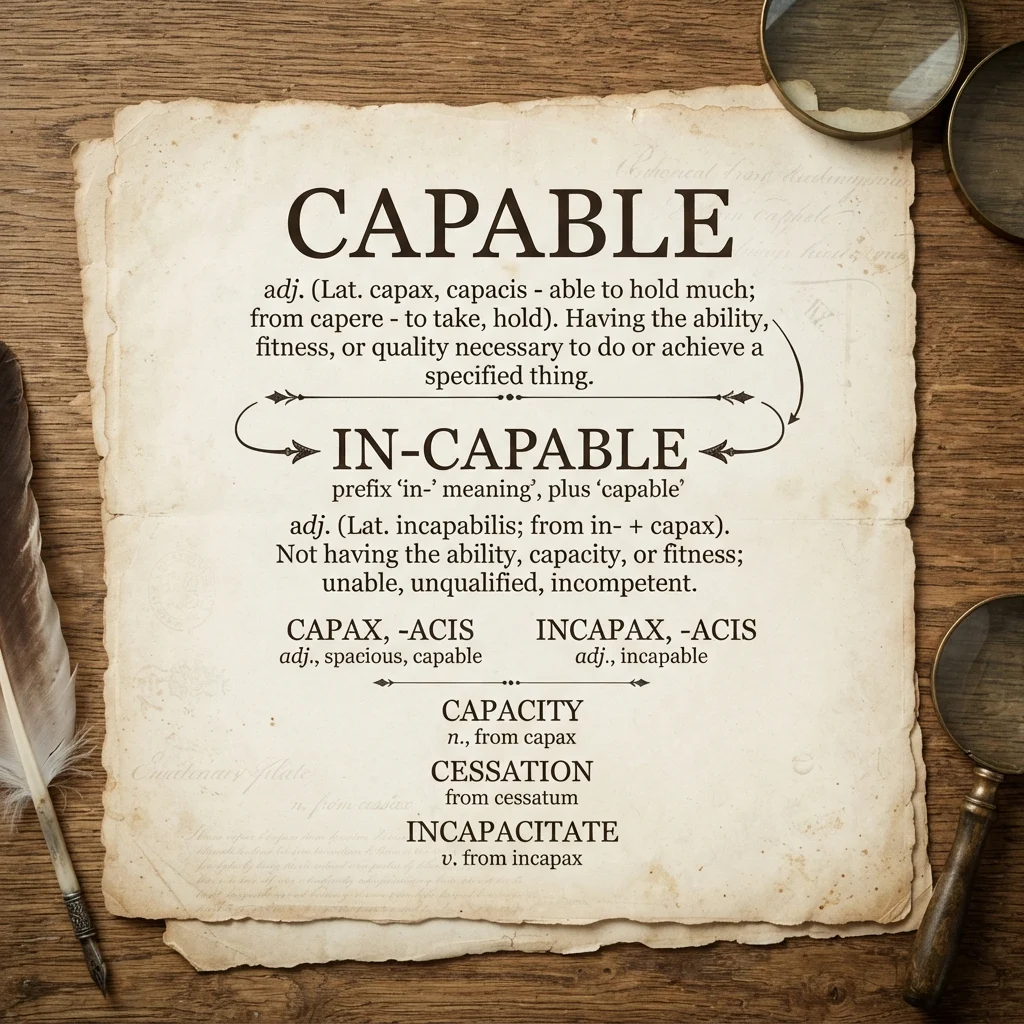
The word incapable comes from capable, which means “able” or “having the ability to do something.”
The word capable comes from the Latin capabilis, which is related to the idea of being able to receive, hold, or take something. Over time, it developed into the modern meaning of having the ability or skill to do something.
The prefix in- can mean “not”. When added to capable, it creates incapable, meaning “not capable.”
This is why the form incapable became the normal word in English.
The form uncapable may look logical because English often uses un- to create opposites. For example:
- able → unable
- happy → unhappy
- fair → unfair
- certain → uncertain
However, English does not always form opposites with un-. Some words use in-, im-, il-, or ir- instead.
For this reason, incapable is the established modern form.
British English vs American English Spelling
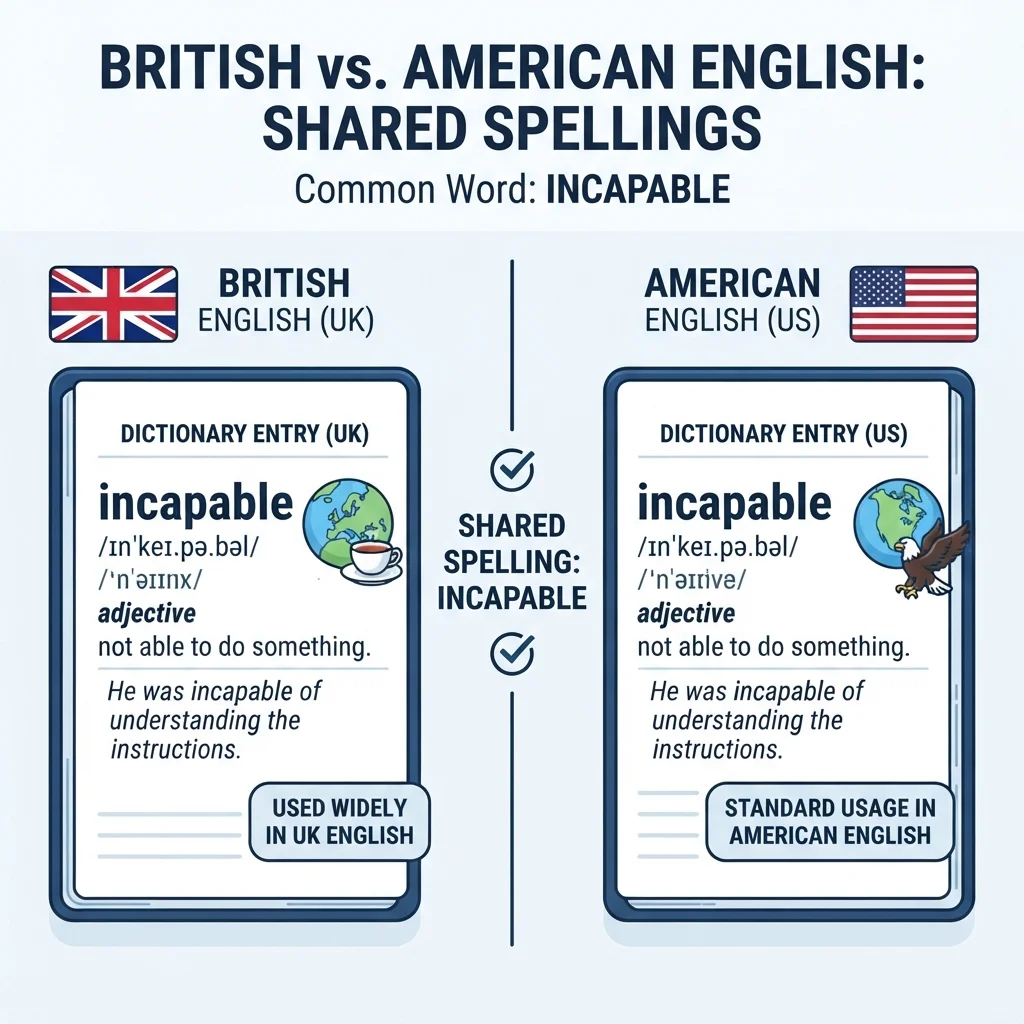
There is no major British-American spelling difference between incapable and incapable.
Both British English and American English use:
incapable
The spelling stays the same in both varieties.
| English Type | Standard Spelling | Example |
|---|---|---|
| American English | incapable | He is incapable of driving. |
| British English | incapable | He is incapable of driving. |
| Canadian English | incapable | She is incapable of doing it alone. |
| Australian English | incapable | The device is incapable of working properly. |
| Global English | incapable | They are incapable of completing the task. |
| Uncommon/older usage | uncapable | This form is rarely used today. |
Why Do People Write “Uncapable”?
The confusion often comes from the prefix un-.
People may think:
capable → uncapable
This seems logical, but standard modern English uses:
capable → incapable
The same kind of pattern happens with many English words. A word may look like it should take one prefix, but established usage determines which form is correct.
Which Spelling Should You Use?
For almost all modern writing, choose incapable.
For US English
Use incapable in:
- School writing
- Business emails
- Websites
- Reports
- Articles
- Social media
- Formal documents
For UK and Commonwealth English
Use incapable as well.
The spelling does not change between British and American English.
For Global English
If your writing is intended for an international audience, incapable is the safest and clearest choice.
It is widely understood and sounds natural to English speakers.
What About “Uncapable”?
You may find uncapable in old books, historical texts, or unusual writing. However, it is not the normal choice in current standard English.
If you want your writing to sound clear and professional, use incapable.
Common Mistakes with Uncapable or Incapable
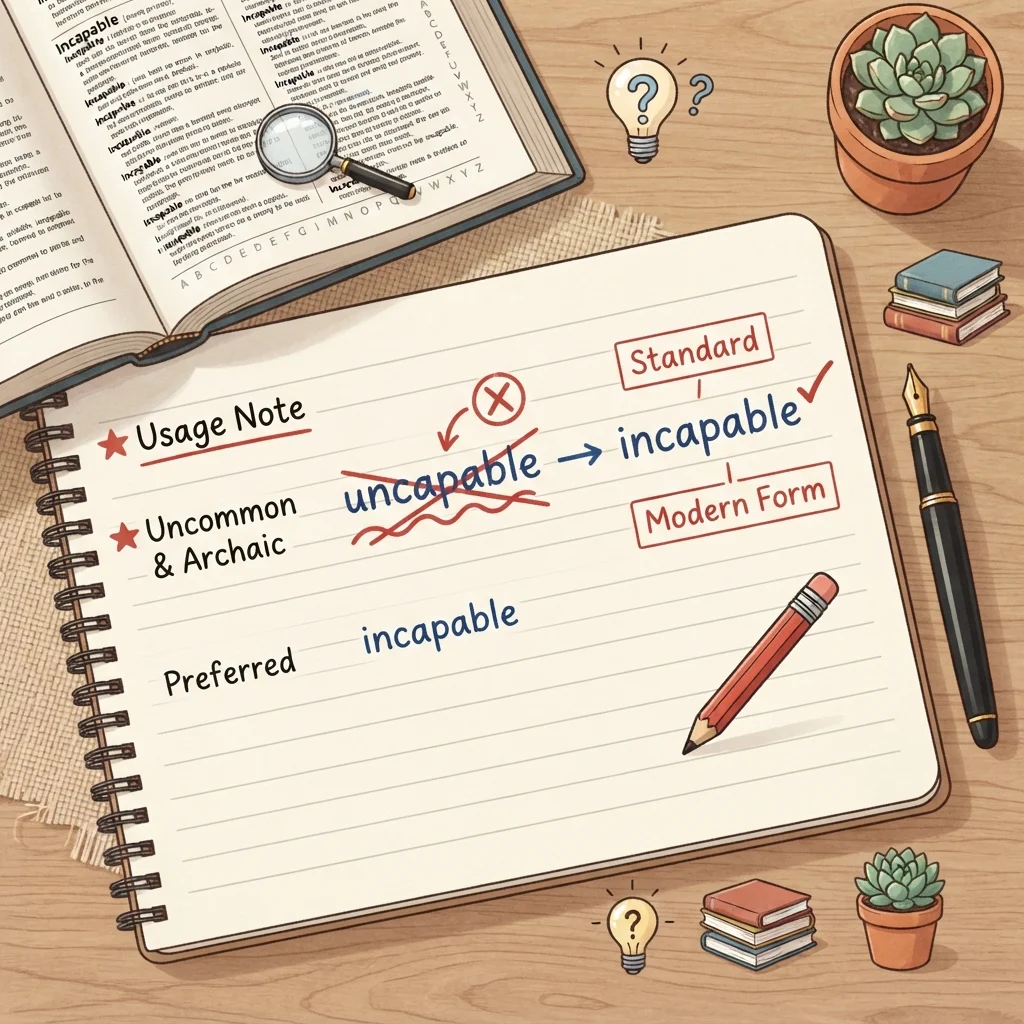
1. Using “uncapable” in formal writing
Incorrect or uncommon:
The team is uncapable of finishing the project.
Better:
The team is incapable of finishing the project.
2. Confusing “incapable” with “unable”
Both can describe a lack of ability, but they are not always used in exactly the same way.
Unable often describes a specific situation:
I am unable to attend the meeting.
Incapable can suggest a lack of ability, skill, capacity, or suitability:
The machine is incapable of handling the load.
3. Forgetting “of”
The usual structure is:
incapable of + noun or -ing verb
Examples:
- incapable of working
- incapable of understanding
- incapable of making a decision
- incapable of change
4. Writing “incapable to”
Avoid:
She is incapable to understand the lesson.
Use:
She is incapable of understanding the lesson.
5. Assuming “un-” is always correct
English prefixes do not always follow a simple rule. Uncapable may look logical, but incapable is the established modern form.
Uncapable or Incapable in Everyday Examples
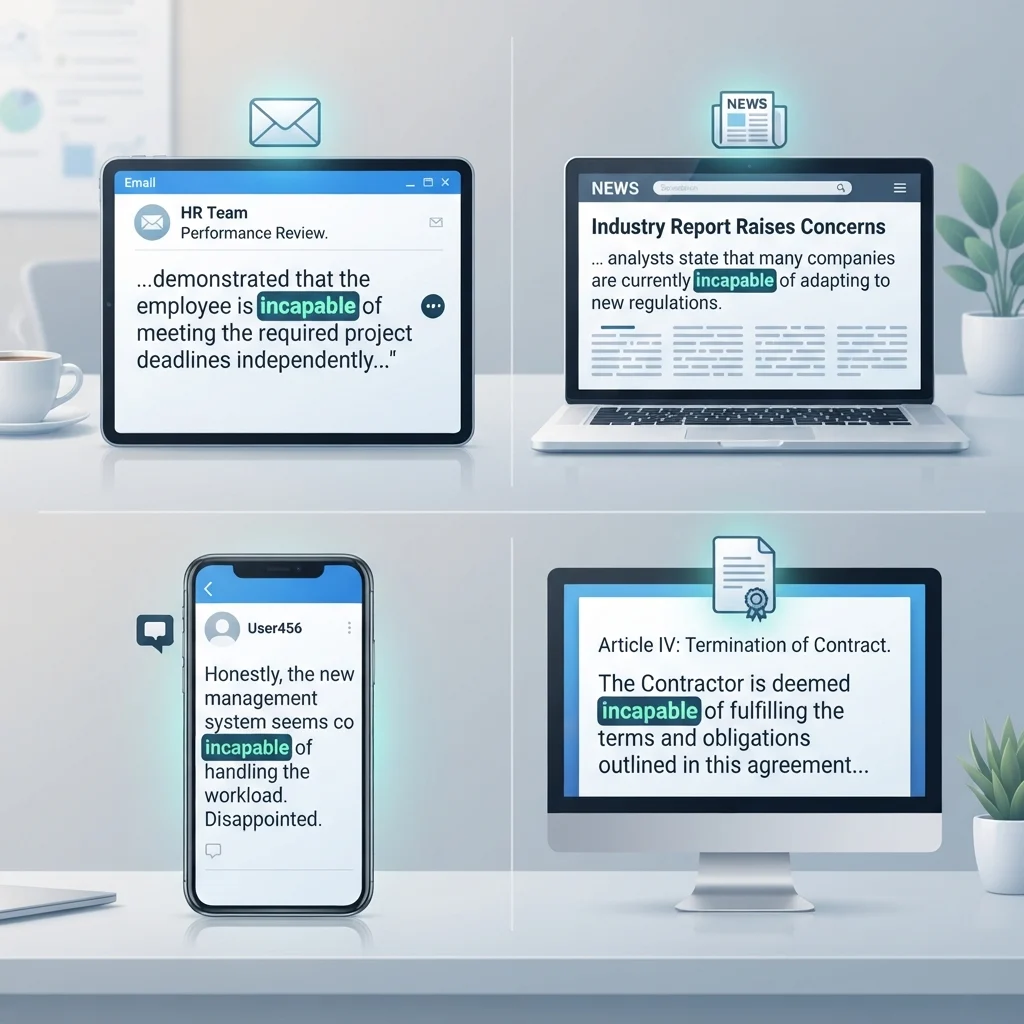
Knowing how the word works in real sentences makes the difference easier to remember.
In Emails
Unfortunately, our current system is incapable of processing this request.
This sounds clear and professional.
In News Writing
The damaged equipment was incapable of supporting the required operation.
News and formal writing normally use incapable.
On Social Media
I am incapable of saying no to cute puppies!
This casual sentence uses the standard spelling while keeping a friendly tone.
In Formal Writing
The organization was found incapable of meeting the required standards.
This is appropriate for reports and formal documents.
In Everyday Conversation
My phone is incapable of running that game.
This means the phone does not have the ability or capacity to run it.
With People
He is incapable of keeping a secret.
Here, incapable describes a person’s inability to perform an action.
With Things
This small computer is incapable of handling such a large file.
Here, the word describes the capacity of an object.
Uncapable or Incapable – Google Trends & Usage Data
Search interest around “uncapable or incapable” usually comes from people checking whether uncapable is a correct English word.
The search pattern is strongly connected to:
- Spelling questions
- Grammar checks
- Word comparisons
- English learning
- Writing correction
- “Which word is correct?” searches
The important usage pattern is that incapable is much more established in modern English than uncapable.
Searchers may type uncapable because the spelling appears logical. They then look for confirmation before using it in writing.
Usage can also vary by context. Incapable is common in formal, academic, professional, and everyday English. Uncapable is far less common and may appear in older or unusual texts.
For modern readers, incapable provides the clearest and most familiar wording.
Uncapable vs Incapable: Comparison Table
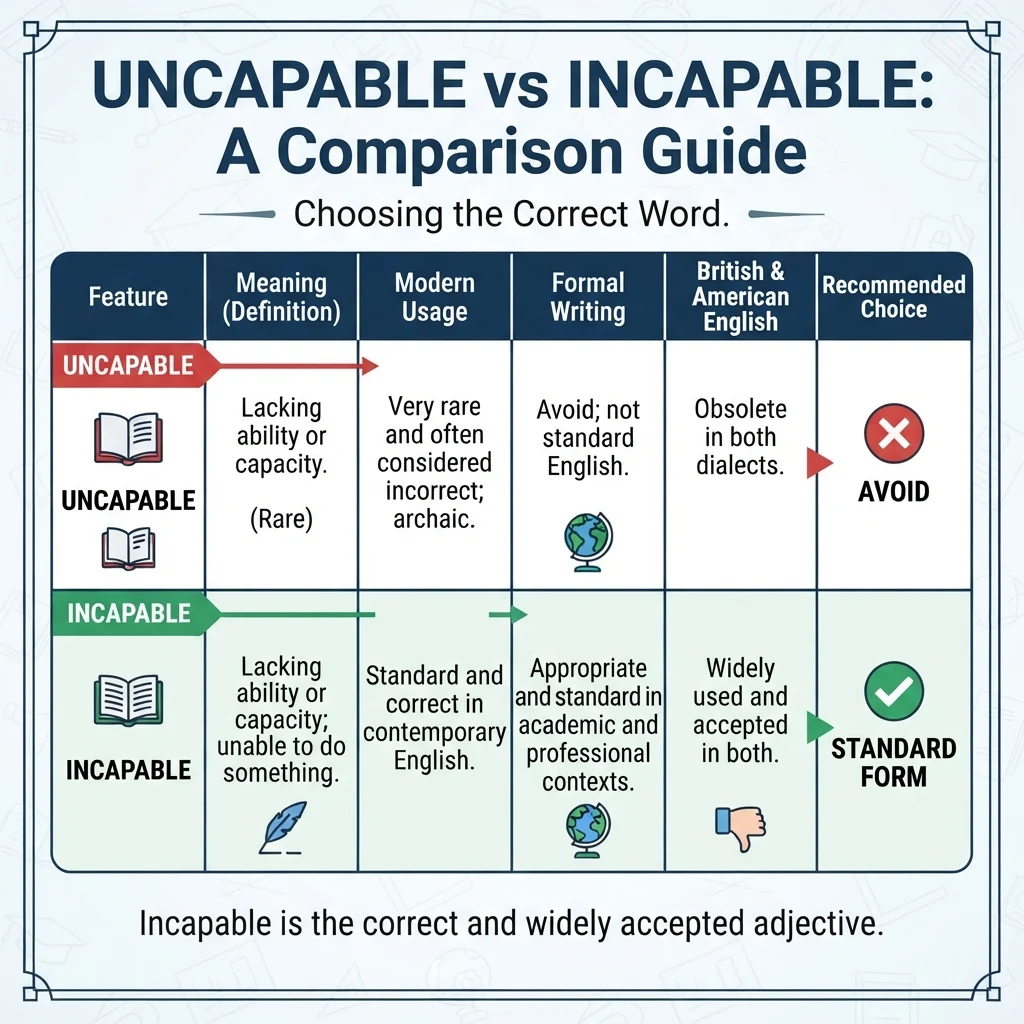
| Feature | Incapable | Uncapable |
|---|---|---|
| Modern standard English | Yes | Rare |
| Common today | Yes | No |
| Means “not able” | Yes | Intended meaning |
| Formal writing | Recommended | Avoid |
| British English | Used | Rare |
| American English | Used | Rare |
| Everyday English | Natural | Unusual |
| Professional writing | Recommended | Not recommended |
| Historical/older usage | Yes | May appear |
| Best choice today | Yes | No |
FAQs About Uncapable or Incapable
1. Is “uncapable” a correct word?
Uncapable can be found in some older or uncommon English usage, but it is not the normal modern choice. Use incapable in current standard English.
2. Is “incapable” the correct spelling?
Yes. Incapable is the standard modern spelling when you mean “not able” or “not capable.”
3. Should I use incapable or uncapable?
Use incapable in modern English. It is clearer, more familiar, and suitable for both British and American English.
4. Is incapable used in British English?
Yes. Incapable is standard in British English, just as it is in American English.
5. Is incapable used in American English?
Yes. Incapable is the standard American English form.
6. What is the opposite of capable?
The standard opposite is incapable.
For example:
She is capable of solving the problem.
She is incapable of solving the problem.
7. Do you say “incapable of” or “incapable to”?
The normal structure is incapable of.
Correct:
He is incapable of doing the job.
Not:
He is incapable to do the job.
Conclusion
When choosing between uncapable or incapable, the safest and most natural answer is incapable. It is the standard modern English word for describing someone or something that lacks the ability, skill, or capacity to do something.
The confusion usually happens because un- is a common English prefix. However, English does not always form opposites by simply adding un-. In this case, the established form is incapable, created with the prefix in-.
There is also no British-versus-American spelling difference here. Both varieties use incapable. You can use it in emails, school assignments, news writing, professional documents, websites, and everyday conversations.
Although uncapable may appear in older or uncommon texts, it is not the best choice for modern standard writing. If you want your sentence to sound natural, clear, and professional, remember this simple rule: capable → incapable.
So, whenever you are unsure, choose incapable.

Robert Walser creates meaningful English captions for funcaptionz.com, delivering creative wording, short ideas, and expressive lines for everyday inspiration..









