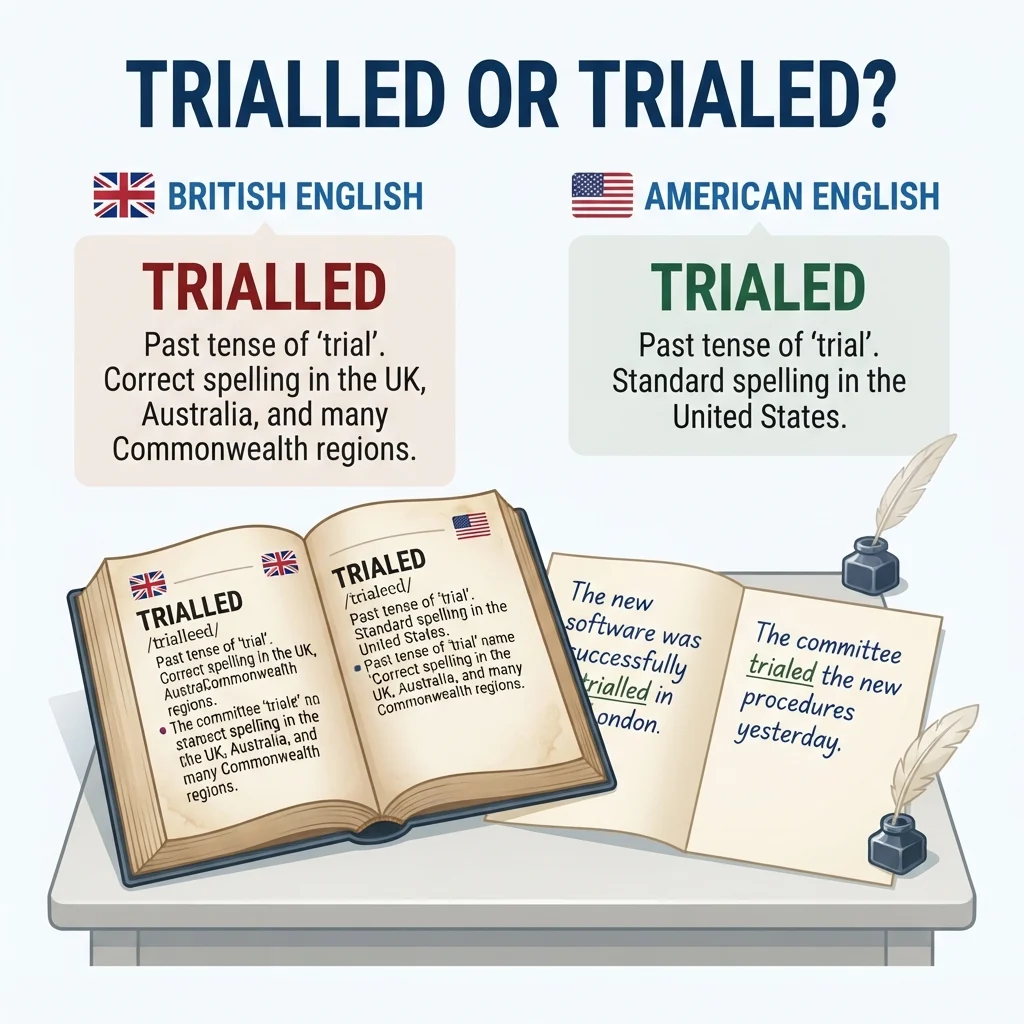
Trialled or trialed? Both are correct. “Trialled” is mainly used in British English, while “trialed” is the usual American English spelling.
Trialled or trialed—which spelling should you use? If you’ve ever hesitated between these two versions while writing, you’re not alone. The good news is that both trialled and trialed are correct, and the difference mainly comes down to the variety of English you’re using.
Trialled is the preferred spelling in British English, while trialed is generally preferred in American English. Both forms are the past tense and past participle of trial, so they have the same meaning and function in a sentence. The difference is simply a spelling convention, not a difference in meaning.
For example, British English typically uses, “The company trialled a new product,” while American English commonly uses, “The company trialed a new product.” Knowing this distinction can help you choose the spelling that matches your audience and writing style.
But which version should you actually use in an article, assignment, email, or professional document? That depends on whether you’re following British or American English.
In this guide, you’ll learn the exact difference between trialled and trialed, why both spellings exist, how each is used, which version is more appropriate for British and American readers, common mistakes to avoid, and clear example sentences. By the end, you’ll know exactly when to use trialled or trialed without second-guessing your spelling.
Trialled or Trialed meanings
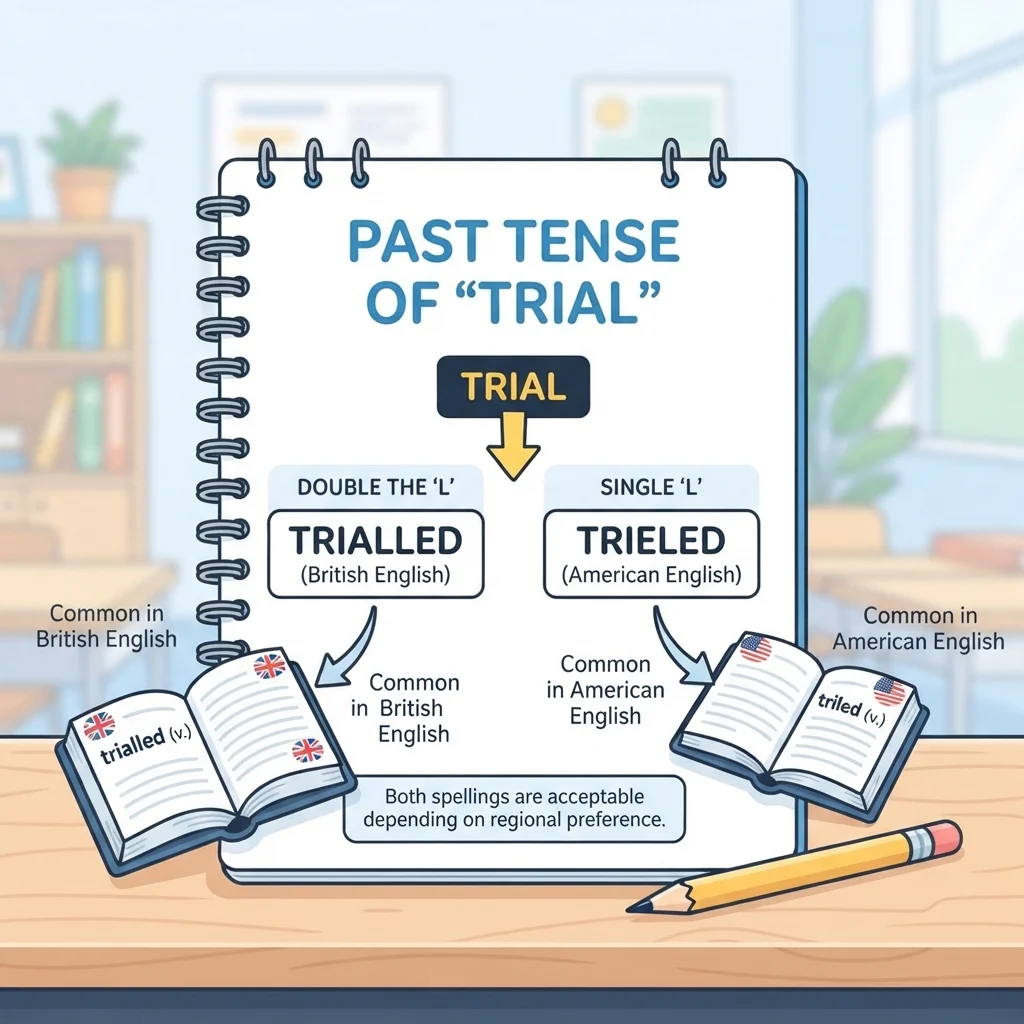
Trialled is the usual spelling in British English.
Trialed is the usual spelling in American English.
Both are correct. The choice depends mainly on the type of English you are using.
Examples
- British English: The company trialled the new software last month.
- American English: The company trialed the new software last month.
The meaning is exactly the same: tested something to see if it worked well.
| Spelling | Main Usage | Example |
|---|---|---|
| Trialled | British English | We trialled the new system. |
| Trialed | American English | We trialed the new system. |
So, if your audience uses British English, choose trialled. For American readers, trialed is usually the better choice.
The Origin of Trialled or Trialed

The word trial has a long history. It comes from Old French and Latin roots linked to ideas of testing, judging, and examining something.
Over time, trial became both a noun and a verb in English.
As a verb, trial means to test something before deciding whether it works or should be used.
For example:
The school decided to trial a new teaching method.
When the verb changes into the past tense, English spelling traditions create the difference between trialled and trialed.
British English often doubles the final consonant before adding -ed in certain words.
This gives:
trial + led → trialled
American English generally avoids doubling the final l in this word:
trial + ed → trialed
The difference is mainly a spelling convention. It does not create a difference in meaning.
British English vs American English Spelling
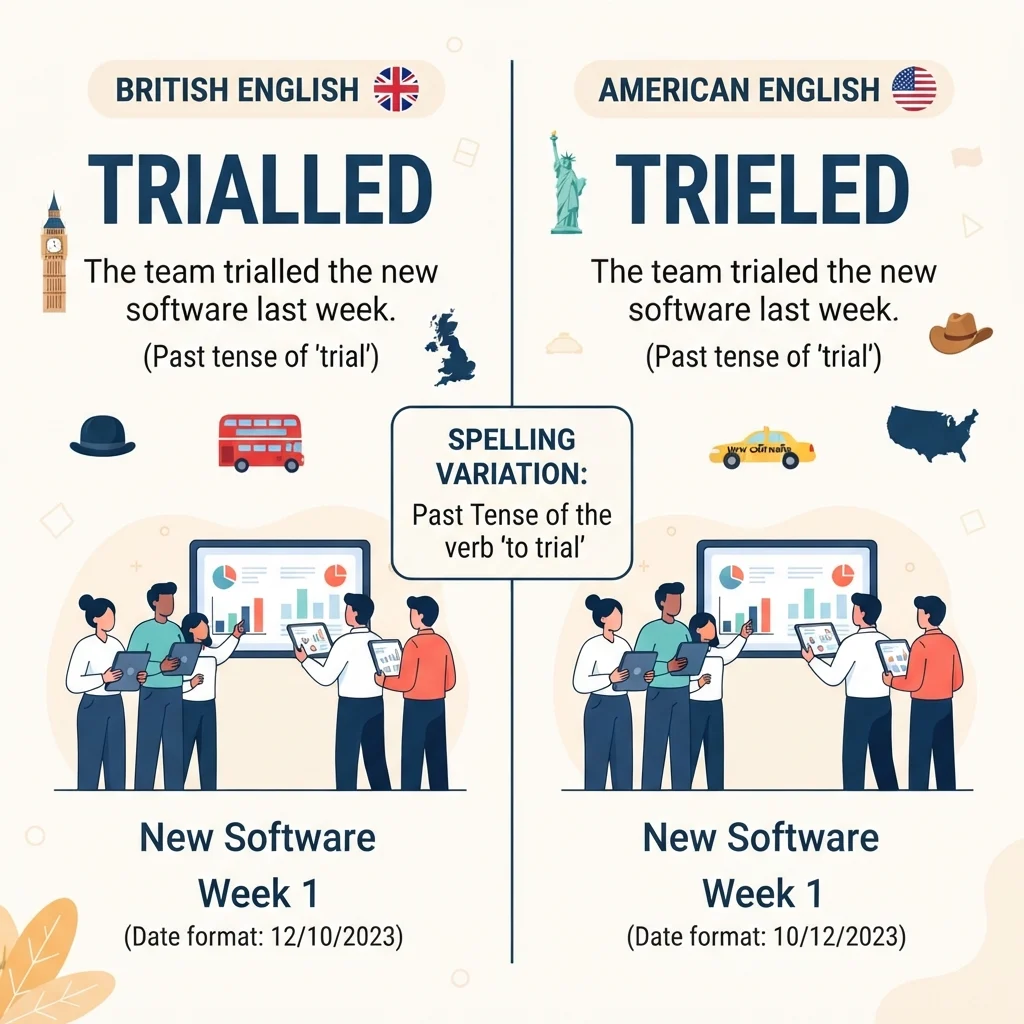
The most important difference is simple:
- British English → trialled
- American English → trialed
British spelling often keeps the doubled l in words formed from certain verbs.
American spelling tends to use one l in words such as trialed.
Comparison Table
| English Style | Correct Form | Example |
|---|---|---|
| British English | trialled | They trialled the product. |
| American English | trialed | They trialed the product. |
| British English | trialling | We are trialling the service. |
| American English | trialing | We are trialing the service. |
| Both | trial | They will trial the product. |
| Both | trials | Several trials were completed. |
The same pattern can appear with the -ing form.
British English
- trial
- trialled
- trialling
American English
- trial
- trialed
- trialing
The key point is consistency. If you begin a document using British spelling, keep using British spelling throughout that document.
Which Spelling Should You Use?
Your audience should guide your choice.
For a UK Audience
Use trialled.
Example:
The company trialled the new service in London.
This form is natural in British English.
For a US Audience
Use trialed.
Example:
The company trialed the new service in Boston.
This spelling fits standard American English.
For Commonwealth English
In countries where British English spelling is common, trialled is generally the safer choice.
This can include writing aimed at readers in places such as the UK, Australia, and other regions that commonly follow British spelling traditions.
For a Global Audience
Either form can work, but consistency matters most.
If your website mainly follows British spelling, use trialled. If it follows American spelling, use trialed.
Do not switch between the two forms randomly.
Common Mistakes with Trialled or Trialed
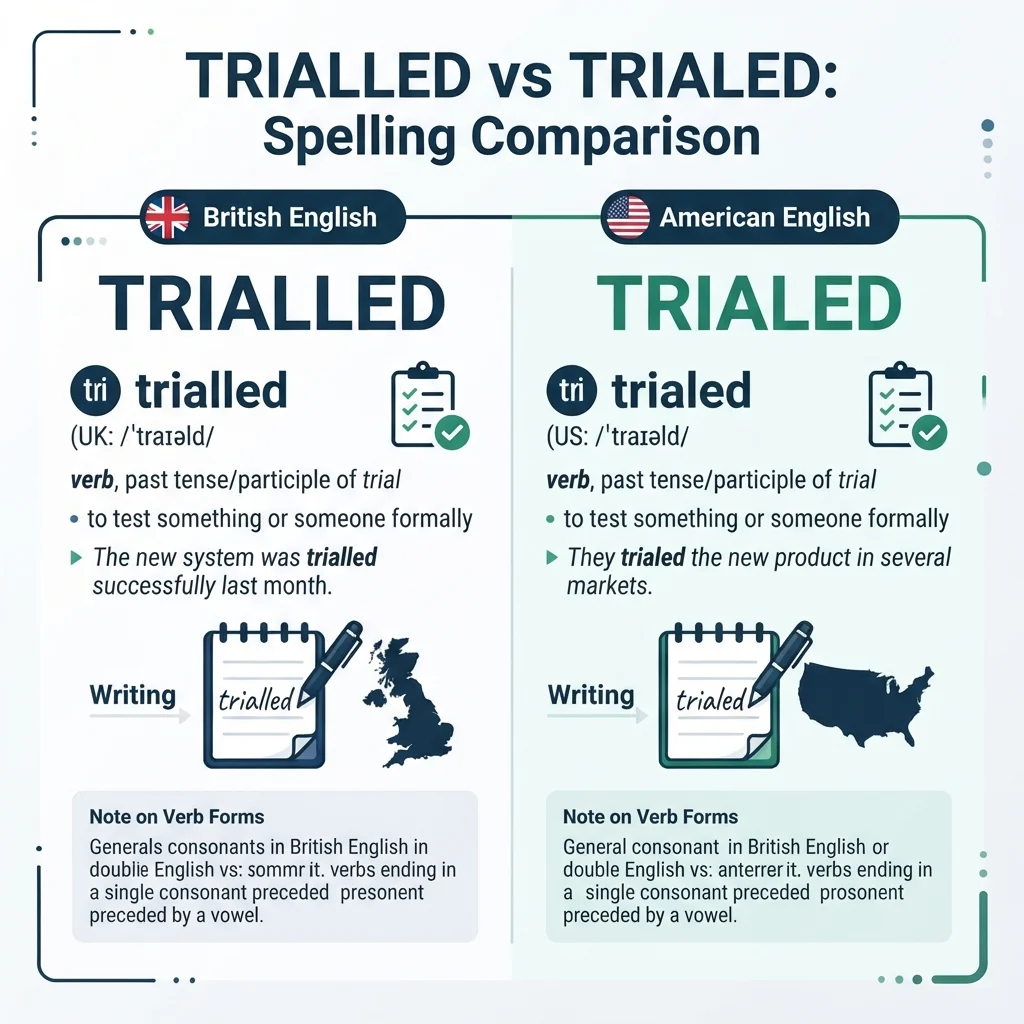
1. Thinking One Spelling Is Always Wrong
Both trialled and trialed are accepted English spellings.
The difference is mainly regional.
Incorrect idea:
“Trialed is always wrong.”
Better:
“Trialed is standard in American English.”
2. Mixing Spelling Styles
Avoid changing spelling styles in the same article.
Example to avoid:
We trialled the app and later trialed the new version.
If your article follows British English, write:
We trialled the app and later trialled the new version.
3. Using Trialling and Trialing Randomly
The same regional pattern applies to the present participle.
British: trialling
American: trialing
Choose one style and keep it throughout your writing.
4. Confusing Trial With Try
Trial means testing something, often in a planned or official way.
Try is more general.
Example:
The company trialled a new payment system.
This means the company tested the system.
5. Adding an Extra Letter
Do not create forms such as:
- trialledd
- trialleded
- triallingg
The correct forms are:
- trialled
- trialed
- trialling
- trialing
Trialled or Trialed in Everyday Examples

These spellings can appear in many types of writing.
In Emails
British English:
We trialled the new system this week, and the results were positive.
American English:
We trialed the new system this week, and the results were positive.
In News Writing
British English:
The city trialled a new traffic plan.
American English:
The city trialed a new traffic plan.
On Social Media
British English:
We finally trialled the new app!
American English:
We finally trialed the new app!
In Formal Writing
British English:
The organization trialled the program before introducing it nationwide.
American English:
The organization trialed the program before introducing it nationwide.
In Business Writing
British English:
The company trialled the service with a small group of customers.
American English:
The company trialed the service with a small group of customers.
In every example, the meaning stays the same.
Trialled or Trialed – Google Trends & Usage Data
Search interest for trialled or trialed is strongly connected to regional spelling.
In general, trialled is more closely associated with British English searches and writing. Trialed is more closely associated with American English.
The spelling you see online can also depend on the type of content.
For example:
- UK websites commonly use trialled.
- US websites commonly use trialed.
- International websites may use either form.
- Academic and business writing usually follows the style guide of its organization.
- Search results can contain both forms because the two spellings have the same meaning.
Search engines understand that trialled and trialed are spelling variants. You do not need to use both forms repeatedly in the same article.
For your own writing, the best approach is simple: match the spelling style used by your target readers and remain consistent.
Trialled vs Trialed: Side-by-Side Variations
| Form | British English | American English |
|---|---|---|
| Present tense | trial | trial |
| Past tense | trialled | trialed |
| -ing form | trialling | trialing |
| Noun | trial | trial |
| Plural noun | trials | trials |
| Meaning | Test something | Test something |
The biggest difference appears when -ed or -ing is added.
British: trial → trialled → trialling
American: trial → trialed → trialing
FAQs About Trialled or Trialed
1. Is trialled or trialed correct?
Both are correct. Trialled is commonly used in British English, while trialed is commonly used in American English.
2. Is trialled British spelling?
Yes. Trialled is the usual British English spelling of the past tense of trial.
3. Is trialed American spelling?
Yes. Trialed is the usual American English spelling.
4. Does trialled mean something different from trialed?
No. Both words have the same meaning. They are regional spelling variants.
5. Should I use trialled in UK writing?
Yes. If you are following British English, trialled is the natural choice.
6. Should I use trialed for American readers?
Yes. Trialed generally fits American English spelling conventions.
7. Is trialling or trialing correct?
Both can be correct. Trialling is commonly used in British English, while trialing is commonly used in American English.
Conclusion
The choice between trialled or trialed is mainly a matter of English spelling style. Both forms are correct and both mean that something was tested or used on a trial basis.
Use trialled when writing in British English. Use trialed when writing in American English. The same difference appears with the -ing forms: British English uses trialling, while American English uses trialing.
The most important rule is to stay consistent. Do not switch between British and American spelling without a reason. Your choice should match your readers, website, school, workplace, or preferred style guide.
If you write for a UK or British-English audience, trialled is usually the form you want. For US readers, trialed is generally the better fit.
So, when you see trialled or trialed, remember: both are correct; the spelling depends on the variety of English you are using.

Stella Gibbons writes creative English captions for funcaptionz.com, blending wit, clarity, and short ideas to inspire readers across social platforms daily use









