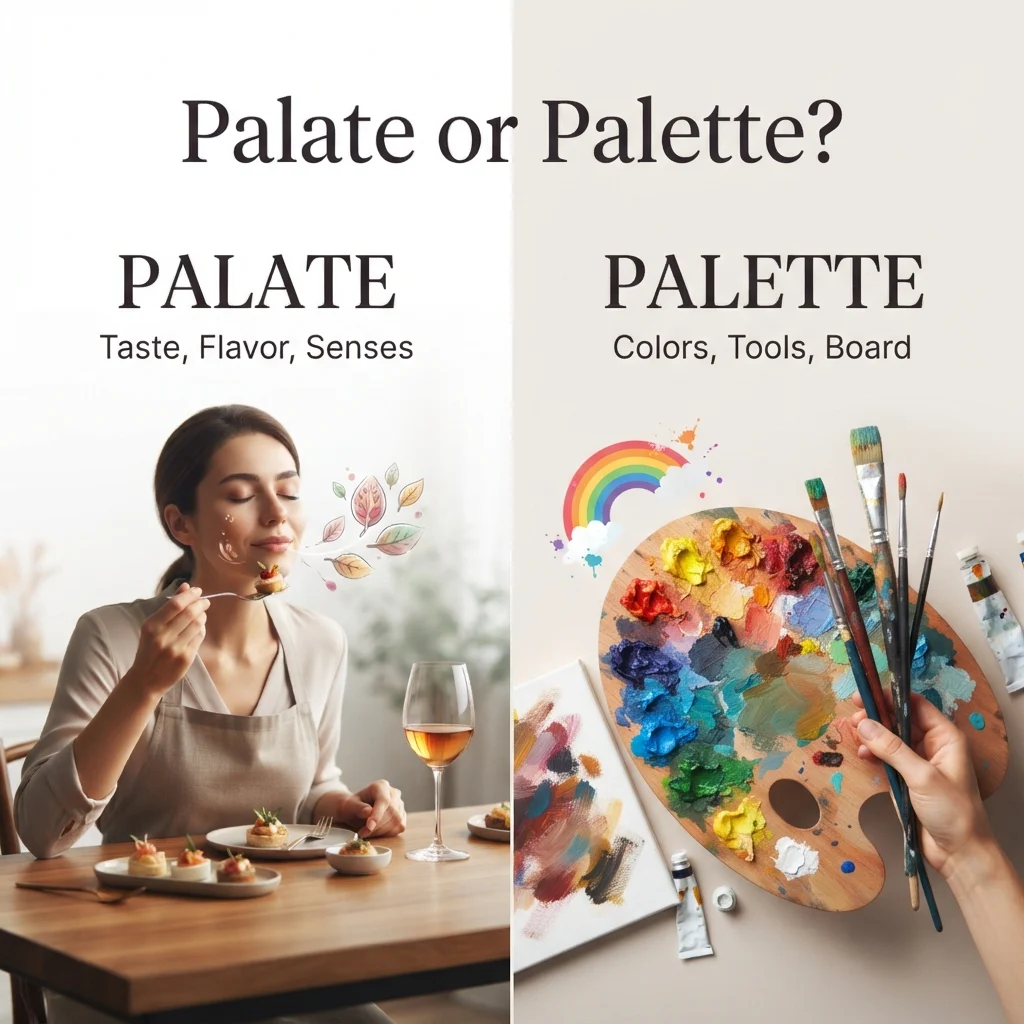
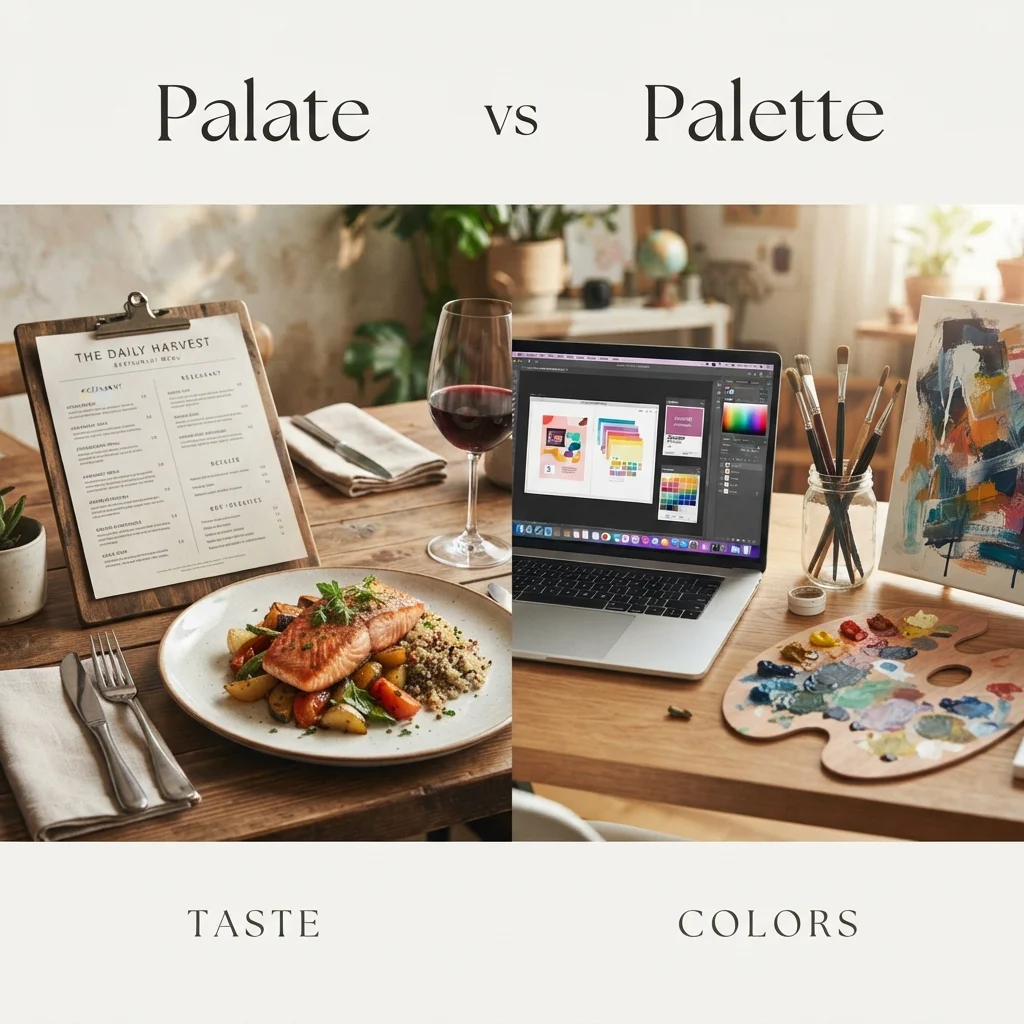
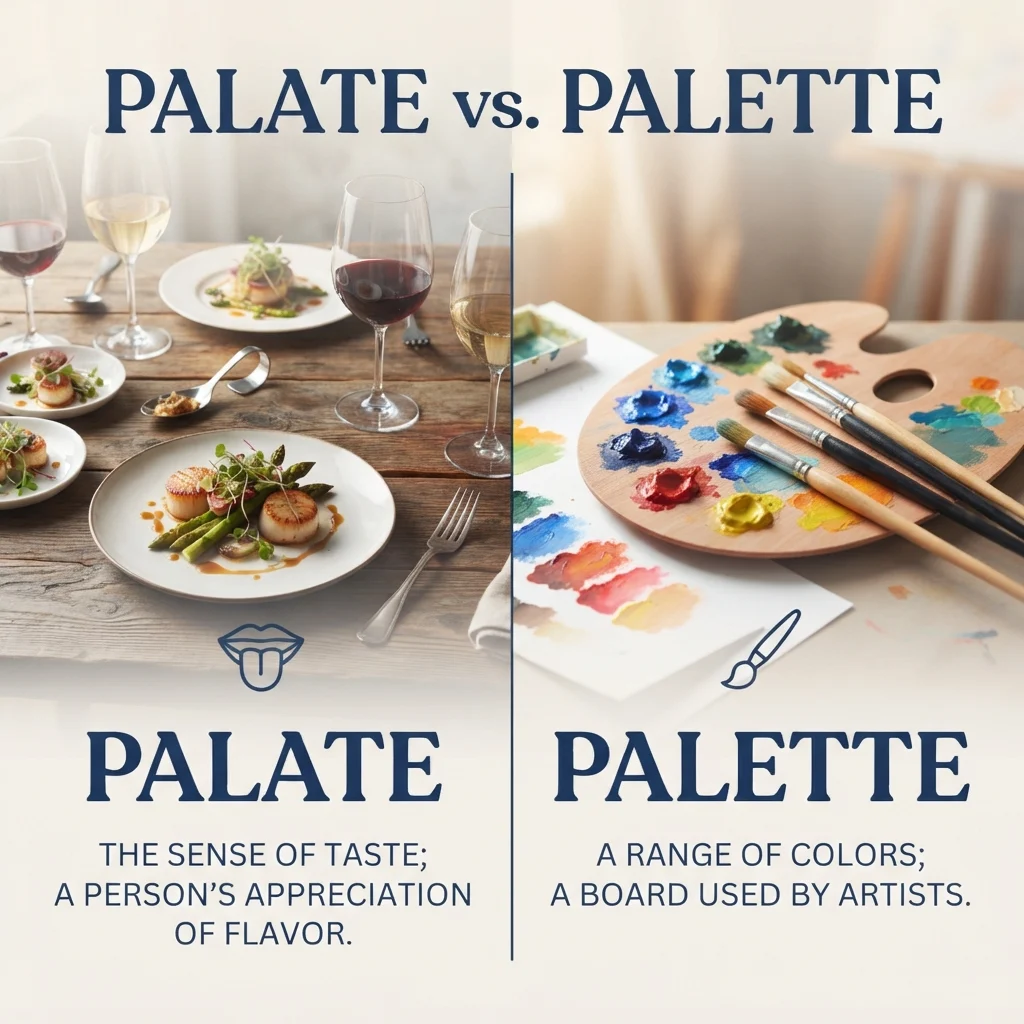
Palate means your sense of taste, while palette means a range of colors or a set of colors used by an artist or designer.
Although “palate” and “palette” sound the same, they have different meanings, spellings, and uses.
Remember: palate is connected to taste, while palette is connected to colors.
Have you ever paused over palate or palette and wondered which spelling belongs in your sentence? These commonly confused words are easy to mix up because they sound alike, but their meanings are completely different. One is used when talking about taste and food, while the other is used for colors, art, and design.
In this guide, you’ll learn the difference between palate and palette, including their meanings, origins, correct usage, common mistakes, and everyday examples. You’ll also see how each word works in real sentences, making the distinction easier to remember.
Whether you’re describing a chef’s refined palate or choosing a color palette for a painting, understanding these two words will help you use the right spelling every time.
Palate or Palette meanings
Palate means the roof of your mouth or your sense of taste.
Example:
The chef created a dish that pleased my palate.
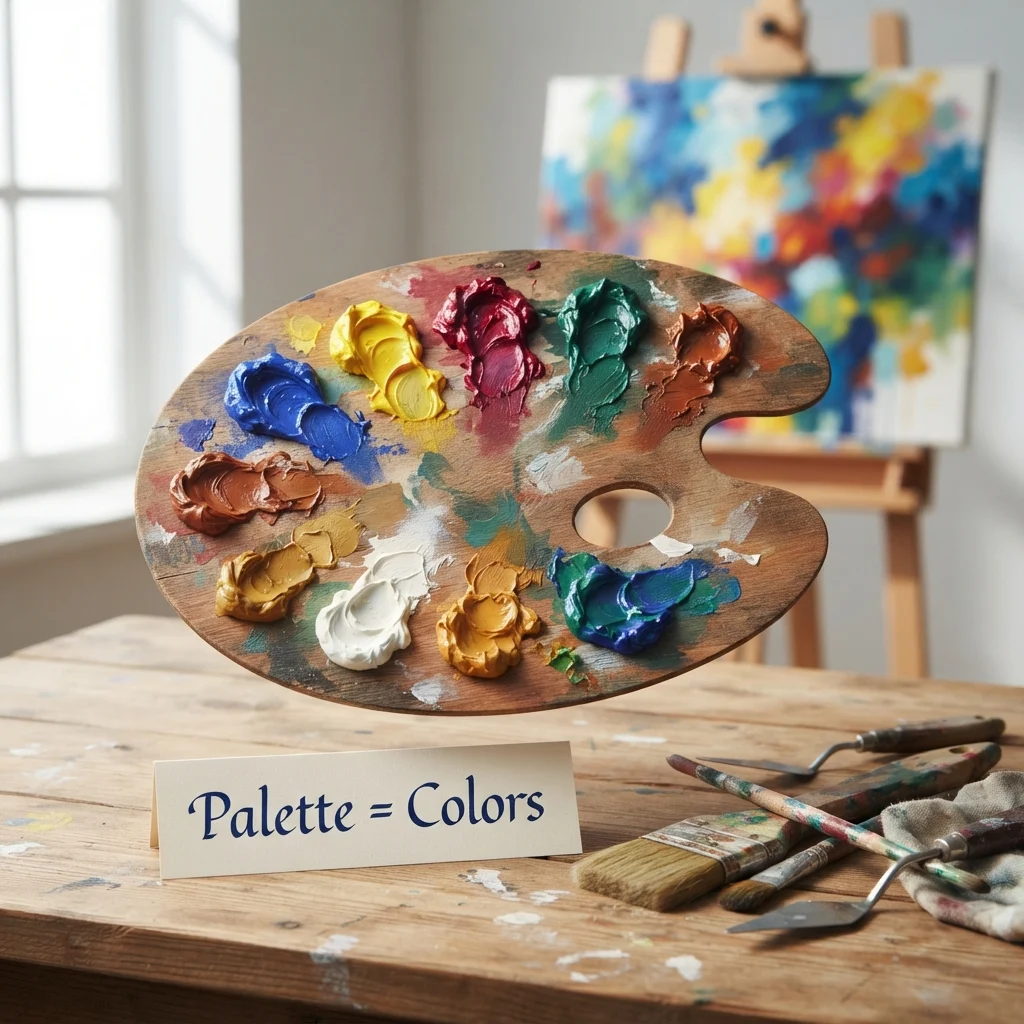
Palette means a set or range of colors used in art, design, fashion, or digital work.
Example:
The designer chose a warm color palette.
Easy way to remember
- Palate = taste or mouth
- Palette = colors
- Palette has an extra t, just like an artist may use many colors together.
So, if you are talking about food or taste, use palate.
If you are talking about colors, use palette.
The Origin of Palate or Palette
The words palate and palette have different histories, even though they look and sound very similar today.
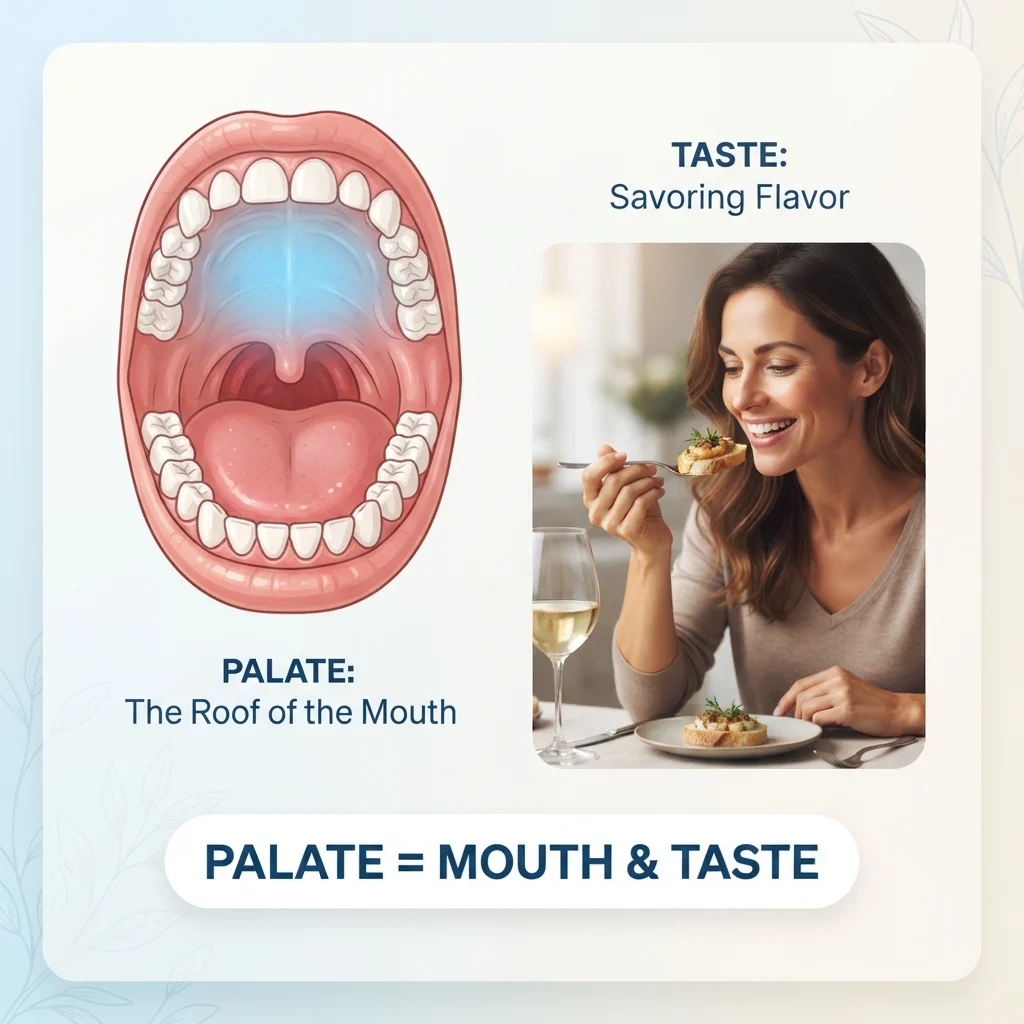
Palate comes from the Latin word palatum, meaning the roof of the mouth. It entered English through Old French. Over time, its meaning also became linked with a person’s sense of taste.
For example:
The spicy sauce was too strong for my palate.
Here, palate refers to the person’s taste.
Palette has a different history. It comes from French palette, meaning a small board or slab used by painters to hold and mix colors. The French word is related to pale, meaning a shovel or blade-like object.
The spelling difference exists because the words came from different language roots. Their similar pronunciation can make them confusing, but their meanings remain separate.
A simple history lesson can therefore make the spelling easier:
Palate → mouth and taste
Palette → artist’s colors
British English vs American English Spelling
There is an important point here: British English and American English use the same spellings for palate and palette.
Unlike words such as colour/color or favourite/favorite, these two words do not normally change spelling between British and American English.
| Meaning | British English | American English |
|---|---|---|
| Roof of the mouth | palate | palate |
| Sense of taste | palate | palate |
| Set of artistic colors | palette | palette |
| Color range in design | palette | palette |
Examples in British English
- The meal was pleasing to my palate.
- The artist used a bright color palette.
Examples in American English
- The spices may be too strong for some palates.
- The website uses a simple blue and white palette.
So, you do not need to change these spellings based on whether your reader is from the UK or the US.
Insight or Insite: Which Spelling Is Correct? Meaning & Use 🔍
Which Spelling Should You Use?
Your choice depends on what you mean, not where your reader lives.
For food and taste
Use palate.
Example:
The restaurant offers flavors for every palate.
For art and colors
Use palette.
Example:
The painter selected a dark blue palette.
For design and branding
Use palette.
Example:
The brand uses a neutral color palette.
For professional writing
Use the word that matches your meaning. Both palate and palette are standard English words, so neither is more correct by region.
For a global audience, the same rule works:
Taste = palate
Colors = palette
Common Mistakes with Palate or Palette
Because the words sound similar, several mistakes are common.
Mistake 1: Using palette for taste
❌ The spicy food pleased my palette.
✅ The spicy food pleased my palate.
The sentence is about taste, so palate is correct.
Mistake 2: Using palate for colors
❌ The designer selected a soft pastel palate.
✅ The designer selected a soft pastel palette.
The sentence is about colors, so palette is correct.
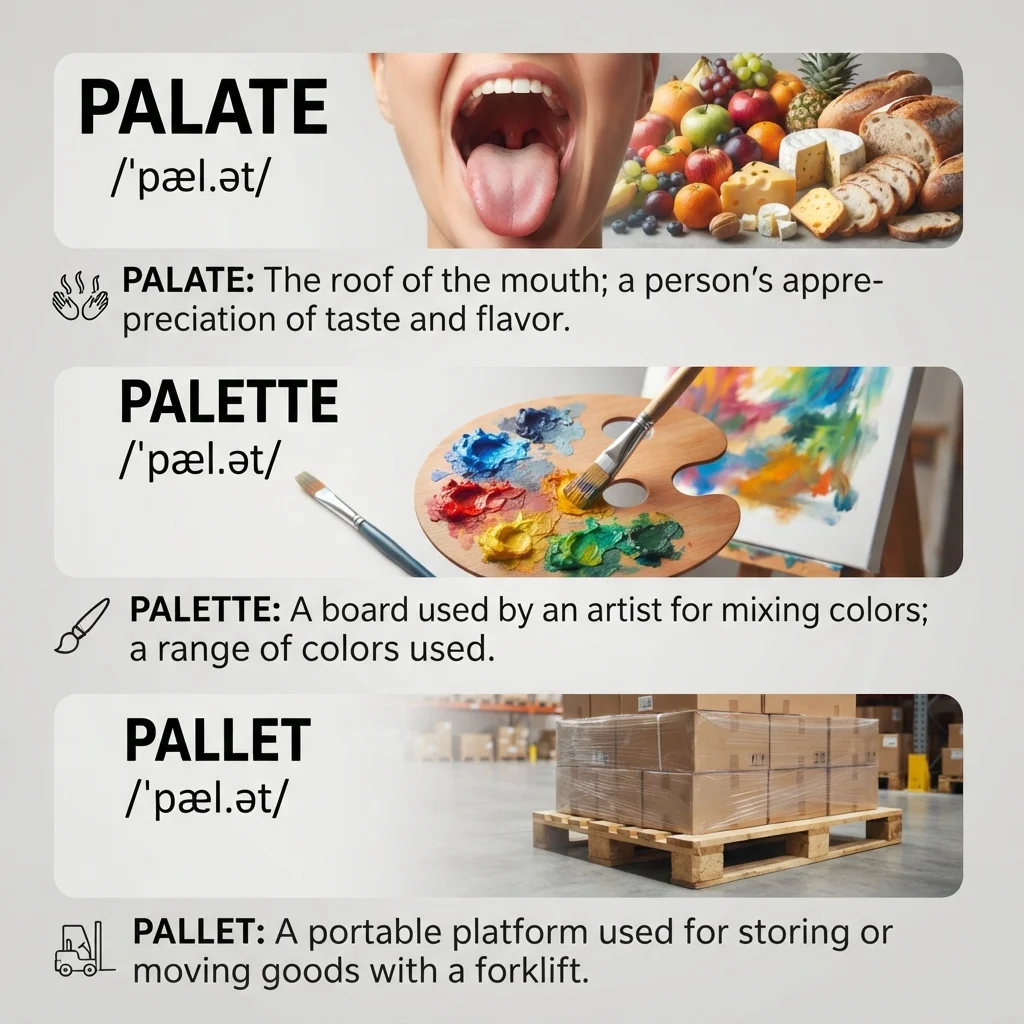
Mistake 3: Confusing both words with “pallet”
There is another word that looks similar: pallet.
Pallet usually means a flat platform used for moving or storing goods.
So:
- Palate = mouth or taste
- Palette = colors
- Pallet = platform for goods
Mistake 4: Adding unnecessary spelling changes
Some writers may think American and British English use different forms of these words. They do not.
❌ pallete
❌ palete
❌ palet
✅ palate
✅ palette
Palate or Palette in Everyday Examples
Understanding real-life examples makes the difference easier to remember.
In Emails
Palate:
The menu offers several dishes to suit different palates.
Palette:
Please review the new color palette for the presentation.
In News Writing
Palate:
The new restaurant is attracting diners with bold flavors that suit different palates.
Palette:
The designer introduced a fresh color palette for the campaign.
On Social Media
Palate:
This dessert is a dream for anyone with a sweet palate.
Palette:
I love this soft pink and cream palette!
In Formal Writing
Palate:
The dish provides a balanced combination of flavors for the modern palate.
Palette:
The report uses a professional blue and gray color palette.
In Food Writing
Palate:
The rich sauce creates a smooth and pleasant palate.
In Art Writing
Palette:
The painter used a muted palette to create a calm mood.
Palate or Palette – Google Trends & Usage Data
Search interest for palate and palette can vary by country and by topic.
Palate often appears in searches connected with:
- Food
- Taste
- Cooking
- Restaurants
- Wine
- Flavor
- Dining
Palette is more common in searches connected with:
- Art
- Graphic design
- Color combinations
- Fashion
- Interior design
- Branding
- Digital design
The words can also appear together in spelling and grammar searches because users often want to know which form is correct.
Search patterns may change over time as trends in food, design, fashion, and online content change. However, the basic meaning remains stable.
A useful rule is to look at the topic around the word. If the topic is food or taste, palate is likely the word you need. If the topic is colors or design, palette is likely correct.
Palate vs Palette: Keyword Variations
| Word or Phrase | Meaning | Example |
|---|---|---|
| palate | Roof of the mouth | The palate helps with eating and speaking. |
| palate | Sense of taste | The dish pleased my palate. |
| palates | More than one sense of taste | The restaurant serves many palates. |
| palette | Set of colors | The artist chose a bright palette. |
| color palette | Group of selected colors | The website has a warm color palette. |
| paint palette | Surface for mixing paint | She mixed the colors on her palette. |
| palette of colors | Range of colors | The designer created a soft palette of colors. |
| pallet | Platform for goods | The boxes were placed on a wooden pallet. |
FAQs About Palate or Palette
1. Is it palate or palette for taste?
Use palate when you mean taste or the roof of the mouth.
Example: The meal was perfect for my palate.
2. Is it palate or palette for colors?
Use palette when talking about a group or range of colors.
Example: The artist used a bright color palette.
3. Are palate and palette pronounced the same?
They are commonly pronounced very similarly, which is one reason they are easy to confuse.
4. Is palette British or American?
Palette is used in both British and American English. The spelling does not normally change.
5. Is palate British or American?
Palate is also standard in both British and American English.
6. What is the difference between palate, palette, and pallet?
Palate relates to the mouth or taste. Palette relates to colors. Pallet is a platform used for storing or moving goods.
7. How can I remember the difference?
Think palate = taste and palette = colors. The extra t in palette can help you remember the word used by artists and designers.
Conclusion
The difference between palate or palette is much easier once you connect each word with its meaning. Palate refers to the roof of the mouth and is also used for a person’s sense of taste. Palette refers to a collection or range of colors, especially in art, design, fashion, and digital work.
The two words have different origins, even though they look and sound similar. They also use the same spellings in British and American English, so regional spelling is not the main issue. The real question is what you are trying to describe.
When writing about food, flavor, or taste, choose palate. When writing about colors, painting, branding, or design, choose palette. And remember pallet, which has a separate meaning related to goods and storage.
Once you remember palate = taste and palette = colors, this common spelling confusion becomes simple to avoid.

Walter de la Mare writes creative English captions for funcaptionz.com, sharing short ideas, thoughtful wording, and expressive lines for modern readers.









