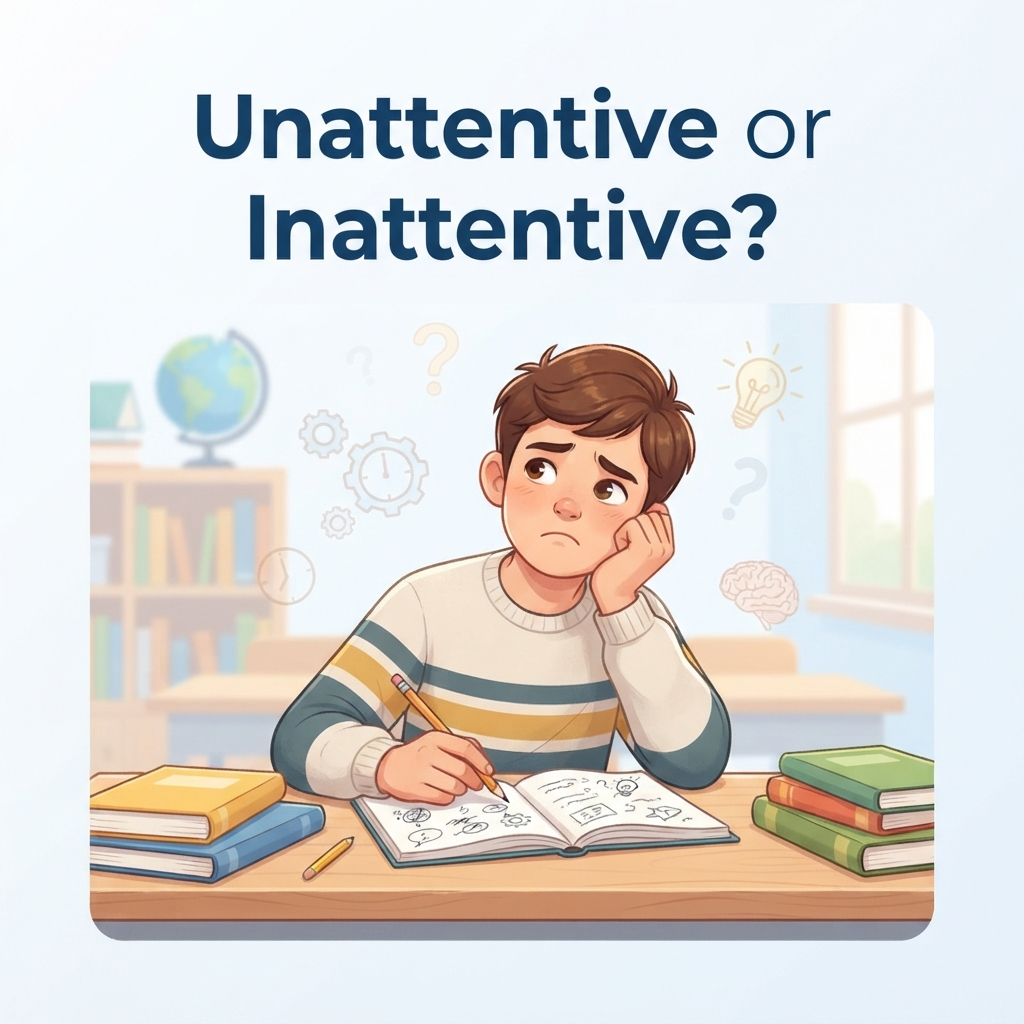
Both “unattentive” and “inattentive” are correct English words, but “inattentive” is more commonly used when describing someone who is not paying attention or noticing something.
Unattentive or inattentive—which one should you use? This small word-choice question can be surprisingly confusing because both forms are real English words. The good news is that you do not need to guess. Inattentive is the more common choice when you mean someone is not paying attention, listening carefully, or focusing on what is happening.
For example, “The student was inattentive during the lesson” means the student was not paying enough attention. Unattentive can also describe a lack of attention, but it is less common in everyday usage and may emphasize being careless or failing to give someone or something proper attention.
So, are the two words interchangeable? Sometimes, but not always. Their meanings overlap, while their usage and frequency can differ depending on the sentence and context. Understanding this distinction can help you choose the word that sounds natural and communicates your exact meaning.
If you’ve ever paused while writing and wondered whether “unattentive or inattentive” is the better choice, you’re not alone. Many English learners and writers encounter this confusion because the prefixes “un-” and “in-” can both appear to create negative meanings.
In this guide, you’ll learn the meaning of unattentive and inattentive, how they differ, which one is more common, when to use each word, correct sentence examples, common mistakes, and the simplest way to remember the difference. By the end, you’ll be able to choose the right word confidently without second-guessing your sentence.
Unattentive or Inattentive meanings
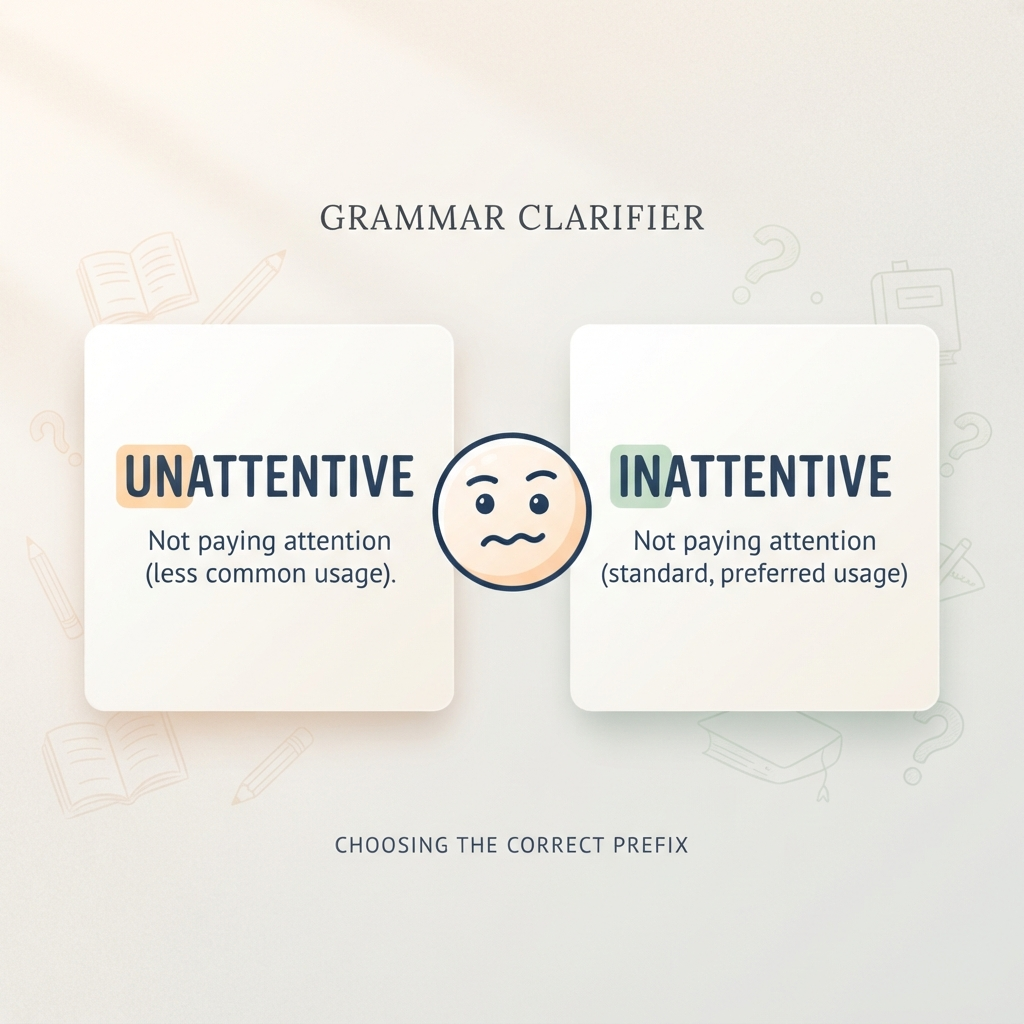
Both “unattentive” and “inattentive” are correct English words.
They both mean not paying attention or not giving enough attention.
Unattentive
Unattentive means failing to pay attention or showing little attention.
Example:
The student was unattentive during the lesson.
Inattentive
Inattentive also means not paying attention or not being careful.
Example:
The driver was inattentive while driving.
Which one is more common?
Inattentive is often preferred in formal writing. It is common in education, professional writing, reports, and careful descriptions.
Unattentive is also correct and natural. It can sound more direct and is often used in everyday English.
So, you do not need to worry about one being completely wrong. The main difference is style and context, not basic meaning.
The Origin of Unattentive or Inattentive
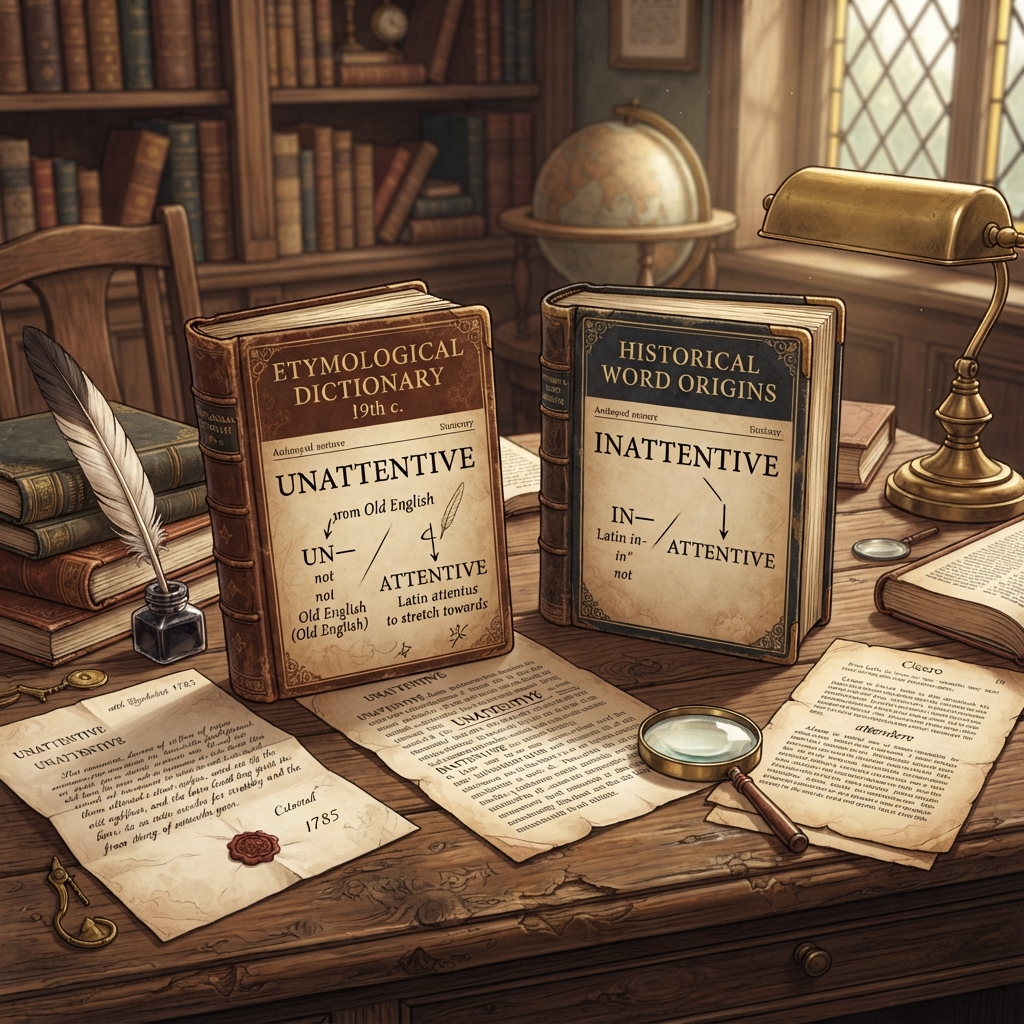
The two words come from different negative prefixes.
Unattentive is formed from un- + attentive.
The prefix un- is an old English prefix used to show the opposite of something. For example:
- happy → unhappy
- kind → unkind
- careful → uncareful
- attentive → unattentive
Inattentive comes from in- + attentive.
The prefix in- comes from Latin and can mean not or opposite of. It appears in many English words, such as:
- active → inactive
- complete → incomplete
- direct → indirect
- attentive → inattentive
The word attentive comes from Latin roots linked to giving attention or paying close notice.
English has borrowed words from many languages over hundreds of years. This is one reason we have different negative prefixes that can create similar meanings.
The spelling difference is therefore not simply a mistake. Unattentive and inattentive developed through different word-building patterns.
British English vs American English Spelling
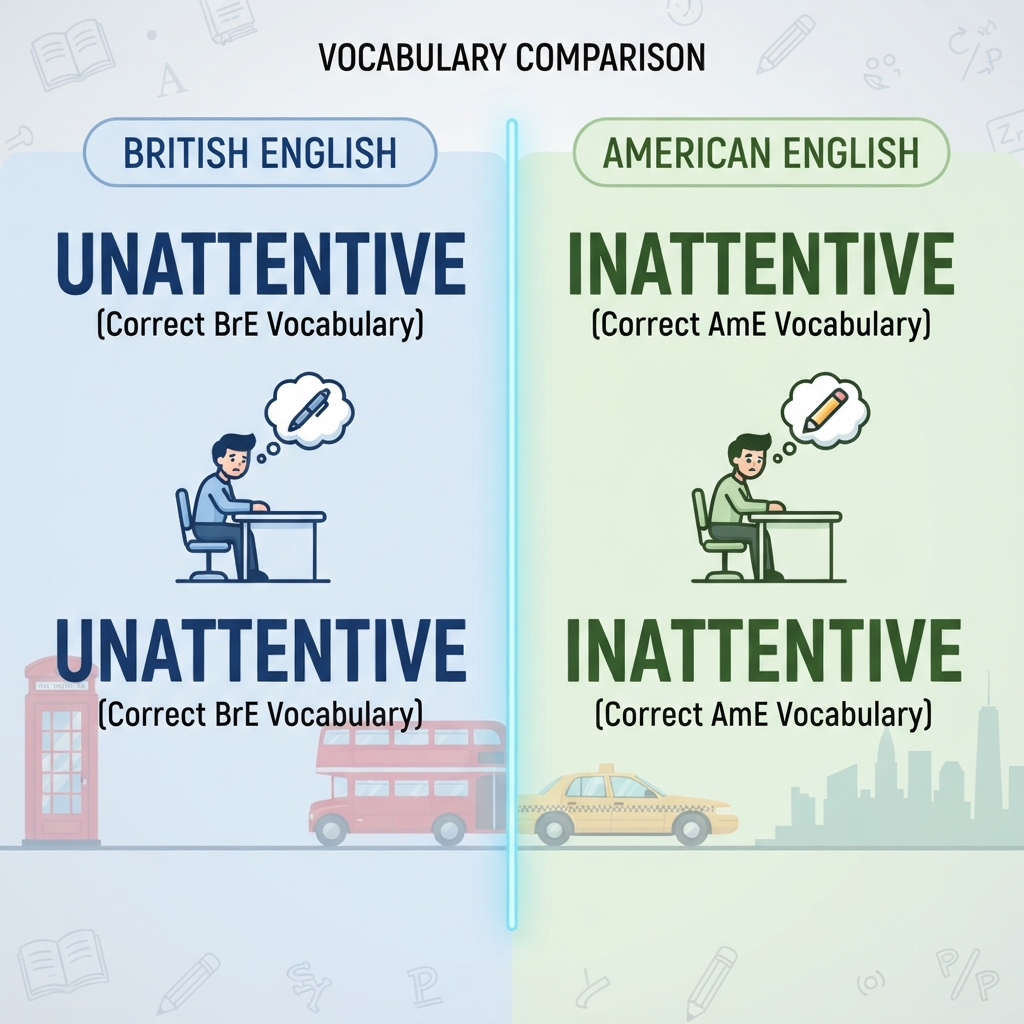
There is no major British-versus-American spelling change between unattentive and inattentive.
Both forms can be found in British and American English.
| Word | British English | American English | Meaning |
|---|---|---|---|
| Unattentive | Correct | Correct | Not paying attention |
| Inattentive | Correct | Correct | Not paying attention |
| Attentive | Correct | Correct | Paying close attention |
Unlike words such as colour/color or organise/organize, these two words do not follow a simple UK-versus-US spelling rule.
The choice is mainly based on word preference, sentence style, and context.
For example:
British English:
The child appeared inattentive in class.
American English:
The employee seemed inattentive during the meeting.
Both sentences are grammatically correct.
Which Spelling Should You Use?
The best choice depends on your audience and the type of writing.
For American English
Inattentive is a safe choice, especially in formal or professional writing.
Example:
The employee was inattentive during the training session.
For British English
Both unattentive and inattentive are acceptable.
Choose the word that sounds natural in your sentence and matches the style of the surrounding text.
For Commonwealth English
Both forms can be used. Inattentive is useful when you want a more formal tone.
For Global English
If your readers come from different countries, inattentive may be the clearest choice for formal content.
The most important rule is simple: do not treat “unattentive” as a misspelling of “inattentive.” Both are valid words.
Common Mistakes with Unattentive or Inattentive
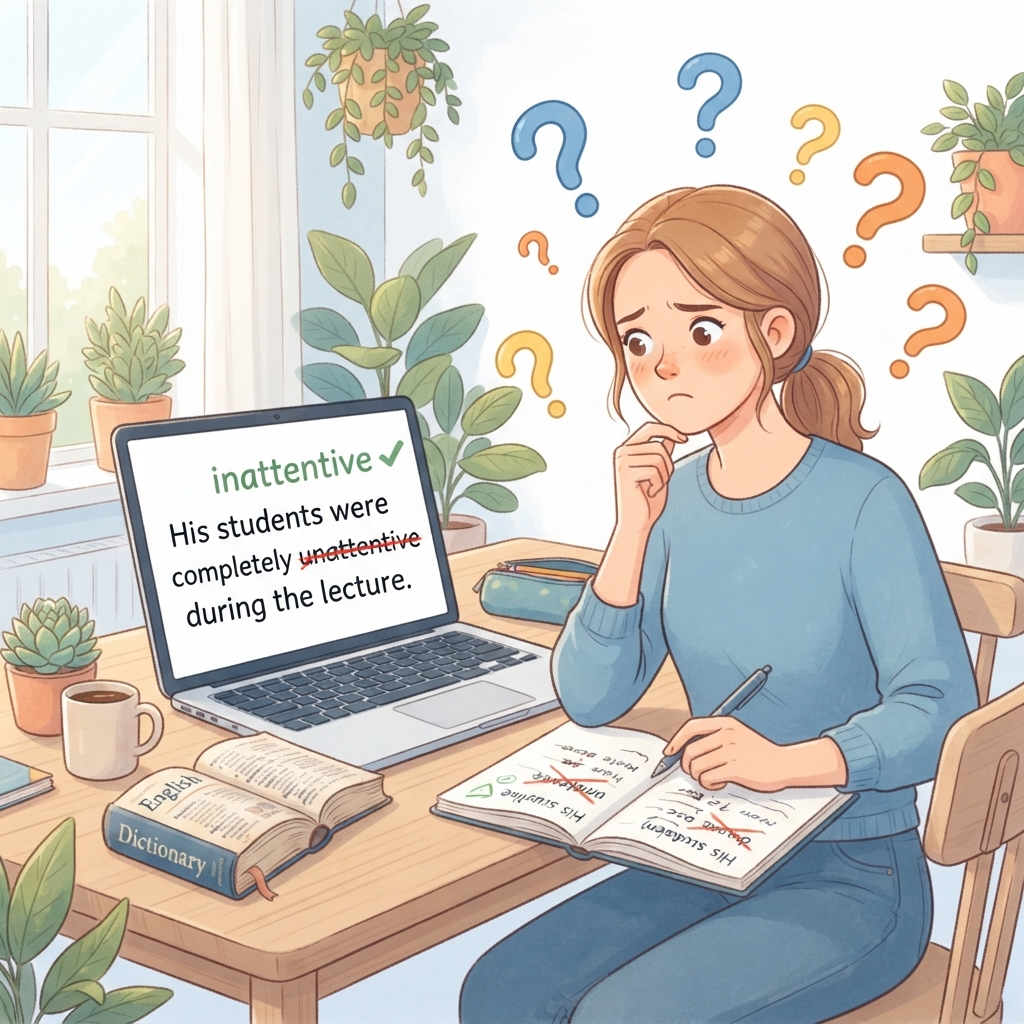
Because the words are so similar, writers often make a few mistakes.
Mistake 1: Thinking “unattentive” is wrong
Wrong idea:
“Unattentive” is not a real word.
Correction:
“Unattentive” is a valid English word.
Mistake 2: Thinking “inattentive” is always wrong
Wrong idea:
Only “unattentive” should be used.
Correction:
“Inattentive” is also correct and widely used.
Mistake 3: Using both words together
Avoid unnecessary repetition.
Incorrect:
The inattentive and unattentive student missed the lesson.
Better:
The inattentive student missed the lesson.
Mistake 4: Confusing attentive with inattentive
Remember:
Attentive = paying attention
Inattentive = not paying attention
Example:
The attentive student listened carefully.
Example:
The inattentive student looked out the window.
Unattentive or Inattentive in Everyday Examples

These words can appear in many types of writing.
In Emails
Example:
I apologize for being inattentive during our discussion.
This sounds polite and professional.
In News Writing
Example:
The report said the driver was inattentive before the accident.
Here, inattentive gives a clear description.
On Social Media
Example:
Sorry, I was a little inattentive today!
The word can describe someone who was distracted or not fully focused.
In Formal Writing
Example:
The report noted that several employees were inattentive during the training.
Inattentive works well in formal reports and academic-style writing.
In School
Example:
The teacher noticed that one student was inattentive during class.
In Everyday Conversation
Example:
I was unattentive and missed what you said.
Here, unattentive sounds natural and direct.
Unattentive or Inattentive – Google Trends & Usage Data
Search interest for “unattentive or inattentive” comes mainly from people who are unsure which form to use.
The search intent is usually about:
- Correct spelling
- Word meaning
- Grammar
- English usage
- Difference between similar words
- Formal writing
- British and American English
The two words are both established English vocabulary, but inattentive is generally the more familiar choice in formal contexts.
Usage can also change by country, writing style, and subject. Education, workplace writing, psychology-related descriptions, and formal reports often use inattentive.
Unattentive is also used correctly, especially when writers want a simple description of someone who is not paying attention.
Because language use changes over time, search popularity should not be treated as a rule for correct spelling. A word can have lower search interest and still be completely correct.
Unattentive vs Inattentive: Comparison Table
| Feature | Unattentive | Inattentive |
|---|---|---|
| Correct word? | Yes | Yes |
| Basic meaning | Not paying attention | Not paying attention |
| Spelling | un + attentive | in + attentive |
| Formal writing | Suitable | Very suitable |
| Everyday English | Suitable | Suitable |
| British English | Correct | Correct |
| American English | Correct | Correct |
| Main difference | Style and word preference | Style and word preference |
The key point is that neither spelling should automatically be marked as wrong.
FAQs About Unattentive or Inattentive
1. Is inattentive a correct word?
Yes. Inattentive is a correct English word meaning not paying attention.
2. Is unattentive a correct word?
Yes. Unattentive is also a correct English word with a similar meaning.
3. What is the difference between unattentive and inattentive?
Both mean not paying attention. The main difference is their word formation and style. “Inattentive” is often preferred in formal contexts.
4. Is inattentive more formal than unattentive?
It can sound more formal in many contexts. However, unattentive is still correct and can be used in both everyday and formal writing.
5. Should I use inattentive in American English?
Yes, inattentive is a safe and natural choice in American English, especially for formal writing. “Unattentive” is also correct.
6. Should I use inattentive or unattentive in British English?
Both are acceptable. Choose the one that fits your sentence and writing style.
7. Is unattentive a misspelling of inattentive?
No. Unattentive is not a misspelling. It is a valid word with the same basic meaning.
Conclusion
When choosing between unattentive or inattentive, you do not need to worry about choosing between a correct word and a spelling mistake. Both words are correct. They both describe someone who is not paying attention or giving enough attention.
The main difference comes from how the words were formed. Unattentive uses the prefix “un-,” while inattentive uses “in-.” Both prefixes can create a negative meaning.
For formal, professional, academic, or global writing, inattentive is a strong and natural choice. However, unattentive is also perfectly acceptable when it fits your sentence.
The simple rule is: use attentive when someone pays attention, and use inattentive or unattentive when they do not. Always consider your audience and keep your wording consistent.

Storm Jameson writes engaging English captions for funcaptionz.com, sharing creative wording, short ideas, and expressive lines for modern readers online Today.









