Dissociating or disassociating: “dissociating” is usually correct when you mean becoming disconnected from your thoughts, feelings, or surroundings, while “disassociating” means separating from an association or connection.
Dissociating or disassociating—which word should you actually use? These two words look almost identical, but choosing the wrong one can completely change your meaning. The good news is that the difference is easier to understand once you know what each word describes.
Dissociating is commonly used when someone is experiencing disconnection from their thoughts, feelings, memories, identity, or surroundings. For example: “I felt like I was dissociating during the stressful situation.”
Disassociating generally refers to separating or distancing someone or something from an association, connection, or relationship. For example: “The organization is disassociating itself from the statement.”
So, if you’re describing psychological or emotional disconnection, dissociating is generally the word you want. If you’re talking about ending or distancing an association, disassociating may be appropriate.
In this guide, you’ll discover the exact difference between dissociating or disassociating, their meanings, correct usage, examples, and common mistakes—so you can choose the right word confidently every time.
Dissociating or Disassociating meanings
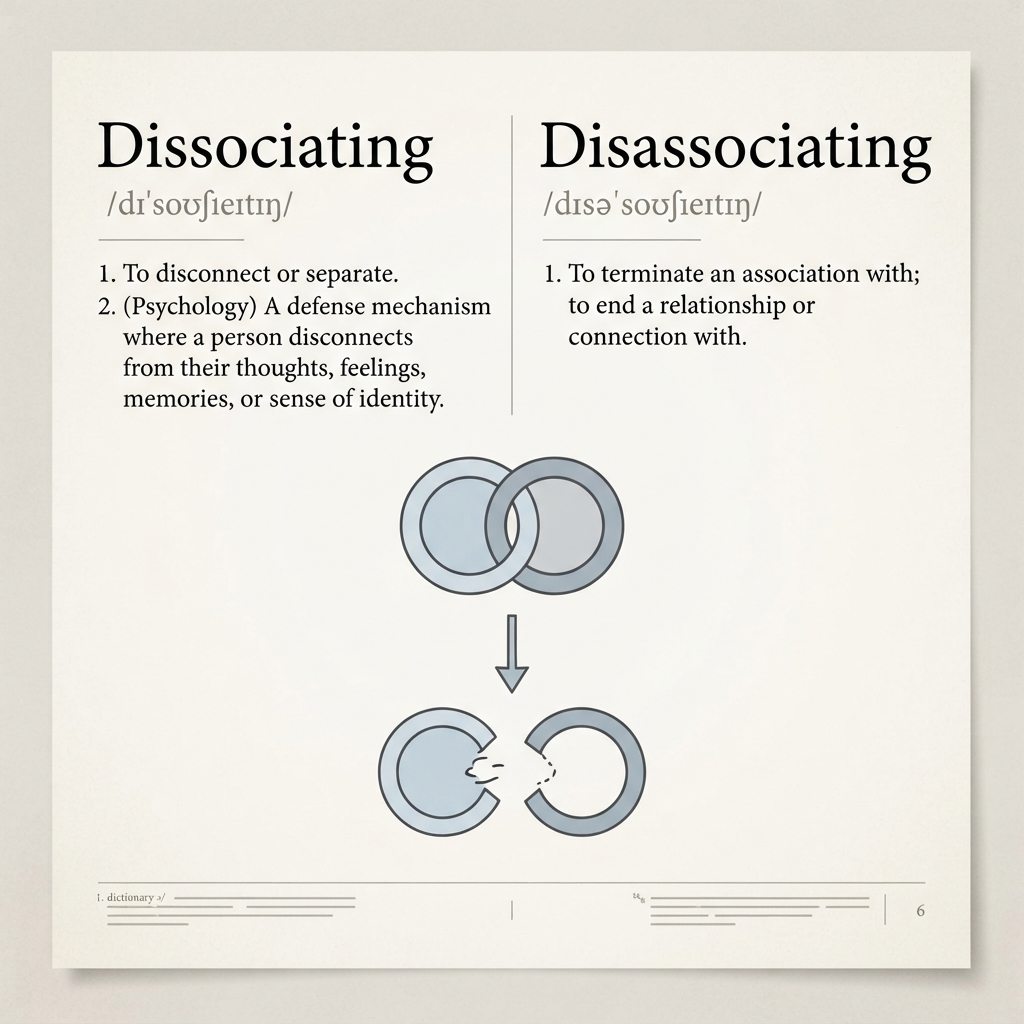
Both dissociating and disassociating are valid English words.
Dissociating is the more common form in many general contexts. It means separating or becoming separated from something.
Disassociating also means separating from an association, connection, or relationship. It can place more focus on ending or removing an association.
Examples
- The company is dissociating itself from the controversial statement.
- He is dissociating himself from the group.
- The organization is disassociating itself from the former member.
- She is dissociating the two ideas in her explanation.
For most general writing, dissociating is a natural choice when you mean separating or becoming separate.
However, disassociating is not automatically wrong. The best choice depends on the meaning and context.
The Origin of Dissociating or Disassociating
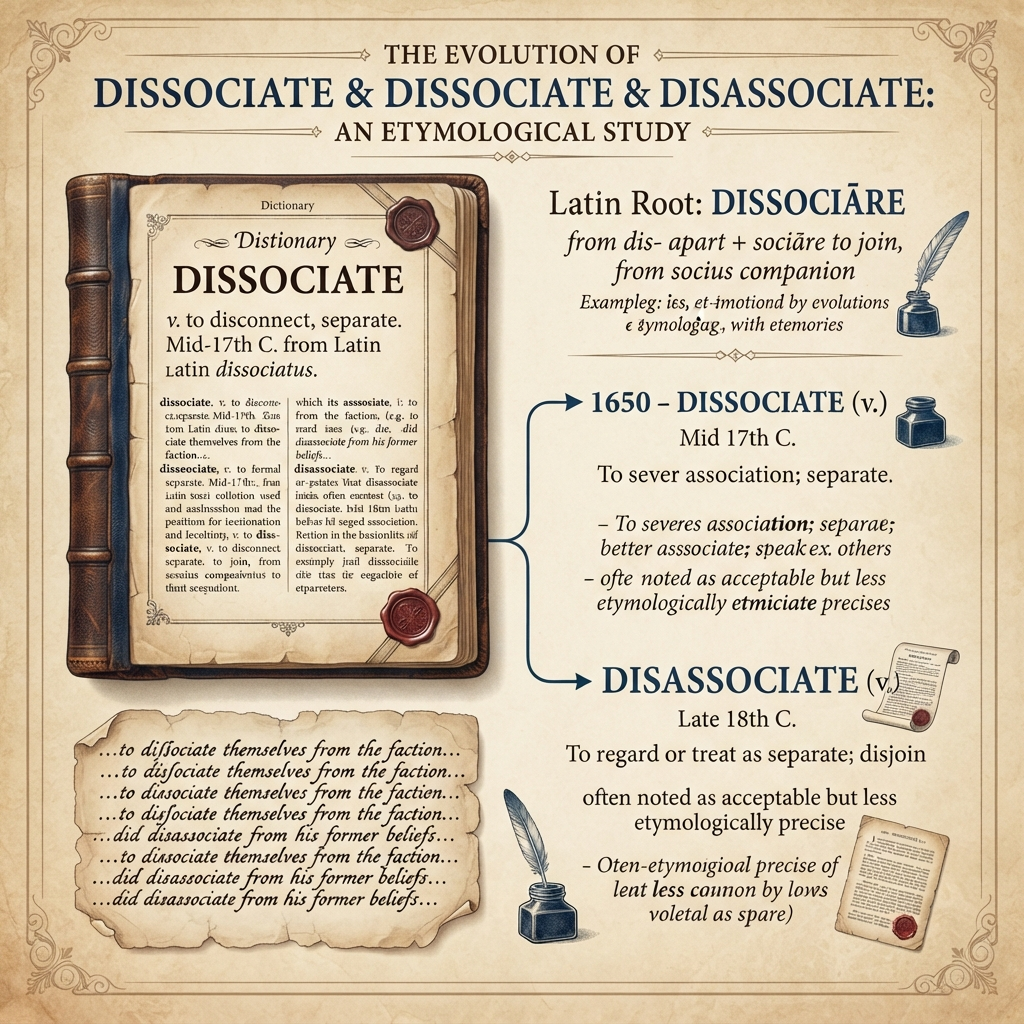
The word dissociating comes from dissociate, which is related to the Latin word dissociare. It carries the idea of separating things that were previously connected.
The word contains the prefix dis-, which can suggest separation, removal, or apartness. It is related to words such as disconnect, disjoin, and disengage.
Dissociate entered English several centuries ago. Over time, it became established as a standard word for separating or removing a connection.
Disassociate developed as another English form. It combines the idea of separation with associate, a word connected with being joined or linked with someone or something.
This explains why the two spellings look so similar.
Why Do Both Forms Exist?
English often develops more than one form for a similar idea. Speakers may create a word by adding a prefix to an existing word, even when another form already exists.
That is part of what happened with dissociate and disassociate.
Today, both forms can be found in dictionaries and real-world writing. Still, their frequency and preferred use can vary by region, field, and context.
British English vs American English Spelling
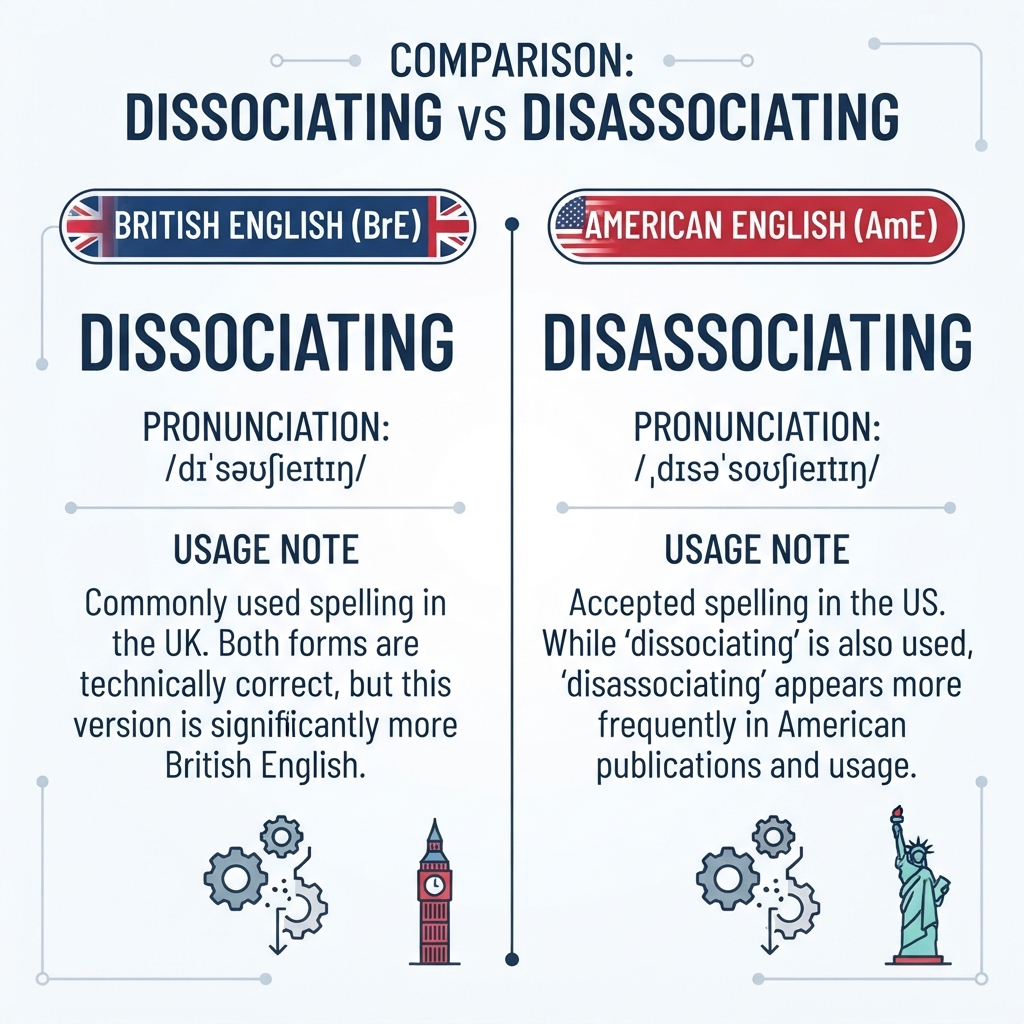
There is no simple rule saying that dissociating is British English and disassociating is American English.
Both forms occur in British and American English.
The bigger difference is often usage preference, not a fixed spelling rule.
| Form | British English | American English | General meaning |
|---|---|---|---|
| Dissociating | Used | Used | Separating or becoming separate |
| Disassociating | Used | Used | Separating from an association |
| Dissociate | Common | Common | To separate or disconnect |
| Disassociate | Used | Used | To separate from an association |
Examples in Both Varieties
British English:
The group is dissociating itself from the decision.
American English:
The company is dissociating itself from the statement.
You may also see:
The organization is disassociating itself from the former partner.
The important point is that both forms can appear in either variety of English.
Which Spelling Should You Use?
The right choice depends on your audience and the meaning you want to express.
For US English
Dissociating is a clear and widely recognized choice.
Use it when you mean separating, disconnecting, or distancing something from something else.
For UK and Commonwealth English
Dissociating is also perfectly suitable. Disassociating may appear when the context specifically involves ending an association.
For Global English
If you write for an international audience, dissociating is often a simple and familiar option.
The most important rule is consistency. Do not switch between the two forms without a reason.
Quick Tip
If your sentence is about separating or distancing, dissociating is usually a safe choice.
If your sentence strongly focuses on ending an association, disassociating can also work.
Common Mistakes with Dissociating or Disassociating
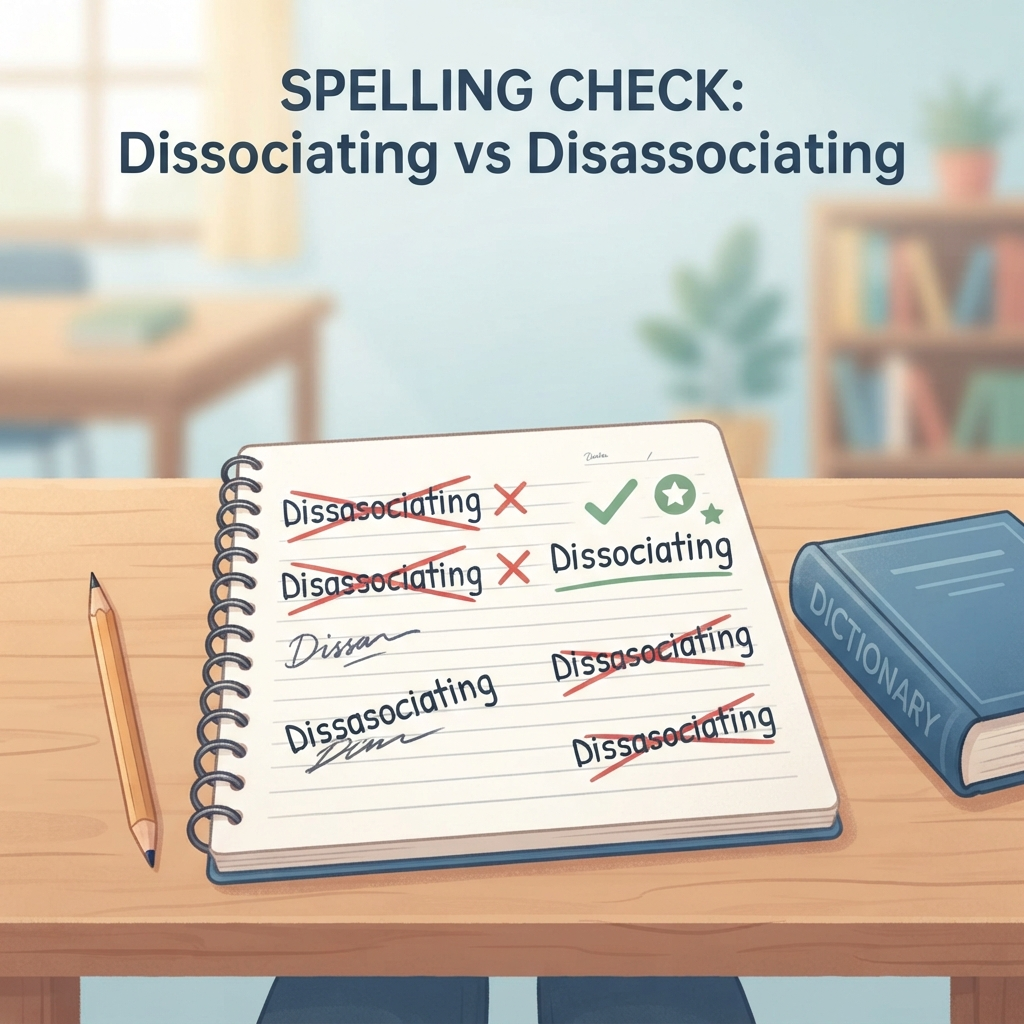
Writers often make mistakes because the two words look almost identical.
Mistake 1: Treating One Form as Always Wrong
Incorrect idea:
Disassociating is never correct.
Better:
Both forms are used in English.
The choice depends on context and style.
Mistake 2: Using the Wrong Verb Form
The base forms are:
- dissociate
- disassociate
Their -ing forms are:
- dissociating
- disassociating
Do not create unusual spellings such as dissociatting or disassociatting.
Mistake 3: Confusing Meaning
Do not assume that the two words always have exactly the same use in every sentence.
For example:
The study examined dissociating factors.
This may sound different from:
The company is disassociating itself from the claim.
The surrounding words help determine the intended meaning.
Mistake 4: Mixing Spellings
Avoid changing forms randomly within the same article.
Choose the form that fits your meaning and keep your writing consistent.
Dissociating or Disassociating in Everyday Examples
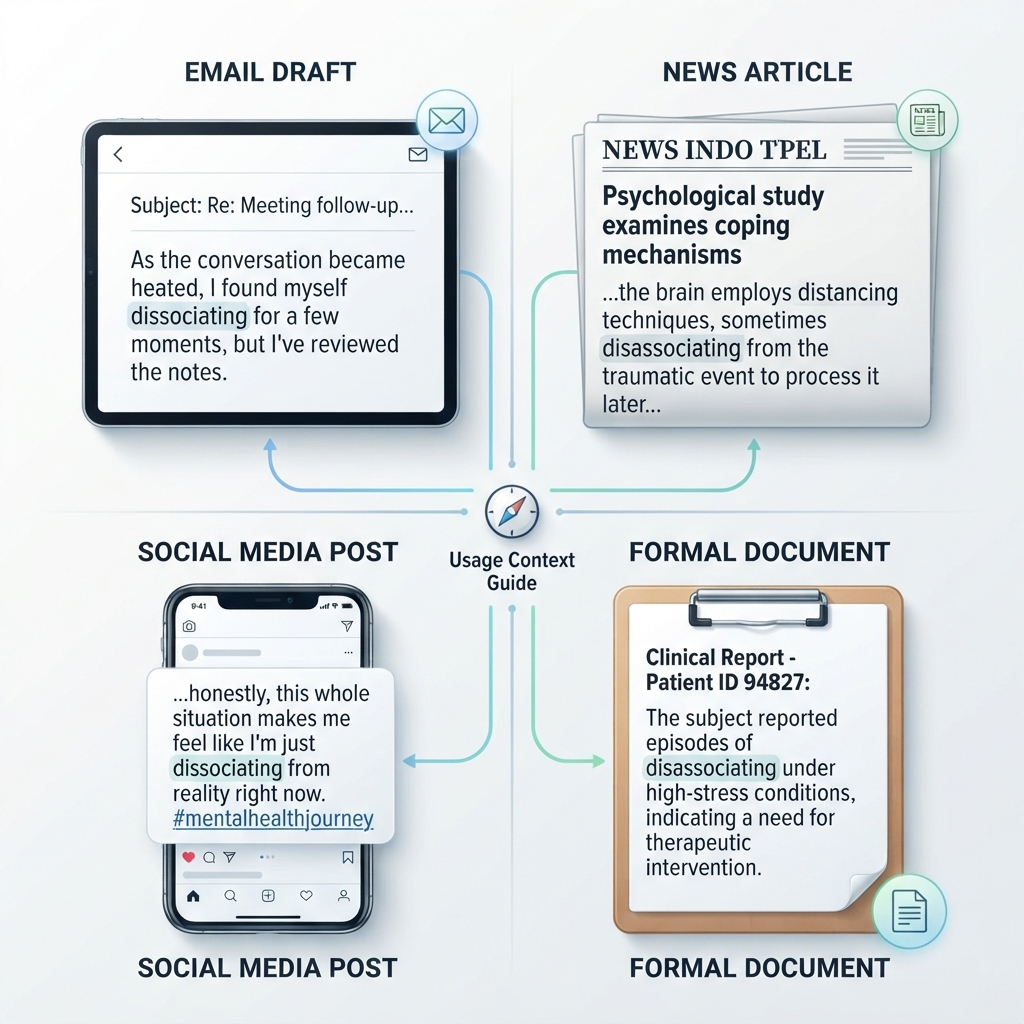
Seeing both forms in real sentences makes the difference easier to understand.
In Emails
We are dissociating our company from the statement mentioned below.
Or:
We are disassociating our organization from the former partnership.
Both can work when the intended meaning is to separate an organization from an association.
In News Writing
The company is dissociating itself from the comments made by the former employee.
Another possible sentence is:
The organization is disassociating itself from the controversial campaign.
News writing often uses these words when organizations publicly distance themselves from people, statements, or actions.
On Social Media
I am dissociating myself from this conversation.
Or:
The brand is disassociating itself from the post.
These forms can work in informal online writing, although simpler words such as distancing may sound more natural.
In Formal Writing
The researcher discussed factors that may contribute to dissociating the two processes.
You may also see:
The organization is disassociating itself from the previous policy.
Formal writing should focus on clarity rather than choosing a complicated word simply because it sounds more professional.
Dissociating or Disassociating – Google Trends & Usage Data
Search interest for dissociating and disassociating can vary by country, topic, and time.
In general, dissociating has broad use because dissociate is an established word in general English, academic writing, psychology-related discussions, and formal communication.
Disassociating also appears in professional, organizational, and general writing. It is especially understandable when the context involves ending an association or connection.
Search results can also be affected by the meaning behind the search. Someone searching for dissociating may be looking for a definition, spelling help, or a specific technical meaning. Someone searching for disassociating may be checking whether the longer form is acceptable.
Because search trends change over time, there is no single permanent popularity result for every country or topic.
For practical writing, meaning and audience matter more than small changes in search interest.
Dissociating or Disassociating: Comparison Table
| Feature | Dissociating | Disassociating |
|---|---|---|
| Base word | Dissociate | Disassociate |
| Meaning | Separating or becoming separate | Separating from an association |
| Valid English | Yes | Yes |
| Used in US English | Yes | Yes |
| Used in UK English | Yes | Yes |
| Formal writing | Yes | Yes |
| General writing | Very common | Common |
| Main idea | Separation or disconnection | Ending an association |
| -ing form | Dissociating | Disassociating |
Simple Difference
Dissociating → separating or becoming separate.
Disassociating → separating from an association or connection.
The meanings overlap, so context is important.
FAQs
1. Is dissociating a correct word?
Yes. Dissociating is the present participle of dissociate and is a standard English word.
2. Is disassociating a correct word?
Yes. Disassociating is also used in English and comes from disassociate.
3. Which is more common, dissociating or disassociating?
Dissociating is generally the more established and commonly used form across many types of writing. However, disassociating is also found in real usage.
4. Is dissociating British or American English?
It is used in both British and American English. It is not limited to one variety.
5. Is disassociating American English?
No. Disassociating is not exclusively American. It can be found in British, American, and other varieties of English.
6. Can I use dissociating in formal writing?
Yes. Dissociating is suitable for formal writing when it accurately expresses the intended meaning.
7. Can dissociating and disassociating be used interchangeably?
Sometimes, especially when the basic idea is separation. But they can carry slightly different shades of meaning, so always consider the context before replacing one with the other.
Conclusion
When choosing between dissociating or disassociating, remember that both forms are valid English words. They are closely related and both describe some form of separation or ending a connection.
Dissociating is the more established choice and works well in many general, academic, professional, and formal contexts. Disassociating is also acceptable and can be useful when the sentence focuses on separating from an association.
There is no strict rule that makes one form exclusively British or American. Both can appear in different varieties of English. The meaning of your sentence, your audience, and your preferred writing style should guide your choice.
If you want a simple option for general writing, dissociating is a clear choice. If you specifically want to stress the ending of an association, disassociating may fit well.
The key is to understand the context rather than assuming one spelling is always correct. Once you know the difference, choosing between these two forms becomes much easier.

Stella Gibbons writes creative English captions for funcaptionz.com, blending wit, clarity, and short ideas to inspire readers across social platforms daily use









