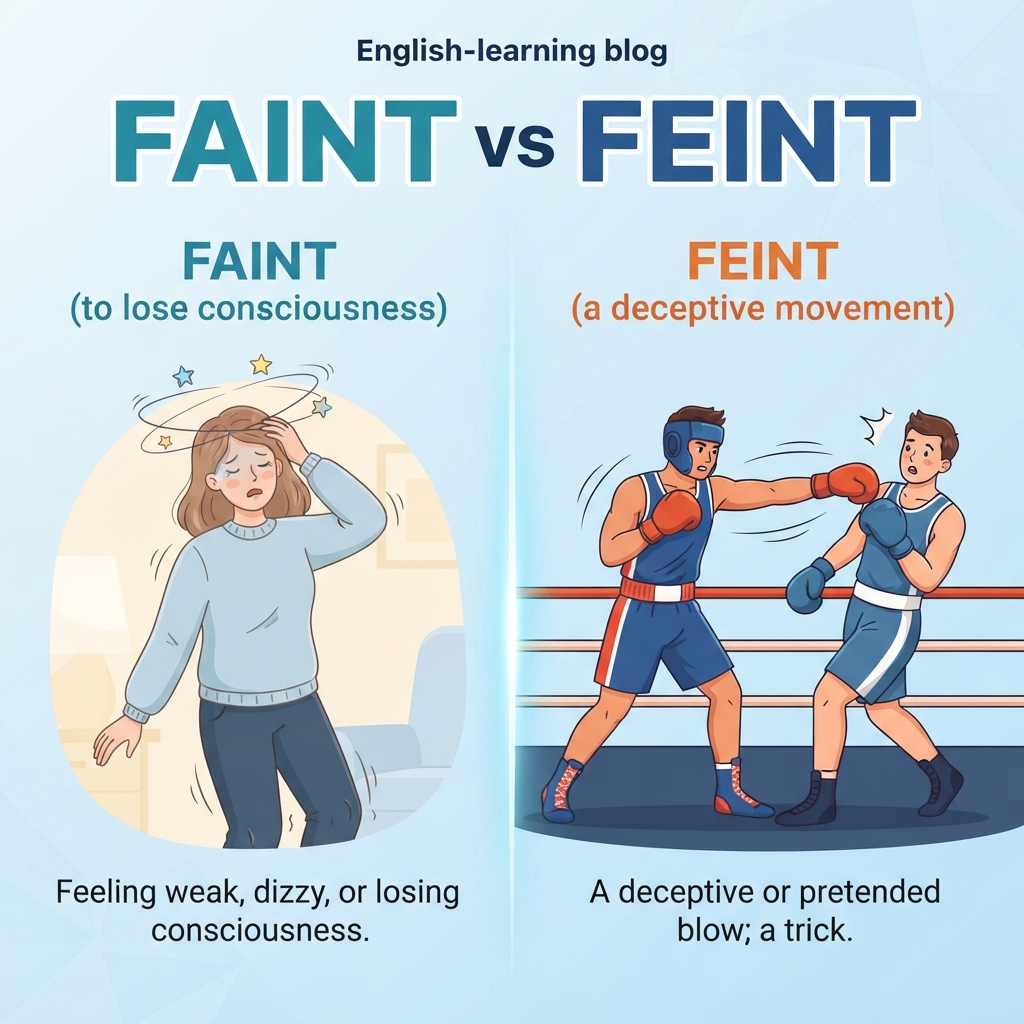
Faint means weak, barely noticeable, or losing consciousness, while feint means a deceptive movement or action used to distract or trick someone.
Faint or feint—which word should you use? They sound almost the same, but choosing the wrong one can completely change the meaning of your sentence. The good news is that the difference is simple once you see how each word works.
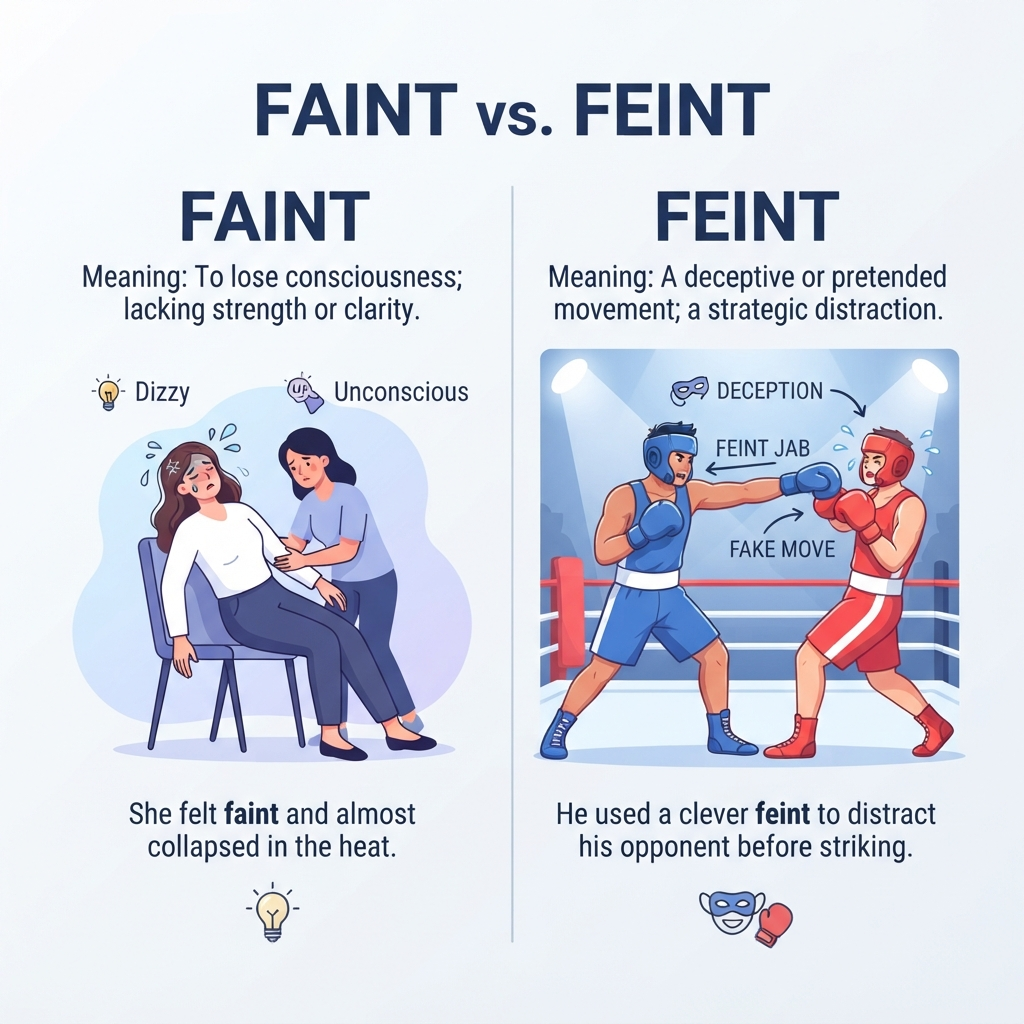
Faint describes something weak or barely noticeable, such as a faint sound or faint light. It can also mean to lose consciousness: She felt faint after standing in the heat.
Feint has a very different meaning. It refers to a deceptive movement or action designed to make someone believe you are doing one thing when you intend to do another. For example, a boxer might make a feint to trick an opponent into reacting too soon.
So, if you’re wondering about faint or feint, remember: faint is about weakness or losing consciousness; feint is about deception. This guide explains their meanings, differences, pronunciation, origins, examples, common mistakes, and an easy way to remember the correct word every time.
Faint or Feint meanings

Faint means weak, unclear, or unconscious.
Feint means a false move or trick used to deceive someone.
Examples of “faint”
- She felt faint after standing for a long time.
- I heard a faint sound outside.
- He fainted in the heat.
- There was a faint smile on her face.
Examples of “feint”
- The boxer made a quick feint with his left hand.
- The player used a feint to fool the defender.
- She made a feint toward the door and moved the other way.
Easy way to remember
Think of:
Faint = weak or unclear
Feint = fake move
So, if someone feels weak, use faint. If someone makes a fake move to trick another person, use feint.
The Origin of Faint or Feint
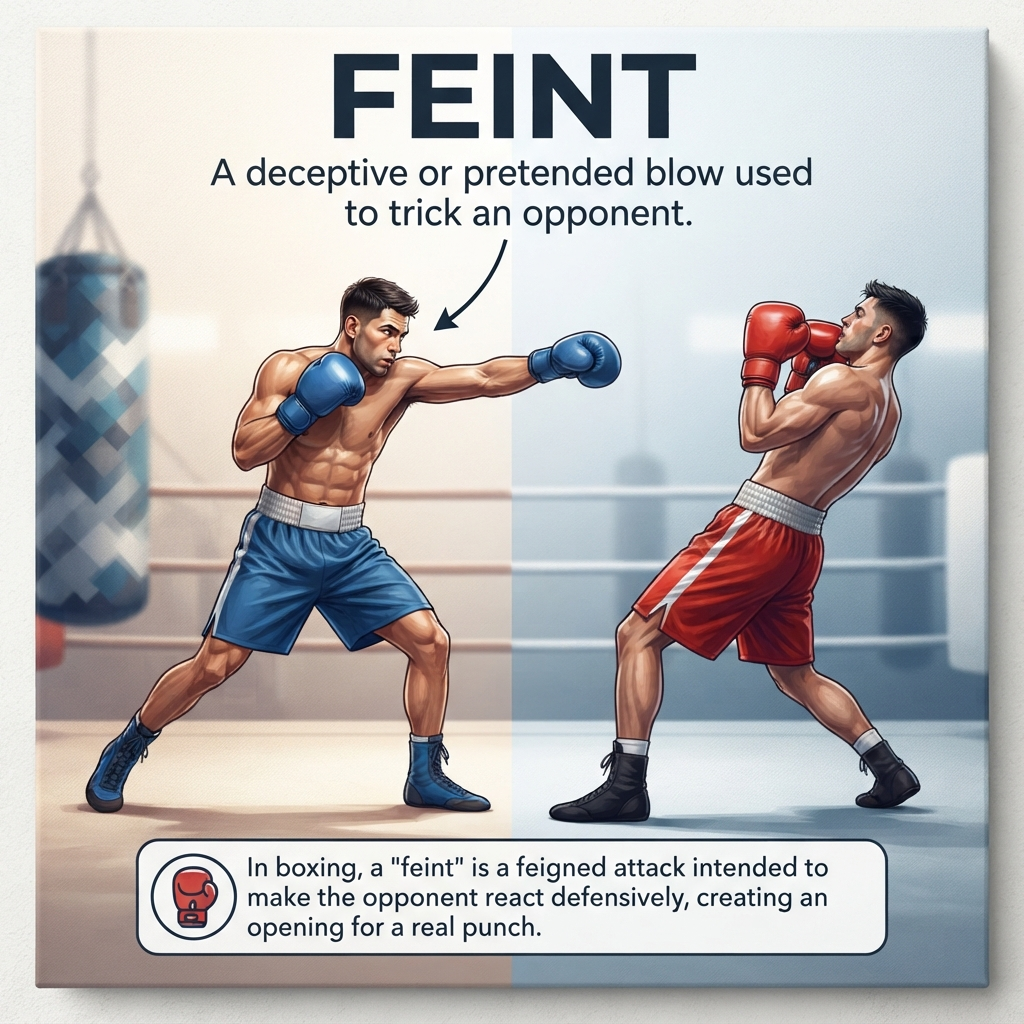
The words faint and feint have different histories, even though they sound the same today.
Origin of “Faint”
Faint comes from Old French and Latin roots linked with weakness and loss of strength. Over time, it developed meanings related to being weak, lacking energy, or losing consciousness.
It also gained another common meaning: something that is difficult to notice.
For example:
- a faint voice
- a faint smell
- a faint light
- a faint memory
The word can work as an adjective, verb, or noun depending on the sentence.
Origin of “Feint”
Feint also comes from French. It is connected with the idea of pretending or making something appear different from what it really is.
The word became strongly associated with fighting and military tactics. A person could make a false movement to make an opponent react.
Today, feint is common in:
- Boxing
- Fencing
- Martial arts
- Football
- Basketball
- Military writing
- Strategy games
The different origins explain why these words have different spellings despite having the same pronunciation.
British English vs American English Spelling
There is no major British-versus-American spelling difference between these two words.
Both British and American English use:
- faint
- feint
The meanings also remain basically the same.
| Word | British English | American English | Main Meaning |
|---|---|---|---|
| Faint | Faint | Faint | Weak, unclear, or unconscious |
| Feint | Feint | Feint | A false move or trick |
| Fainted | Fainted | Fainted | Lost consciousness |
| Feinted | Feinted | Feinted | Made a false move |
Examples in both varieties
British English:
“He felt faint after the long walk.”
American English:
“He felt faint after the long walk.”
British English:
“The boxer made a feint.”
American English:
“The boxer made a feint.”
So, unlike words such as colour/color or favour/favor, you do not need to change the spelling based on your audience.
Which Spelling Should You Use?
The right spelling depends on meaning, not country.
Use “faint” when you mean:
- Weak
- Unclear
- Barely noticeable
- Losing consciousness
- A loss of consciousness
Example:
“She felt faint after skipping lunch.”
Use “feint” when you mean:
- A fake attack
- A false movement
- A deceptive action
- A trick used to mislead someone
Example:
“The fighter used a feint to confuse his opponent.”
For US readers
Use faint for weakness or unclear things and feint for a deceptive move.
For UK and Commonwealth readers
The same rule applies. There is no special British spelling needed.
For global writing
Keep the distinction clear. Since the words sound identical, the surrounding sentence should make the meaning obvious.
Common Mistakes with Faint or Feint
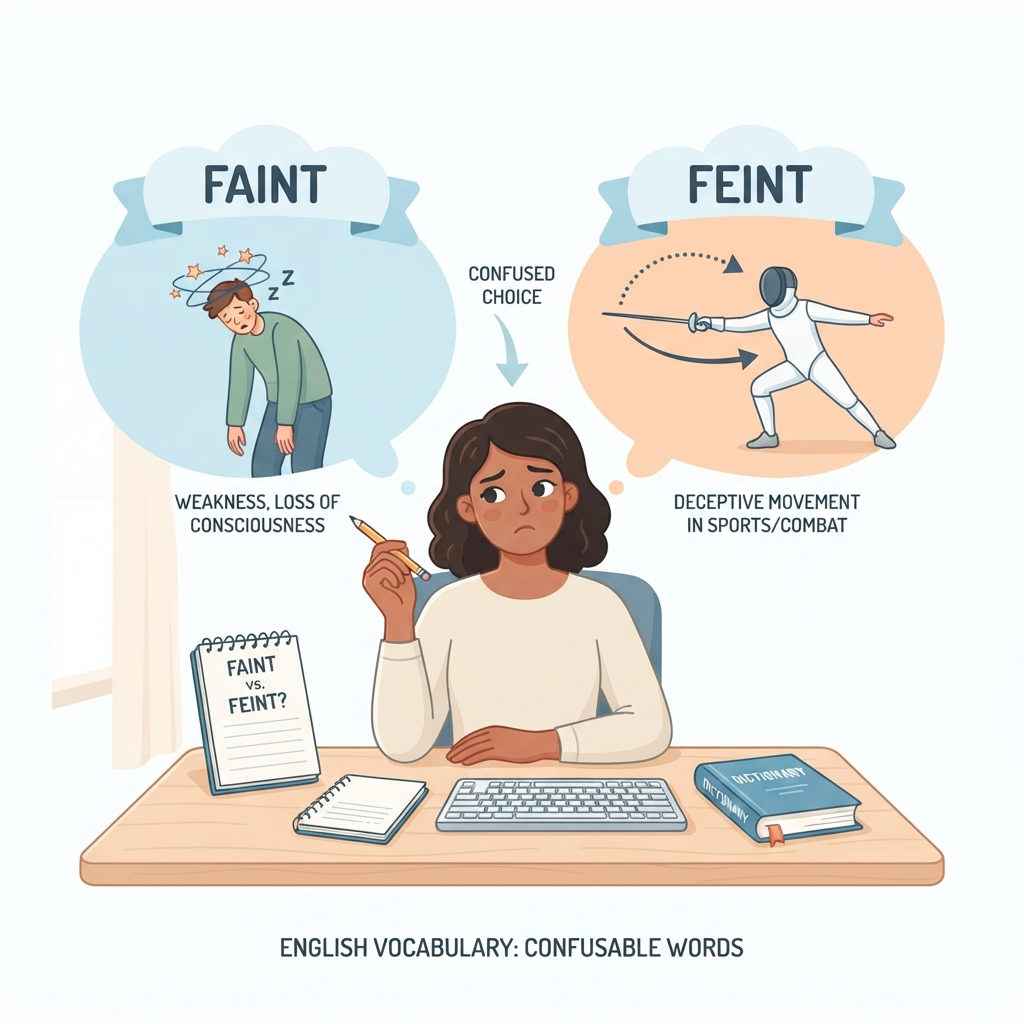
These words are often confused because they sound the same.
Mistake 1: Using “feint” for weakness
❌ She felt feint after running.
✅ She felt faint after running.
Here, faint describes feeling weak.
Mistake 2: Using “faint” for a fake move
❌ The boxer made a faint.
✅ The boxer made a feint.
The boxer is making a deceptive movement, so feint is correct.
Mistake 3: Writing “feinted” when someone lost consciousness
❌ He feinted in the classroom.
✅ He fainted in the classroom.
Fainted means lost consciousness.
Mistake 4: Confusing “faint” with “feint” in sports
❌ The player made a faint to get past the defender.
✅ The player made a feint to get past the defender.
A sports feint is a fake action used to fool another player.
Simple memory trick
Remember:
Faint = feeling
Feint = fooling
This quick trick can help you choose the correct spelling.
Unattentive or Inattentive: Which Is Correct & When to Use Each?
Faint or Feint in Everyday Examples
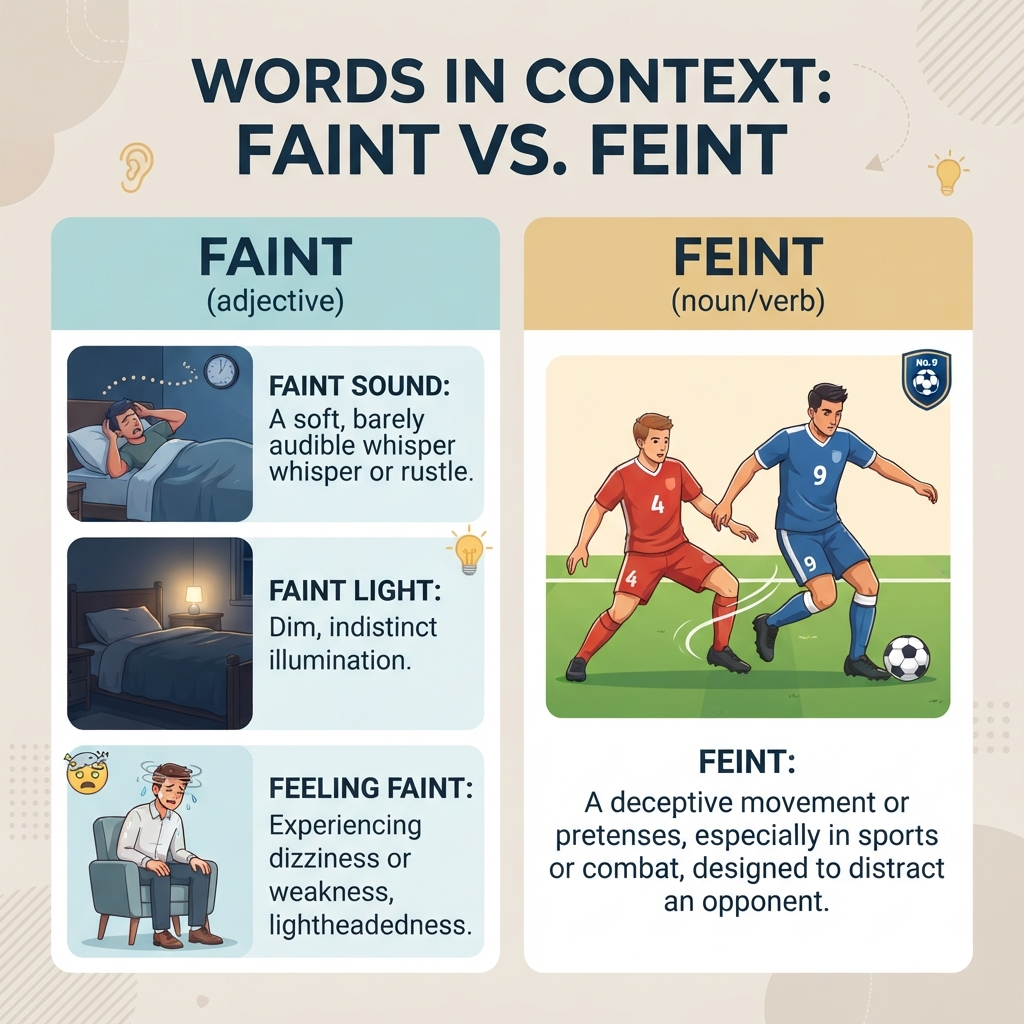
Understanding these words becomes easier when you see them in real situations.
In Emails
Faint:
I noticed a faint error in the document.
Feint:
The player used a feint during the practice match.
In professional emails, use faint when describing something weak or barely noticeable.
Use feint when discussing a deceptive action or strategy.
In News Writing
Faint:
A faint sound was heard during the search.
Feint:
The fighter used a feint before launching another attack.
News writing may use feint when discussing sports, military actions, or strategy.
On Social Media
Faint:
That faint smell of rain always reminds me of summer.
Feint:
That was a clever feint!
On social media, feint often appears in sports posts and gaming discussions.
In Formal Writing
Faint:
The report showed a faint increase in demand.
Feint:
The movement appeared to be a feint intended to distract the opponent.
Both words are correct in formal writing when used with the right meaning.
Faint or Feint – Google Trends & Usage Data
Search interest for faint is much broader because it is a common everyday word.
People use faint in many contexts, including:
- Health and physical weakness
- Sounds
- Smells
- Colors
- Memories
- Light
- Descriptions
Feint has a narrower use. Searches are often connected with:
- Boxing
- Fighting
- Sports
- Fencing
- Military strategy
- Games
- Writing and vocabulary questions
This means faint generally appears in a wider range of everyday searches, while feint is more closely connected with action and strategy.
Google Trends measures relative search interest, rather than showing the exact number of searches. Interest can also change based on sports events, news stories, school topics, and popular searches.
For writers, the important point is simple: both words have real uses, but faint belongs to a much wider range of everyday contexts.
Faint vs Feint: Side-by-Side Comparison
| Feature | Faint | Feint |
|---|---|---|
| Pronunciation | “Faynt” | “Faynt” |
| Meaning | Weak, unclear, or unconscious | Fake move or deceptive action |
| Part of speech | Adjective, verb, noun | Noun, verb |
| Common context | Health, senses, descriptions | Sports, fighting, strategy |
| Example | She felt faint. | He made a feint. |
| Past form | Fainted | Feinted |
| Related idea | Weakness | Deception |
Compare these sentences
She felt faint.
→ She felt weak or close to losing consciousness.
She made a feint.
→ She made a fake movement to trick someone.
The pronunciation is the same, but the meaning changes completely.
FAQs About Faint or Feint
1. Is it “faint” or “feint”?
Both are correct words. Use faint for weakness, unclear things, or losing consciousness. Use feint for a fake or deceptive move.
2. Are faint and feint pronounced the same?
Yes. They are homophones, which means they have the same pronunciation but different meanings and spellings.
3. What does faint mean?
Faint can mean weak, barely noticeable, or unconscious.
Example:
“There was a faint sound outside.”
4. What does feint mean?
A feint is a false movement or action designed to trick another person.
Example:
“The boxer made a feint.”
5. Is “feinted” a real word?
Yes. Feinted is the past tense of feint.
Example:
“The player feinted to the left.”
6. Is “fainted” different from “feinted”?
Yes. Fainted means became unconscious.
Feinted means made a false or deceptive move.
7. How can I remember the difference?
Use this simple rule:
Faint = weak
Feint = fake move
If the sentence is about weakness or losing consciousness, choose faint. If it is about tricking an opponent, choose feint.
Conclusion
The difference between faint and feint is simple once you connect each word with its meaning. Both words sound like “faynt,” but they should not be used in the same situations.
Use faint when you mean weak, barely noticeable, or unconscious. You can talk about a faint sound, faint light, faint smell, or someone who fainted. Use feint when you mean a fake movement or action meant to trick someone. It is especially common in sports, fighting, fencing, and strategy.
There is no important British-versus-American spelling difference here. Both varieties of English use faint and feint in the same way.
The easiest memory trick is “faint = weak” and “feint = fake move.” Keep that rule in mind, and you can avoid one of the most common homophone spelling mistakes in English.

Walter de la Mare writes creative English captions for funcaptionz.com, sharing short ideas, thoughtful wording, and expressive lines for modern readers.









