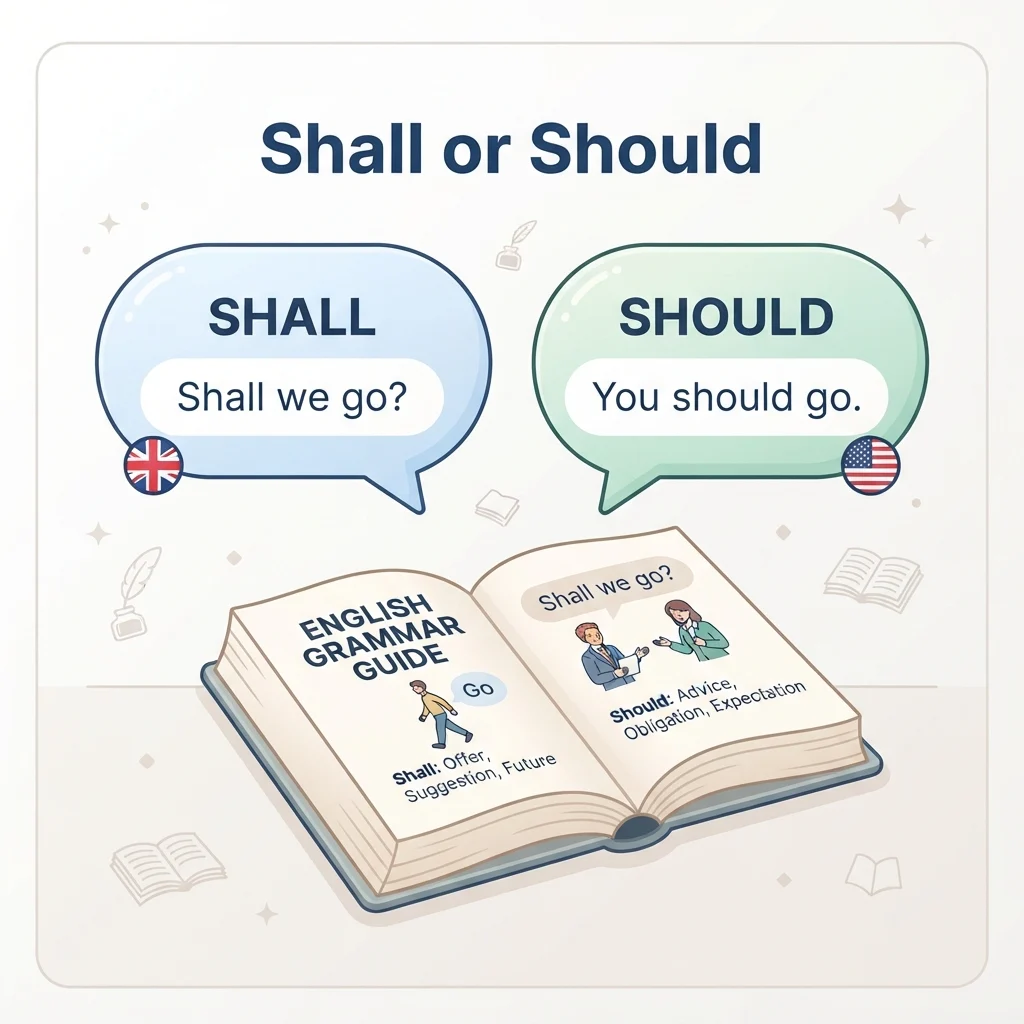
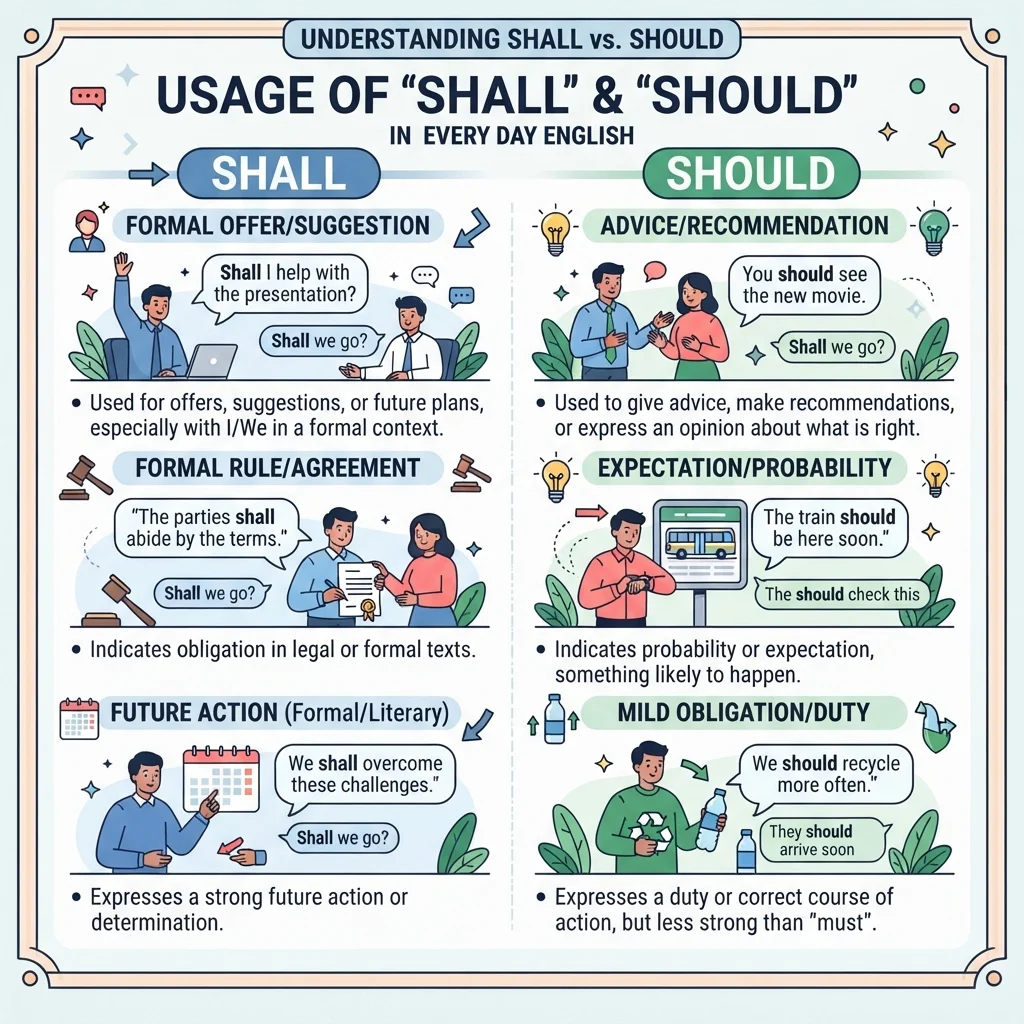
“Shall” is mainly used for suggestions, offers, and formal future statements, while “should” is used for advice, recommendations, expectations, and what is considered appropriate or likely.
Shall or should—which one is correct? The difference may look small, but choosing the wrong word can completely change the meaning of a sentence. Compare “Shall we leave?” with “You should leave.” The first asks for a suggestion or agreement; the second gives advice or expresses what someone is expected to do.
So, when should you use shall, and when is should the better choice? Shall is traditionally used with I and we for offers, suggestions, and certain future statements, especially in British and formal English. Should, however, is much more common in everyday English and is used to give advice, make recommendations, express expectations, or describe what is right or appropriate.
Although these modal verbs can sometimes appear in related contexts, they are not interchangeable. Understanding their difference can help you write clearer sentences and sound more natural in both formal and everyday English.
In this guide, you’ll discover the difference between shall and should, their meanings, grammar rules, practical examples, common mistakes, and simple ways to remember which word to choose. By the end, you’ll be able to use shall vs. should confidently without second-guessing your sentence.
Shall or Should meanings
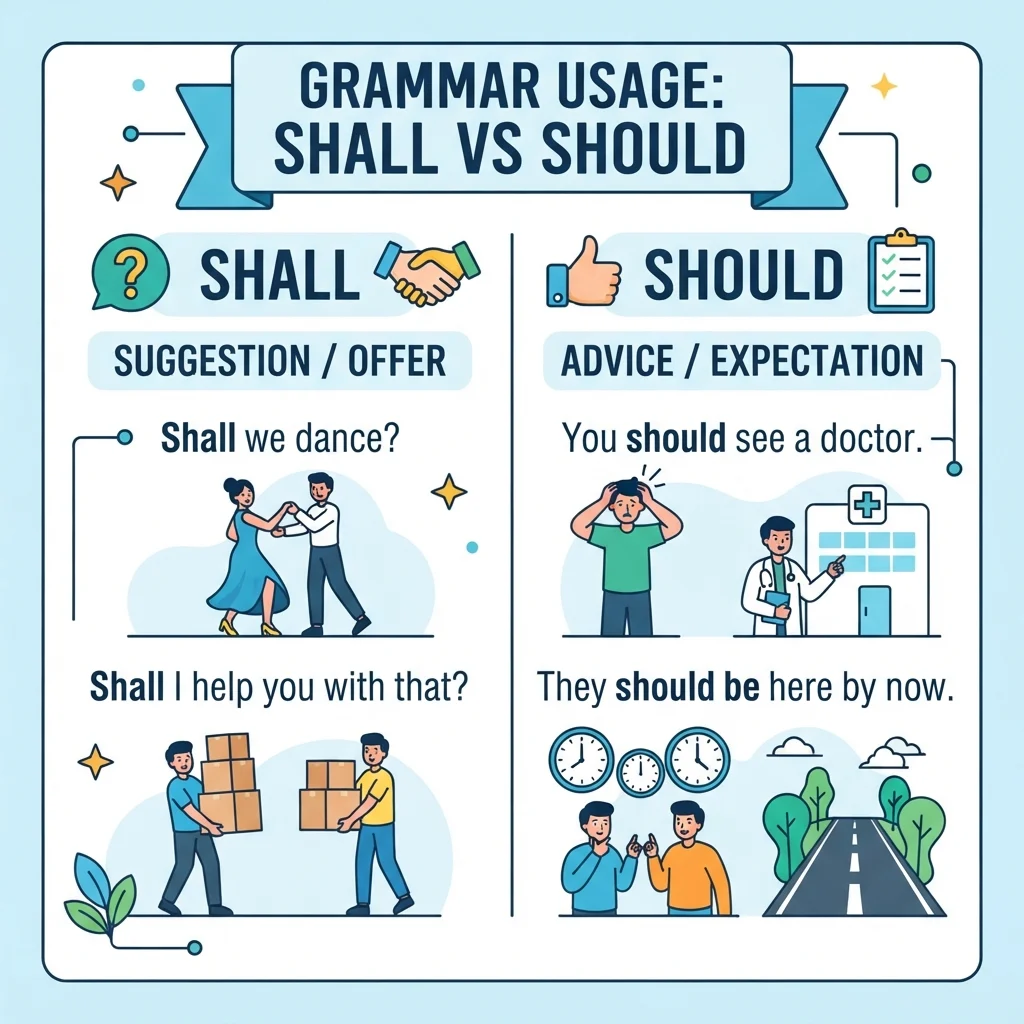
Shall and should are both modal verbs, but they have different uses.
- Shall is often used to make a suggestion or offer.
- Should is often used to give advice or show what is expected.
Examples
Shall we go now?
This means: Do you want to go now?
Shall I help you?
This means: Do you want me to help you?
You should get some rest.
This gives advice.
She should arrive soon.
This shows an expectation.
A simple way to remember them is:
Shall = suggestion or offer
Should = advice or expectation
In modern everyday American English, should is much more common than shall.
The Origin of Shall or Should

The words shall and should have a long history in English. They come from an old Germanic verb linked to the idea of owing, being required to do something, or having an obligation.
Shall developed as a modal verb used to express obligation, intention, or future action.
Should developed as the past form of shall. Over time, its meaning expanded. Today, it is commonly used for advice, expectation, probability, and things that are considered proper or correct.
For example:
You shall obey the rules.
This sounds formal and expresses an obligation.
You should obey the rules.
This gives advice or expresses what is expected.
The difference between these words changed over hundreds of years. Modern English does not always follow the older grammar rules, so their use can depend on country, context, and level of formality.
British English vs American English Spelling
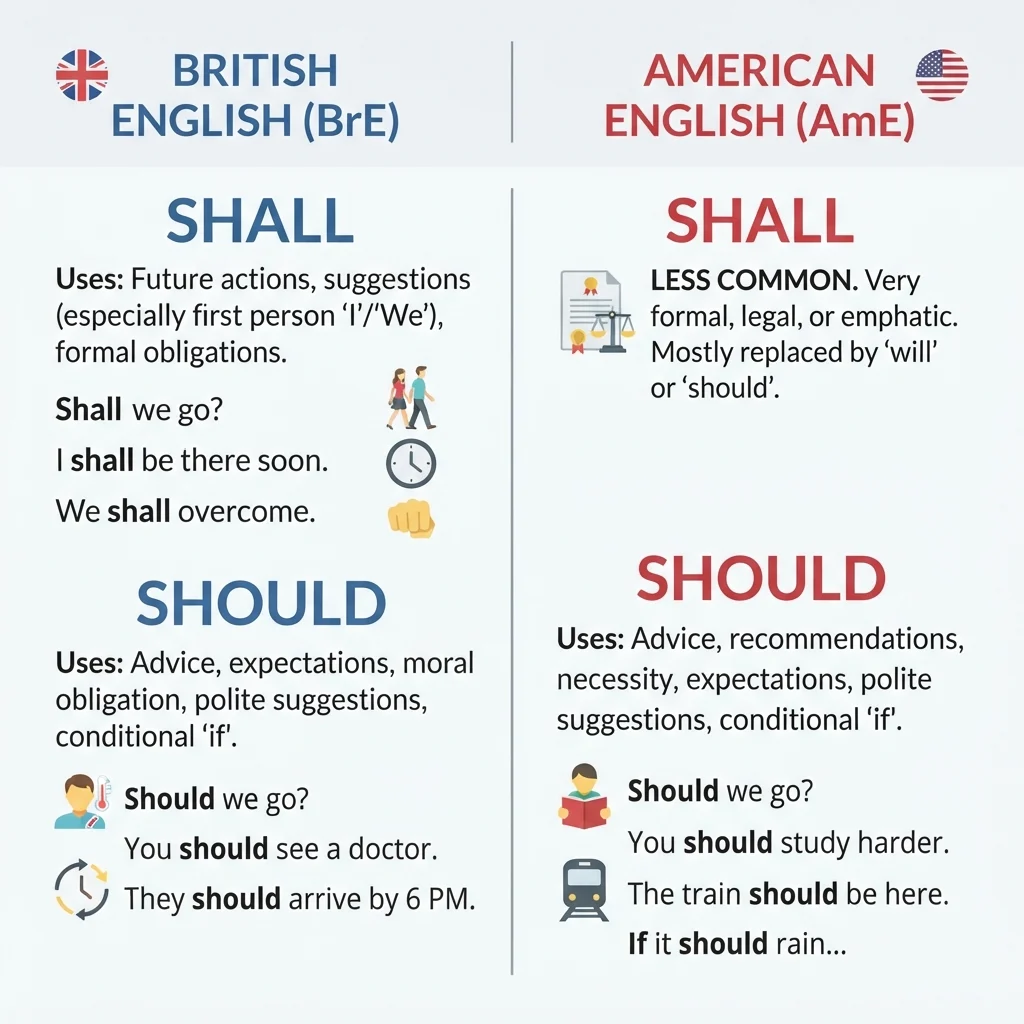
There is no spelling difference between shall and should in British and American English.
The main difference is how often they are used and in which situations.
British English can use shall more naturally in questions with I and we, especially when making suggestions.
Shall we start?
Shall I open the window?
American English often uses should, can, will, or do you want to… in similar everyday situations.
For example:
British English: Shall we meet at six?
American English: Should we meet at six?
Both forms can be understood in both varieties of English.
British English vs American English
| Meaning | British English | American English |
|---|---|---|
| Making a suggestion | Shall we leave? | Should we leave? |
| Offering help | Shall I carry it? | Should I carry it? |
| Giving advice | You should rest. | You should rest. |
| Showing expectation | He should arrive soon. | He should arrive soon. |
| Formal obligation | You shall follow the rules. | You shall follow the rules. |
| Casual future | I will call you. | I will call you. |
The important point is that shall and should are not different spellings of the same word. They are two different modal verbs with related histories and different meanings.
Which Spelling Should You Use?
Since shall and should are both correctly spelled in British and American English, your choice depends on meaning and audience.
For US English
Use should when you mean:
- advice
- expectation
- duty
- something likely to happen
Use shall mainly in formal, legal, or traditional language.
You should check your email.
The tenant shall pay the rent on time.
For UK and Commonwealth English
Shall is still common in questions with I and we.
Shall we have dinner?
Shall I call you later?
However, should remains the normal choice for advice and expectations.
For Global English
If you are writing for an international audience, choose the word based on its meaning.
Use:
Should → advice, expectation, or duty
Shall → suggestion, offer, or formal requirement
This approach keeps your writing clear for readers from different countries.
Common Mistakes with Shall or Should
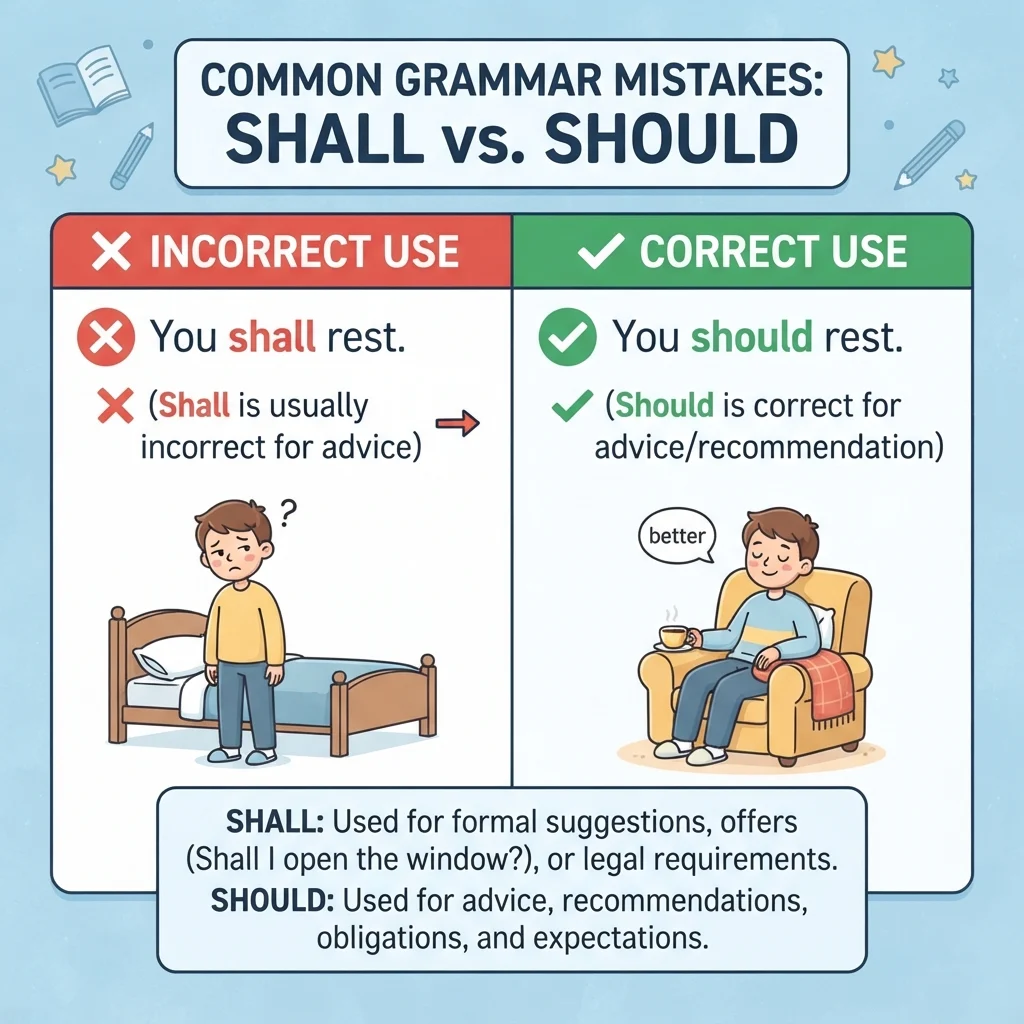
Understanding the meaning can prevent many common errors.
Mistake 1: Using shall for advice
❌ You shall drink more water.
This sounds like a strong formal command.
✅ You should drink more water.
This is natural when giving advice.
Mistake 2: Using should for every suggestion
❌ Should I help you?
This sentence can be correct, but it can sound like you are asking whether helping is the right action.
✅ Shall I help you?
This is a natural offer, especially in British English.
Mistake 3: Thinking shall means the same as will
Shall can express future action, but it is not always a direct replacement for will.
❌ I shall probably go tomorrow.
This is grammatically possible but sounds formal or old-fashioned in many situations.
✅ I will probably go tomorrow.
Mistake 4: Using shall in casual American English
Shall we go? is correct, but it may sound formal or less common in casual American conversation.
Should we go? is often more natural.
Mistake 5: Confusing should with a command
Should usually gives advice or expresses expectation.
You should study tonight.
This normally means studying is a good idea, not that someone is giving a strict order.
Shall or Should in Everyday Examples
These words appear in many types of writing and conversation.
In Emails
Shall we arrange a meeting for Monday?
This politely suggests a meeting.
You should review the attached document.
This gives a helpful recommendation.
In News Writing
The company shall follow the new regulations.
This may appear when reporting formal rules or requirements.
The new policy should reduce costs.
Here, should shows an expected result.
On Social Media
Shall we try this challenge?
This makes a friendly suggestion.
You should watch this movie!
This gives a casual recommendation.
In Formal Writing
The applicant shall provide all required documents.
This expresses a formal requirement.
Employees should follow safety procedures.
This expresses expected behavior or advice.
In Questions
Shall we begin?
This asks for agreement.
Should we begin?
This asks whether beginning is the right choice.
Both can be correct, but the feeling is slightly different.
Shall or Should – Google Trends & Usage Data
Search interest in shall or should usually comes from English learners who want to understand the difference between these two modal verbs.
The words also have different usage patterns.
Should is widely used in modern English across everyday speech, education, advice, news, and online writing.
Shall appears less often in casual American English. It remains more visible in British English, formal writing, legal language, rules, and polite suggestions.
Searches for this topic are especially useful because people may understand both words but still struggle to choose between them.
Usage by Context
| Context | More Common Choice |
|---|---|
| Everyday advice | Should |
| Giving recommendations | Should |
| Talking about expectations | Should |
| British suggestions | Shall |
| Offering help in British English | Shall |
| Legal documents | Shall |
| Formal rules | Shall |
| Casual American conversation | Should |
Google search interest can change over time and may vary by country. Search popularity also does not always show how frequently a word is used in real conversation. For that reason, context is more useful than search volume alone when learning these words.
Shall or Should – Comparison Table
| Feature | Shall | Should |
|---|---|---|
| Word type | Modal verb | Modal verb |
| Main use | Suggestion or offer | Advice or expectation |
| Future meaning | Sometimes | Usually not direct future |
| Advice | Uncommon | Very common |
| Suggestion | Common in some contexts | Common |
| British English | More common | Very common |
| American English | Less common | Very common |
| Formal writing | Common in certain uses | Common |
| Legal writing | Often used | Also possible |
| Example | Shall we start? | You should start. |
FAQs About Shall or Should
1. What is the main difference between shall and should?
Shall is often used for suggestions, offers, and formal requirements. Should is mainly used for advice, expectations, and recommendations.
2. Is shall still used in modern English?
Yes. Shall is still used, especially in British English, formal writing, legal language, and questions such as Shall we go?
3. Is should more common than shall?
Yes. Should is generally more common in modern everyday English, especially in American English.
4. Should I say “Shall we go?” or “Should we go?”
Both can be correct. Shall we go? is a suggestion. Should we go? asks whether going is the right choice.
5. Can shall be used for advice?
Usually, should is better for normal advice.
You should see a doctor.
Using shall can make the sentence sound like a command or formal requirement.
6. Is “shall” more formal than “should”?
Often, yes. Shall can sound formal, traditional, or legal. However, it can also sound natural in British questions such as Shall I help you?
7. Can I use shall and should interchangeably?
No. They can sometimes appear in similar sentences, but their meanings and tone can differ. Choose the word based on what you want to express.
Conclusion
Understanding shall or should becomes much easier when you focus on meaning instead of memorizing complicated grammar rules. Should is the common choice for advice, recommendations, expectations, and things that are considered proper or likely. Shall is often used for suggestions and offers, especially with I and we, and it is also common in formal or legal language.
For example, “You should rest” gives advice, while “Shall we rest?” makes a suggestion. This small difference can completely change the meaning of a sentence.
British English may use shall more often in everyday questions, while American English usually prefers other forms in casual conversation. Still, both words are correct in both varieties of English.
When writing for a global audience, focus on the purpose of your sentence. Use should for advice or expectation and shall for suggestions, offers, or formal requirements. With these simple rules, choosing between shall and should becomes much more natural.

Stella Gibbons writes creative English captions for funcaptionz.com, blending wit, clarity, and short ideas to inspire readers across social platforms daily use









