
Transferable is the more common and generally preferred spelling, while transferrable is a less common variant. Use “transferable” for most standard and professional writing.
Transferable or transferrable—which spelling should you use? The extra r makes this word surprisingly easy to get wrong, especially when you see both forms in English. Fortunately, the difference is simple: transferable is the more widely used spelling, while transferrable is an accepted but much less common variant.
The word means something that can be moved, passed, assigned, or transferred from one person, place, or situation to another. You may see it in phrases such as transferable skills, transferable tickets, or transferable rights. For example, “Communication is a transferable skill” means that the skill can be useful in different jobs or situations.
If you’re writing a resume, school assignment, business document, email, website, or professional article, transferable is usually the clearest choice because it is far more familiar to readers. But does transferrable count as incorrect? And is there any difference between British and American English?
In this guide, you’ll learn the meaning, spelling, pronunciation, origin, usage, examples, and key differences between transferable and transferrable. You’ll also discover which form to choose in formal writing and how to avoid this common spelling confusion once and for all.
Transferable or Transferrable meanings
Transferable is the preferred and more common spelling in modern English.
Transferrable is also used and is considered a valid variant, but it appears less often.
Examples
- She has many transferable skills.
- These credits are transferable to another college.
- The ticket is transferable to another person.
- His work experience is highly transferable.
The less common form can also be written:
- She has many transferrable skills.
- The ticket is transferrable.
Quick rule
If you are unsure, use transferable.
It is shorter, widely accepted, and common in professional and everyday writing.
| Spelling | Status | Commonness |
|---|---|---|
| transferable | Standard spelling | Very common |
| transferrable | Accepted variant | Less common |
The Origin of Transferable or Transferrable
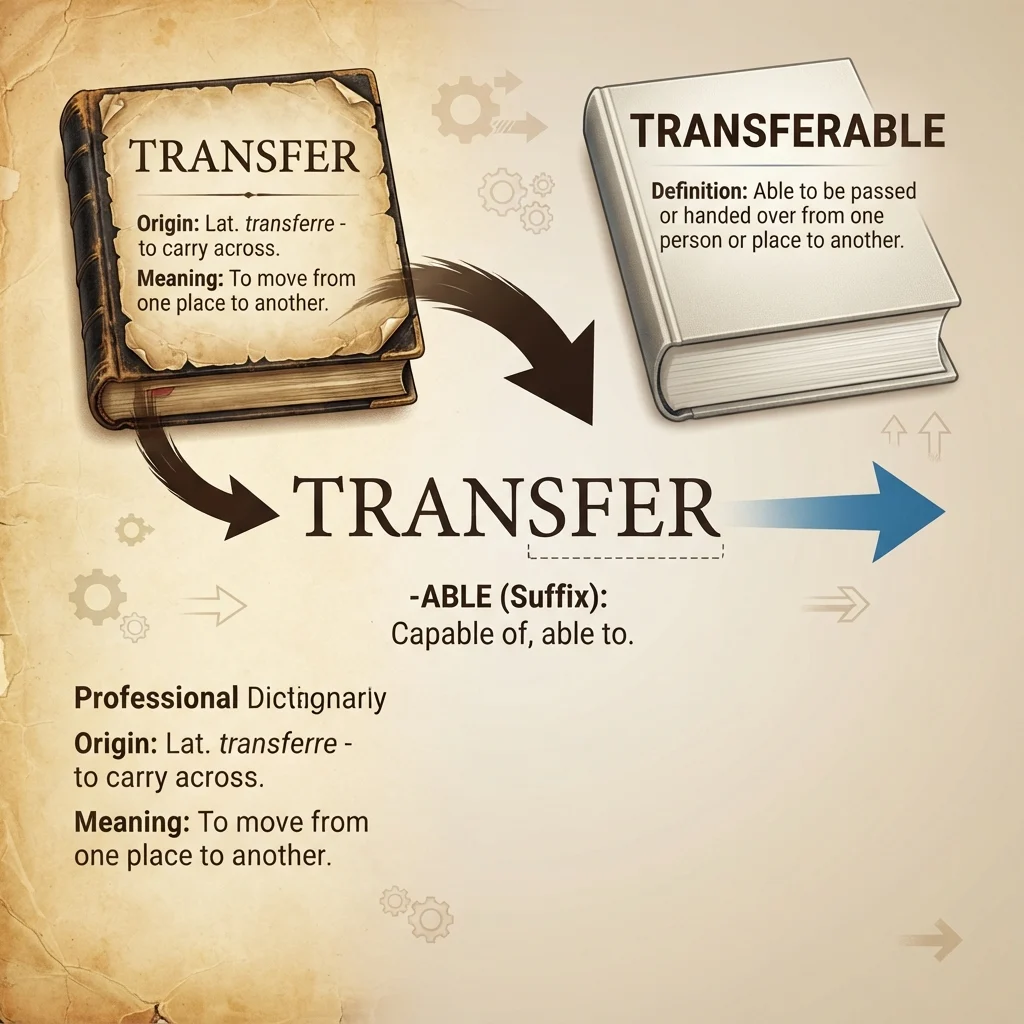
The word transferable comes from the verb transfer.
Transfer comes from Latin roots meaning “to carry across” or “to carry from one place to another.” Over time, the word entered English and developed several meanings.
Today, transfer can mean moving something from one place to another, giving something to another person, or moving responsibility, ownership, or information.
The ending -able means “capable of” or “able to be.”
So:
transfer + able = transferable
The spelling becomes confusing because the verb transfer ends with r. When adding -able, some writers double the final r:
transfer → transferrable
Others keep one r:
transfer → transferable
Both forms developed in English, but transferable became the more common form.
This is why you may find both spellings in dictionaries, books, websites, and professional documents.
British English vs American English Spelling
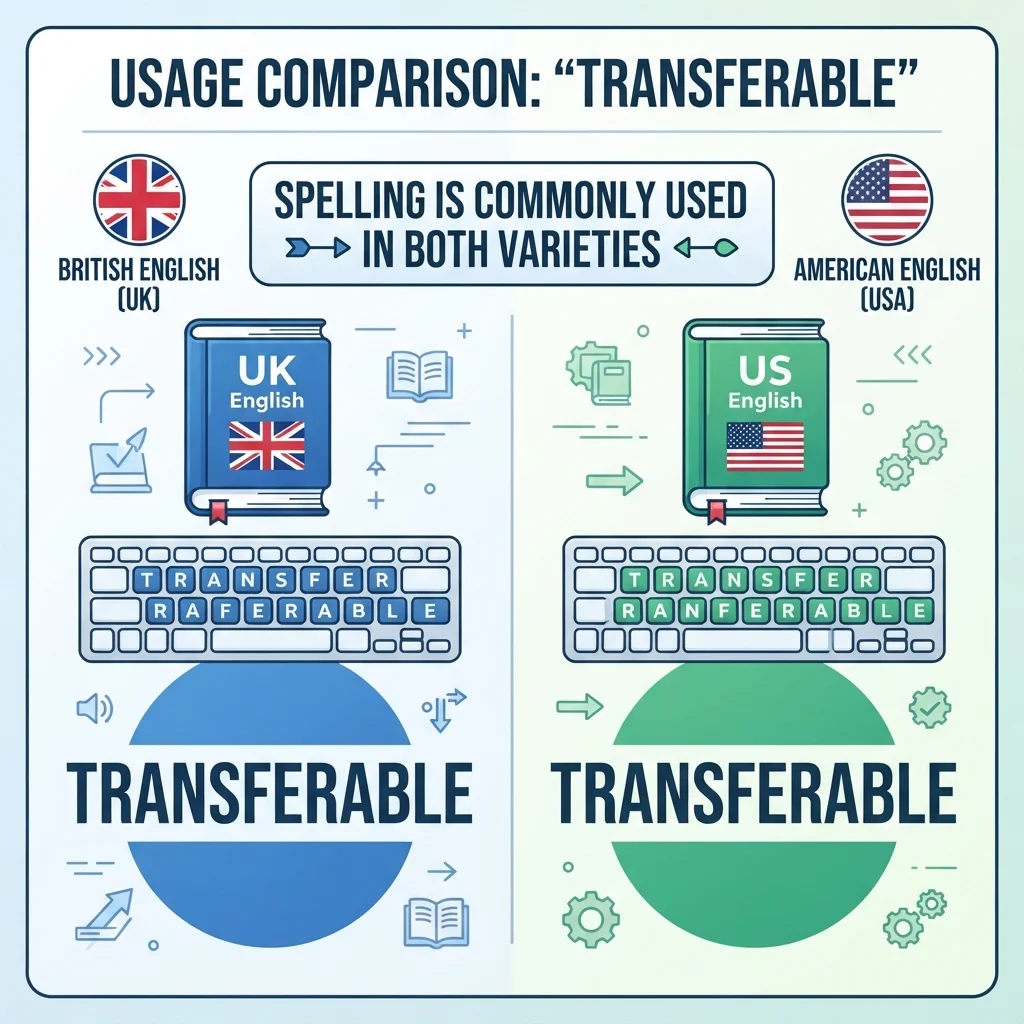
Both transferable and transferrable can be found in British and American English.
The important point is that this is not a simple British-versus-American spelling difference like colour and color.
Instead, the difference is mainly about spelling preference and usage.
| English variety | More common form | Alternative form |
|---|---|---|
| American English | transferable | transferrable |
| British English | transferable | transferrable |
| Canadian English | transferable | transferrable |
| Australian English | transferable | transferrable |
| General international English | transferable | transferrable |
Examples in both varieties
American English:
My skills are transferable to this position.
British English:
My skills are transferable to this position.
The spelling does not normally need to change just because your audience is American or British.
For most readers, transferable is the easiest and safest choice.
Families or Familys: Which Spelling Is Correct and Why? 👨👩👧👦
Which Spelling Should You Use?
Your choice can depend on your audience, but transferable works well in almost every situation.
For American English
Use transferable for:
- Resumes
- Job applications
- Business emails
- College applications
- Reports
- Websites
Example:
I have several transferable skills that match this position.
For British English
Transferable is also a strong choice in British English.
Example:
These skills are transferable to other areas of the business.
For UK and Commonwealth readers
You can safely use transferable in professional and academic writing.
For a global audience
Transferable is usually the clearest choice because it is widely recognized.
Simple advice
If you need to choose only one spelling, choose:
TRANSFERABLE
It is familiar, clean, and widely used.
Common Mistakes with Transferable or Transferrable
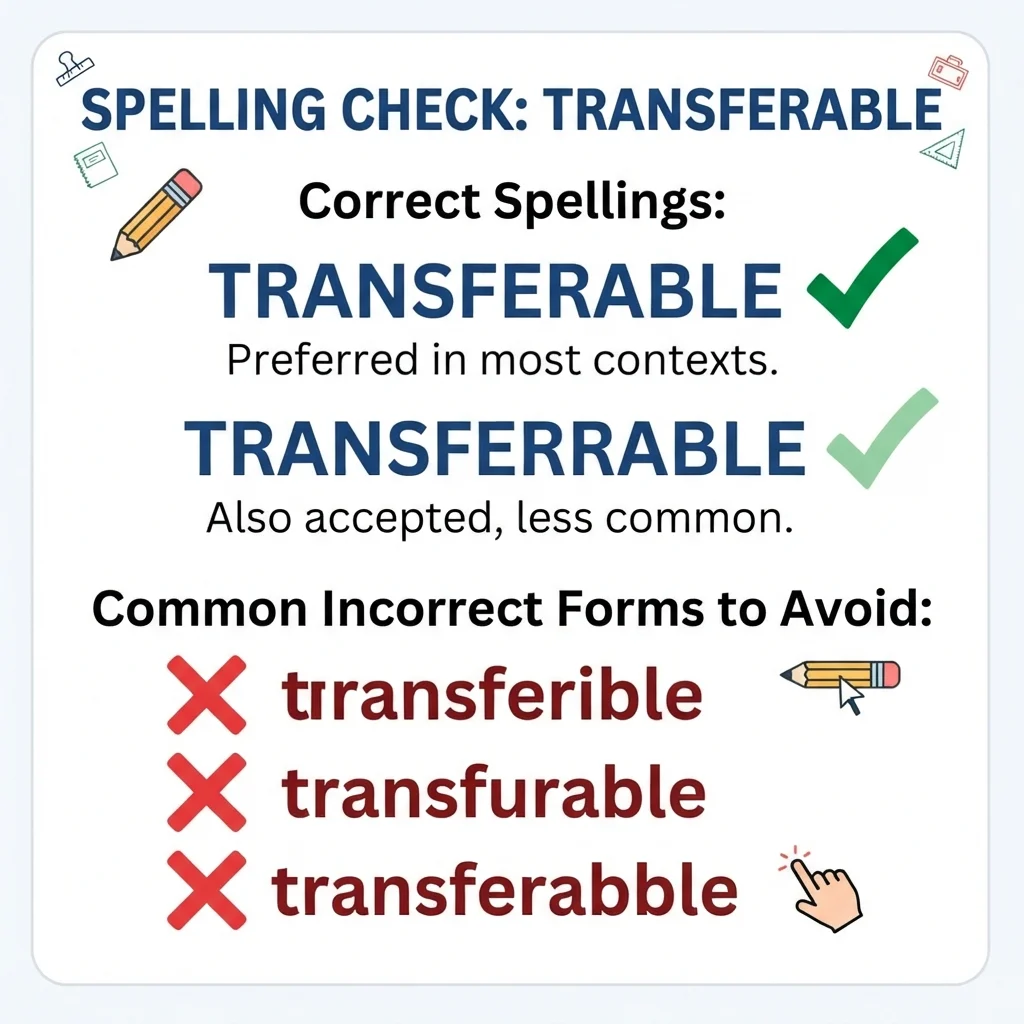
This word causes several spelling mistakes.
1. Writing “transferible”
❌ transferible
✅ transferable
The correct ending is -able, not -ible.
2. Assuming “transferrable” is always wrong
❌ “Transferrable is always incorrect.”
This is not accurate.
Transferrable is an accepted spelling variant, although it is less common than transferable.
3. Adding an extra letter
❌ transferrabble
✅ transferable
Do not add extra letters before the -able ending.
4. Confusing the word with “transfer”
Transfer is the verb.
Transferable is an adjective.
Example:
You can transfer the ticket.
The ticket is transferable.
5. Using “transferable” as a verb
❌ I transferable my credits.
✅ I transfer my credits.
Transferable describes something. It does not perform the action.
Transferable or Transferrable in Everyday Examples

The word appears in many everyday situations.
In Emails
Please confirm whether the booking is transferable.
Or:
My current skills are transferable to this role.
In News Writing
The company introduced new transferable benefits for employees.
On Social Media
Your skills are more transferable than you think.
In Resumes
Developed strong transferable communication and leadership skills.
In Formal Writing
The course provides transferable knowledge that can be applied in several professional settings.
In Education
Some college credits may be transferable to another institution.
In Travel
The airline issued a transferable ticket under certain conditions.
In Business
The employee has transferable skills that can support other departments.
Transferable – Google Trends & Usage Data

Searches for transferable and transferrable usually come from people checking spelling or looking for the correct form.
The two spellings do not have equal popularity. Transferable is generally the more common form in modern English.
The word is especially common in professional and educational contexts.
Common search contexts include:
- Transferable skills
- Transferable credits
- Transferable tickets
- Transferable experience
- Transferable qualifications
- Transferable knowledge
The spelling transferrable may still appear in search results because it is an accepted variant.
Usage can also vary by website, industry, dictionary preference, and writing style. Because spelling databases and search trends can change over time, it is better to focus on the broad usage pattern rather than one temporary search number.
For most online content, business writing, resumes, and educational material, transferable is the safer choice.
Transferable vs Transferrable: Side-by-Side Comparison
| Feature | Transferable | Transferrable |
|---|---|---|
| Correct spelling | Yes | Yes |
| Meaning | Able to be transferred | Able to be transferred |
| Common usage | Very common | Less common |
| Professional writing | Recommended | Acceptable |
| Resume writing | Recommended | Acceptable |
| Academic writing | Recommended | Acceptable |
| British English | Used | Used |
| American English | Used | Used |
| Easy choice | Yes | Less preferred |
The main difference
There is no major difference in meaning.
The main difference is frequency and spelling preference.
Transferable is the form most writers should choose when they want a simple, familiar spelling.
FAQs About Transferable or Transferrable
1. Is transferable or transferrable correct?
Both transferable and transferrable are accepted spellings. However, transferable is more common and is usually the preferred choice.
2. Is transferable the British spelling?
Yes. Transferable is used in British English. It is not limited to American English.
3. Is transferrable a misspelling?
No. Transferrable is an accepted spelling variant. It is simply less common than transferable.
4. Which spelling is better for a resume?
Transferable is a good choice for a resume because it is widely recognized and commonly used in professional writing.
Example:
Transferable leadership skills
5. What does transferable mean?
Transferable means something that can be moved, used, or applied in another place, situation, or context.
Example:
She has transferable skills.
This means her skills can be useful in another job or situation.
6. Should I use transferable skills or transferrable skills?
Both are possible, but transferable skills is the more common phrase.
7. Why does transferable have only one “r”?
The spelling transferable keeps the original ending of transfer and adds -able. English also developed the variant transferrable, which doubles the r.
Conclusion
When deciding between transferable or transferrable, the easiest answer is transferable.
Both spellings can be found in English, and both carry the same basic meaning. The difference is mainly in spelling preference and frequency. Transferable is much more familiar to many readers and is widely used in professional, academic, business, and everyday writing.
You can use transferable when talking about skills, credits, tickets, experience, knowledge, benefits, or other things that can move from one person, place, or situation to another.
Transferrable is not automatically wrong. It is an accepted variant, but it is less common. If you want your writing to be clear and easy for a broad audience, transferable is the better default.
So, when you are writing a resume, email, article, report, or social media post, remember this simple rule:
Transferable is the preferred spelling for most situations.

Storm Jameson writes engaging English captions for funcaptionz.com, sharing creative wording, short ideas, and expressive lines for modern readers online Today.









