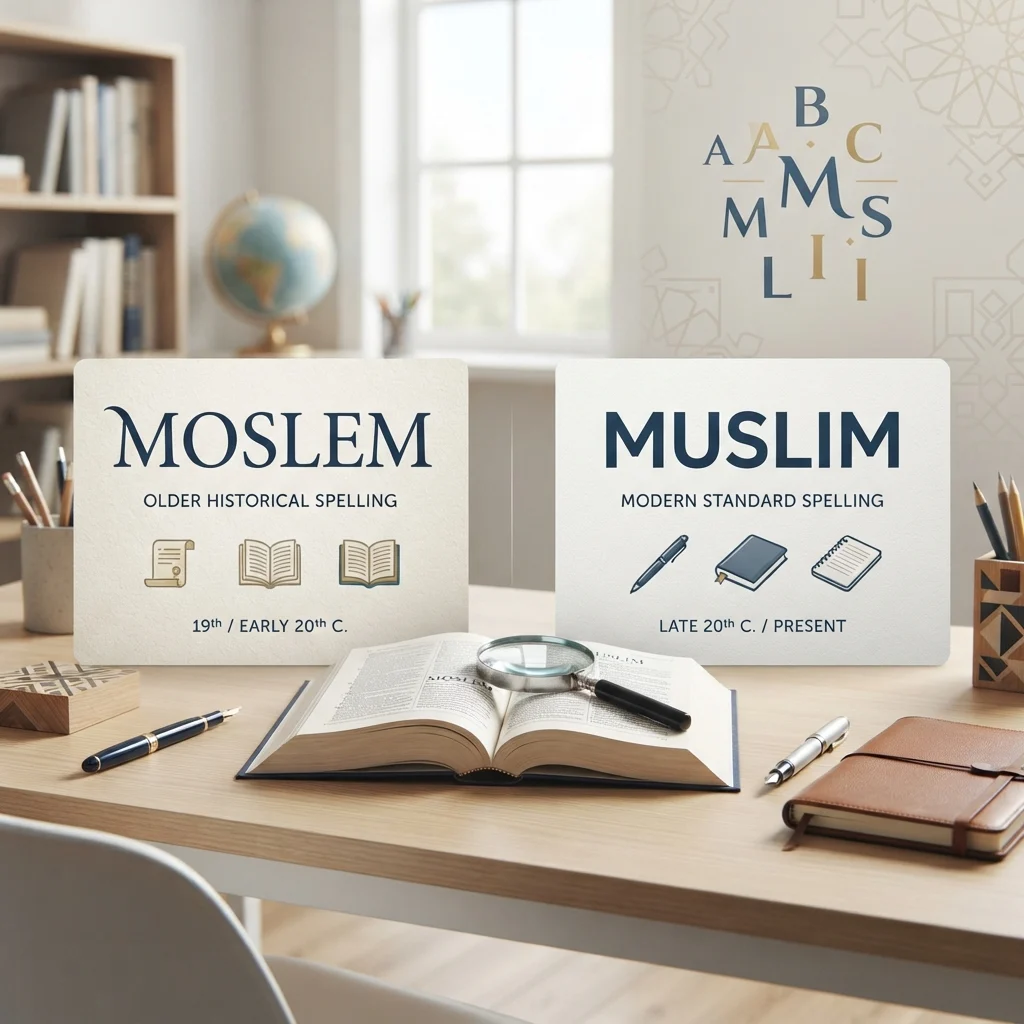
Muslim is the standard modern English spelling for a person who follows Islam, while Moslem is an older variant that is now uncommon in contemporary writing.
Moslem or Muslim—which spelling is correct, and why do both forms exist? If you’ve encountered Moslem in an older book or Muslim in modern articles, you may wonder whether one is incorrect. The key difference is usage: Muslim is the established and overwhelmingly more common spelling in present-day English, while Moslem is an older variant that has become uncommon.
The word Muslim refers to a person who follows Islam and is the form you will normally see in contemporary English writing, including educational, academic, and general-purpose content. Moslem has historical usage, so seeing it in an older source does not necessarily mean it was a spelling mistake. However, it is not the usual choice for modern writing.
So, if you’re wondering “Should I write Moslem or Muslim?”, choose Muslim for contemporary English unless you are specifically discussing historical wording or quoting an older source.
In this guide, you’ll discover the difference between Moslem and Muslim, why both spellings developed, how their usage has changed, and clear examples showing when each form may appear. By the end, you’ll know which spelling fits modern writing and why.
Moslem or Muslim meanings
Muslim is the standard spelling used in modern English.
Moslem is an older English spelling. You may still find it in older books, historical documents, or older publications.
Simple examples:
- Correct for modern writing: Muslim
- Older spelling: Moslem
- Plural: Muslims
- Older plural: Moslems
For most modern writing, choose Muslim.
| Spelling | Modern Usage | Example |
|---|---|---|
| Muslim | Standard and preferred | She is Muslim. |
| Moslem | Older or historical | The old book uses “Moslem.” |
If you are writing for a modern audience, Muslim is usually the clearest choice.
The Origin of Moslem or Muslim
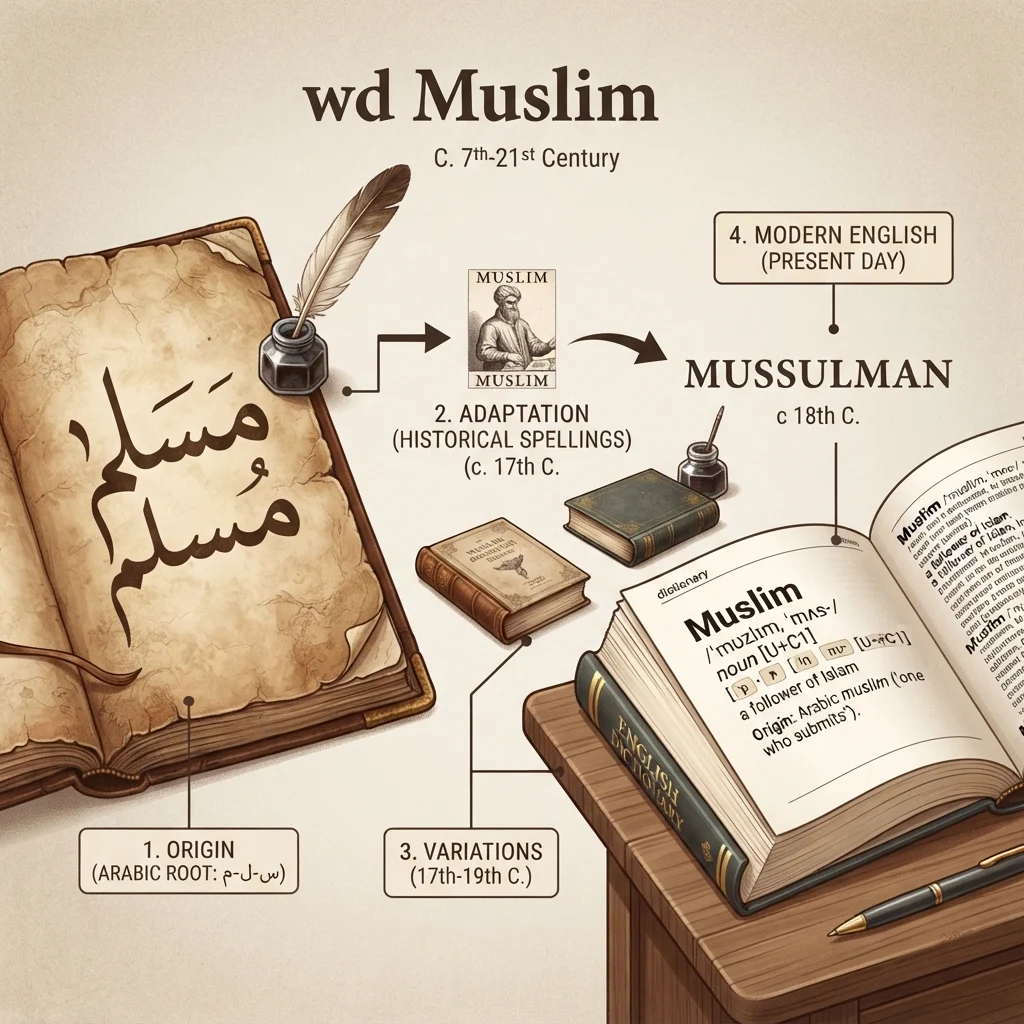
The word Muslim comes from Arabic. It is connected to the Arabic word islām, which means submission or surrender to God.
The Arabic form of the word is commonly written as muslim when represented in English letters.
English has used different spellings for many words borrowed from other languages. Before modern spelling became more consistent, writers often tried to represent foreign sounds in different ways.
This is why older English texts may use Moslem, Muslim, or other historical spellings.
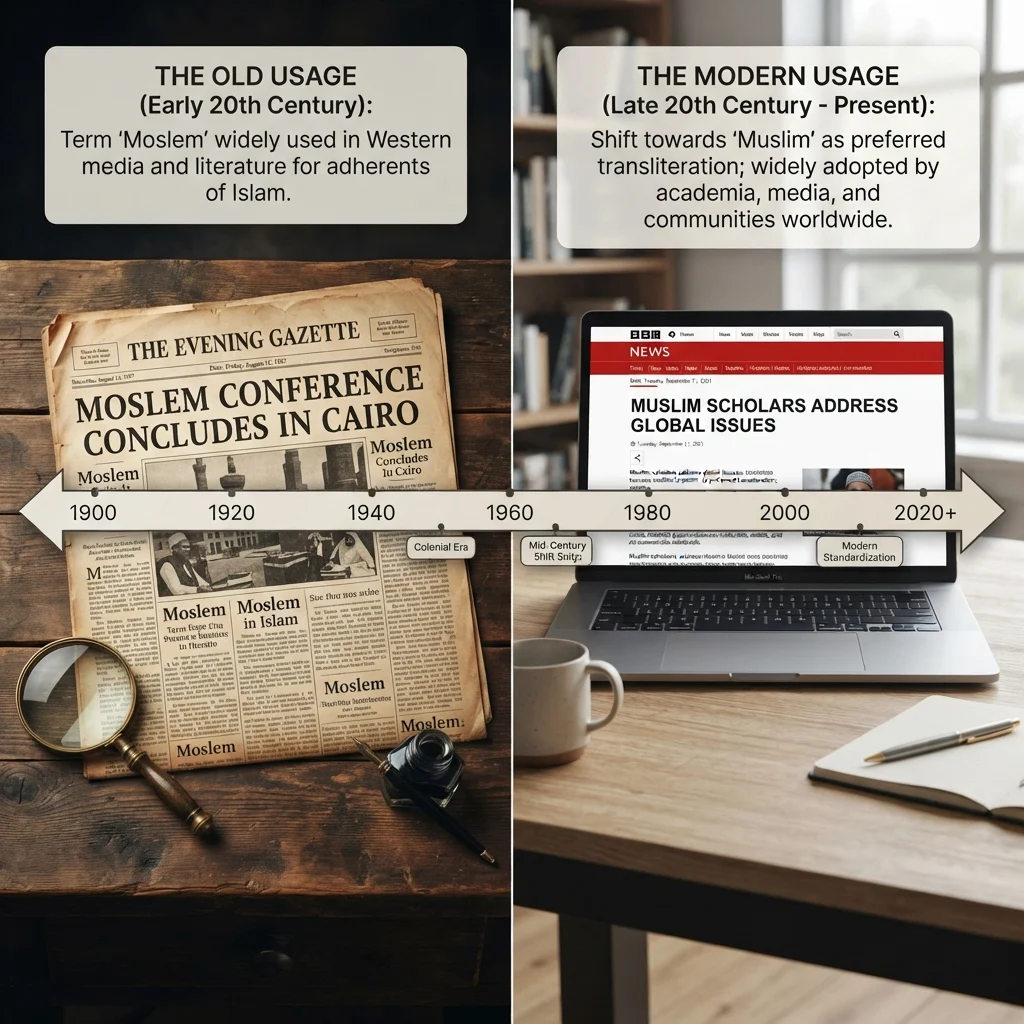
The spelling Moslem became common in some older English writing. Over time, Muslim became the more widely accepted modern form.
Spelling also changed because English speakers developed better ways to represent Arabic words. Modern writing tends to stay closer to the commonly used transliteration Muslim.
Today, the two spellings are not equal in everyday use. Muslim is the normal modern form, while Moslem has an older or historical feel.
British English vs American English Spelling
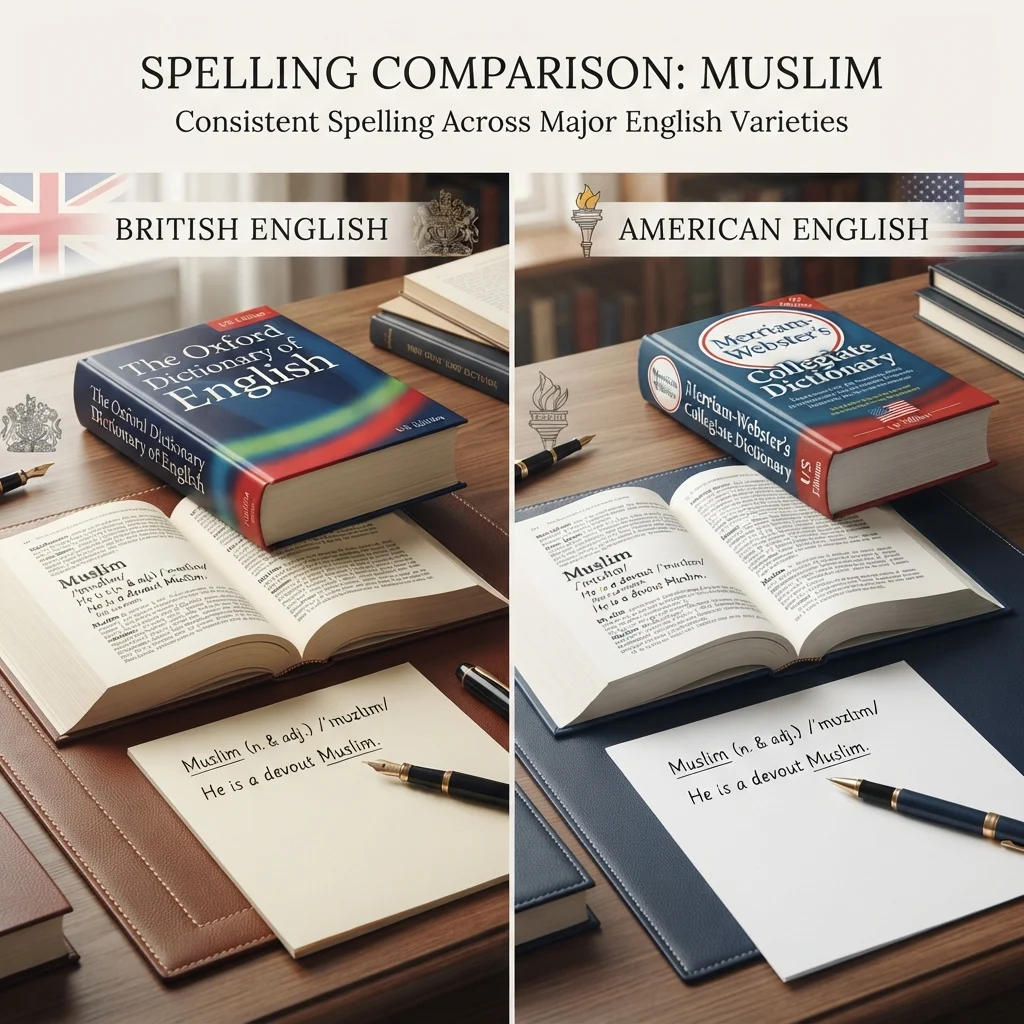
Unlike some spelling differences between British and American English, Moslem vs Muslim is not mainly a US-versus-UK spelling rule.
Both British and American English commonly use Muslim today.
Comparison
| English Variety | Preferred Modern Spelling | Older Form |
|---|---|---|
| British English | Muslim | Moslem |
| American English | Muslim | Moslem |
| Canadian English | Muslim | Moslem |
| Australian English | Muslim | Moslem |
| New Zealand English | Muslim | Moslem |
| International English | Muslim | Moslem |
The main difference is modern versus older usage, rather than British versus American spelling.
Examples
Modern British English:
The Muslim community held a special event.
Modern American English:
The Muslim community held a special event.
Older writing:
The book describes the Moslem population of the region.
The last example may be acceptable when quoting or discussing an old source, but Muslim is normally better for new writing.
Which Spelling Should You Use?
The right choice depends on your audience and the type of writing.
For a US Audience
Use Muslim.
It is the standard form in modern American English.
For a UK or Commonwealth Audience
Use Muslim.
British, Australian, Canadian, and other Commonwealth readers will also recognize this as the normal modern spelling.
For a Global Audience
Use Muslim.
It is the most familiar form for international readers.
For Historical Writing
You may see Moslem in older material.
If you are discussing an old book, newspaper, quotation, or historical document, keep the original spelling when needed.
For example:
The 19th-century text used the word “Moslem.”
This makes it clear that the spelling belongs to the historical source rather than your own modern writing.
Common Mistakes with Moslem or Muslim
Several mistakes happen when people are unsure about these spellings.
Mistake 1: Using Moslem in modern writing
Less suitable:
She is Moslem.
Better:
She is Muslim.
Mistake 2: Thinking British English uses Moslem
This is not a simple British-versus-American difference.
Muslim is widely used in modern British English as well.
Mistake 3: Mixing spellings
Avoid switching between Muslim and Moslem in the same article without a reason.
Choose one modern form and use it consistently.
Mistake 4: Changing historical quotations
If an old source says “Moslem,” do not silently change it when the exact historical wording matters.
Mistake 5: Treating both forms as equally common today
Both forms have existed in English, but Muslim is the normal modern spelling.
Moslem or Muslim in Everyday Examples

Knowing how the word works in real writing can make the difference easier to understand.
In an Email
Our office will be closed for the Muslim holiday.
For modern professional communication, Muslim is the natural choice.
In News Writing
Muslim communities around the world celebrated the occasion.
Modern news writing normally uses Muslim.
On Social Media
Wishing all Muslim friends a peaceful and happy celebration.
Muslim is the more familiar spelling for social media readers.
In Formal Writing
The study examines Muslim communities in different countries.
Academic and professional writing generally uses Muslim.
In Historical Writing
The newspaper used the spelling “Moslem” in its original report.
Here, Moslem is used because the spelling itself is part of the historical discussion.
Moslem or Muslim – Google Trends & Usage Data
Search interest for Moslem or Muslim can vary by country, age group, and writing context.
In modern English-language searches, Muslim is generally the much more familiar spelling. It appears widely in current news, education, books, websites, and everyday communication.
Moslem is more likely to appear in searches connected with:
- Older books
- Historical documents
- Old newspaper articles
- Historical terminology
- Spelling questions
- Archived content
- Discussions about changing language
This creates an important search pattern. Someone searching “Moslem or Muslim” may not simply want a definition. They may want to know whether an older spelling is still correct.
For current writing, the practical answer remains straightforward: use Muslim.
Search popularity can also change over time. Trends data should therefore be viewed as a guide to search behavior, not as a rule for correct spelling.
Moslem vs Muslim: Side-by-Side Comparison
| Feature | Muslim | Moslem |
|---|---|---|
| Modern spelling | Yes | Older form |
| Historical use | Yes | Yes |
| Common today | Yes | Much less common |
| Used in modern news | Yes | Rare |
| Used in modern formal writing | Yes | Usually avoided |
| Suitable for global readers | Yes | Less familiar |
| May appear in old texts | Yes | Yes |
| Best choice for new writing | Yes | Usually no |
The key difference is simple: Muslim is the modern standard form, while Moslem is mainly an older spelling.
FAQs About Moslem or Muslim
1. Is Moslem or Muslim correct?
Muslim is the standard spelling for modern English. Moslem is an older spelling that can appear in historical material.
2. Is Moslem still used?
Yes, but it is much less common in modern English. You may find it in older books, documents, or historical writing.
3. Is Muslim British or American spelling?
Muslim is used in both British and American English. It is not mainly a British-versus-American spelling difference.
4. Should I use Moslem in a formal article?
For a modern article, Muslim is normally the better choice. Use “Moslem” when discussing historical wording or quoting an older source.
5. Why are there two spellings?
English writers have used different ways to represent Arabic words in Latin letters. Older English writing often used spellings that differ from modern usage.
6. Is Muslim the modern spelling?
Yes. Muslim is the standard and widely recognized modern English spelling.
7. Can I use Moslem and Muslim together?
You can, but only when there is a clear reason. For example, you may discuss Moslem as an older spelling while using Muslim throughout your modern writing.
Conclusion
When choosing between Moslem or Muslim, the answer is easy for most modern writing: use Muslim.
The spelling Moslem is not simply an American or British variation. It is an older English form that can still be found in historical books, archived newspapers, and older documents. English has changed over time, and the spelling used for words from other languages has changed with it.
Today, Muslim is the familiar spelling for modern readers. It works well in websites, articles, emails, school assignments, news writing, academic work, and social media.
If you are talking about an old source, however, you may need to keep the original spelling Moslem. This is especially true when the historical wording itself matters.
So, for a simple rule, remember this: use Muslim for modern English, and use Moslem mainly when the historical context calls for it.

Walter de la Mare writes creative English captions for funcaptionz.com, sharing short ideas, thoughtful wording, and expressive lines for modern readers.









