
A testator is a person who makes a will, while testatrix traditionally means a woman who makes a will. In modern legal writing, “testator” is often used as a gender-neutral term.
Testator or testatrix—which word is correct? The answer becomes much simpler once you understand how these legal terms are traditionally used. A testator is someone who creates a will, while testatrix is the traditional term for a woman who makes a will. For example, an older legal document might refer to a female will-maker as the “testatrix.”
However, there is an important modern usage point: testator is increasingly used as a gender-neutral term, so you may not need “testatrix” when referring to a woman today. The preferred terminology can also vary depending on the jurisdiction, legal document, or writing style.
If you’ve encountered testator vs. testatrix in a will, legal document, dictionary, or formal writing and aren’t sure which term to choose, you’re not alone. The distinction is easy to misunderstand because both words describe someone who makes a will.
In this guide, you’ll discover the exact meanings of testator and testatrix, their key difference, traditional and modern usage, correct examples, and which term may be appropriate in different contexts—so you can use the terminology accurately and confidently.
Testator or Testatrix meanings
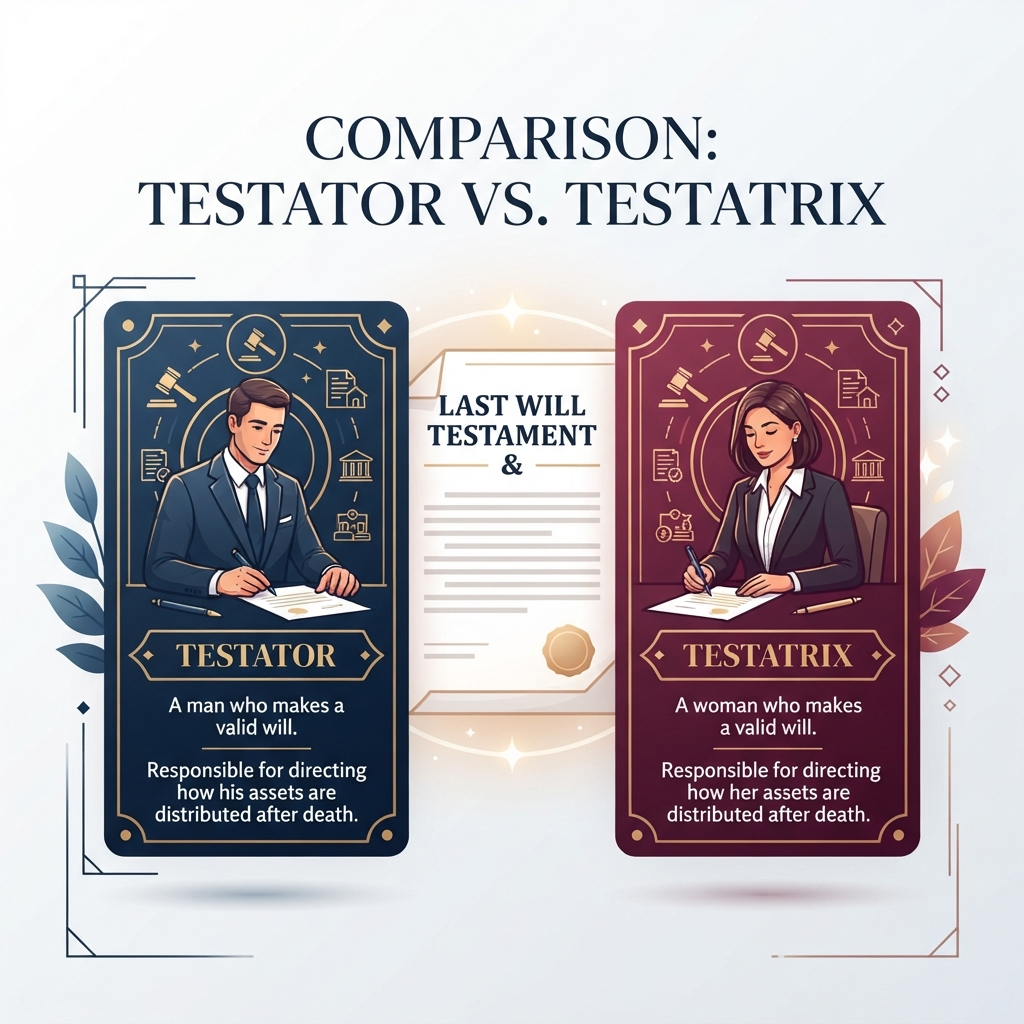
Testator is a person who makes a will.
Testatrix traditionally means a woman who makes a will.
For example:
- The testator signed the will before two witnesses.
- The testatrix left her home to her daughter.
The traditional difference is based on gender:
| Term | Traditional meaning |
|---|---|
| Testator | A person who makes a will, traditionally a man |
| Testatrix | A woman who makes a will |
Today, testator is often used as a general or gender-neutral legal term. It can refer to any person who makes a will.
So, if you need one modern term for a person who creates a will, testator is usually the safer choice.
The Origin of Testator or Testatrix
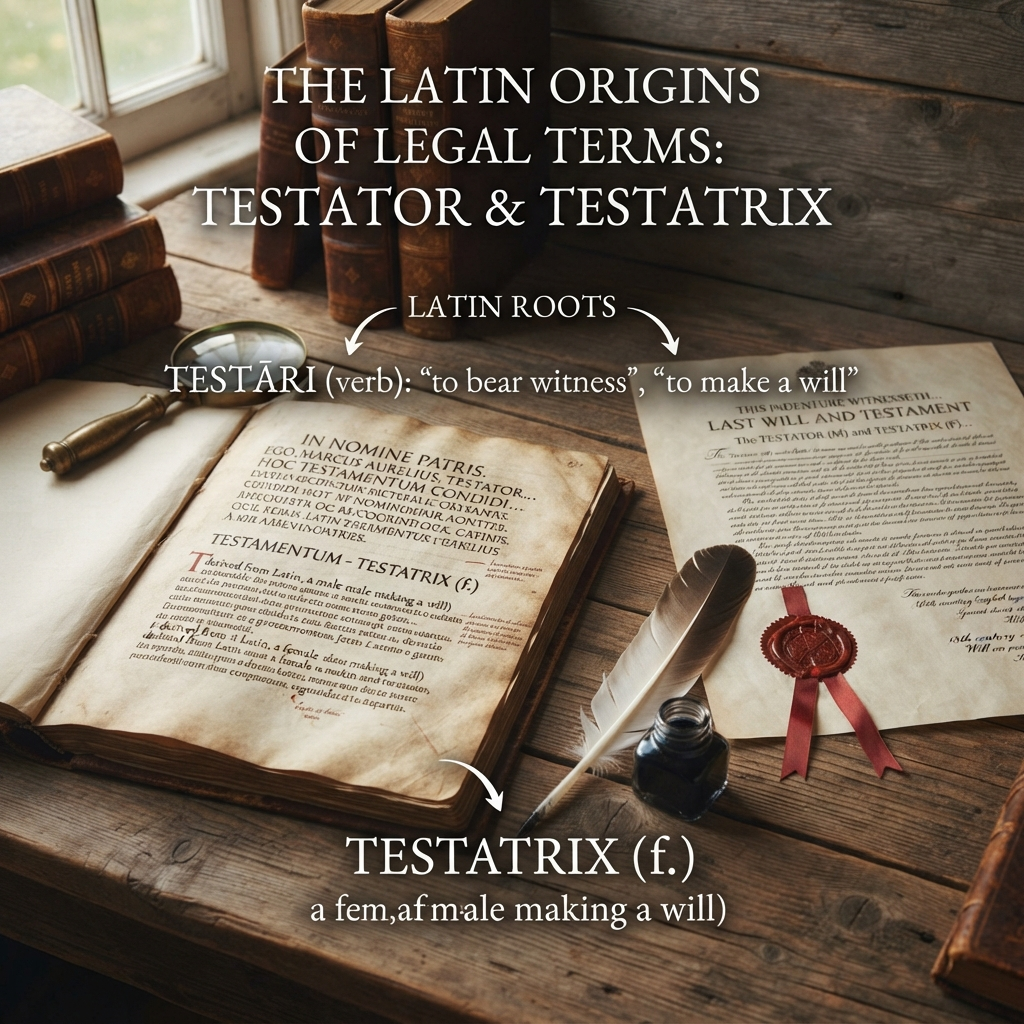
The words testator and testatrix come from Latin.
The word testator comes from the Latin testator, meaning a person who makes a will or gives a legal declaration. It is related to the Latin word testari, meaning “to witness” or “to make a will.”
Testatrix developed as the traditional feminine form of testator.
This type of word formation was common in older legal English. A masculine form was used for men, while a separate feminine form was created for women.
Over time, English legal writing has moved toward simpler and more gender-neutral language. Because of this change, testator is now often used for people of any gender.
The spelling difference is therefore not a simple British-versus-American spelling issue. It mainly comes from the traditional masculine and feminine forms of the word.
British English vs American English Spelling
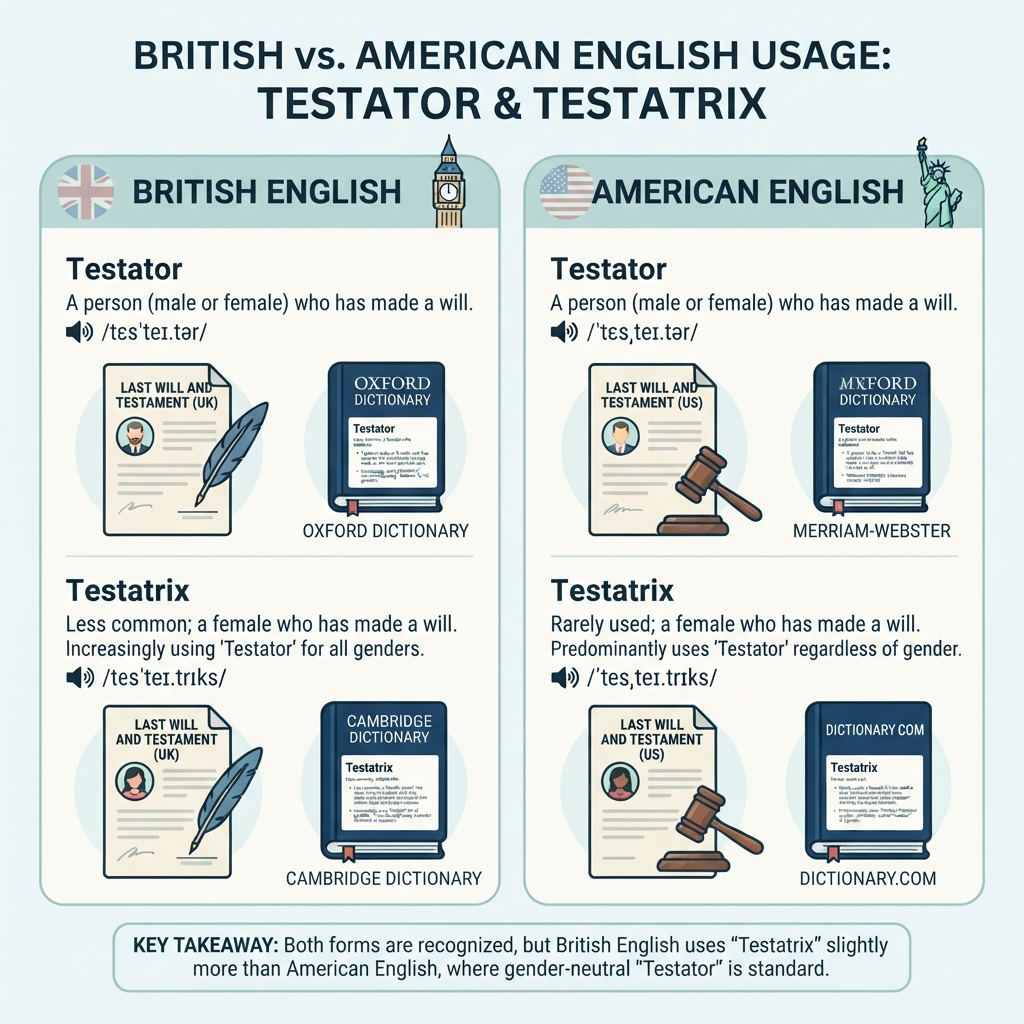
There is no major British-American spelling difference between testator and testatrix.
Both forms are spelled the same in British and American English.
The main difference is how modern legal writers use them. Older or more traditional writing may use testatrix for a woman. Modern writing may use testator for anyone who makes a will.
Comparison Table
| Meaning | British English | American English |
|---|---|---|
| Person who makes a will | Testator | Testator |
| Traditional female form | Testatrix | Testatrix |
| Gender-neutral modern use | Testator | Testator |
| Plural | Testators | Testators |
For example:
British English:
“The testator signed the document.”
American English:
“The testator signed the document.”
The spelling does not change.
Which Spelling Should You Use?
Your choice depends mainly on the type of writing and the legal style being followed.
For US English
Use testator when referring to a person who makes a will. Modern American legal writing commonly favors clear, gender-neutral language.
Example:
“The testator named three beneficiaries.”
For UK and Commonwealth English
Testator is also widely understood and used as the general term.
Testatrix may still appear in older documents, traditional legal language, or documents that specifically use the feminine form.
For Global English
If your audience is international, testator is usually the clearest choice.
It avoids unnecessary gender distinctions and is easy for readers to understand in legal contexts.
Quick Rule
Use “testator” for a person who makes a will.
Use testatrix when you are discussing a traditional feminine legal term or when a specific legal document uses that wording.
Common Mistakes with Testator or Testatrix
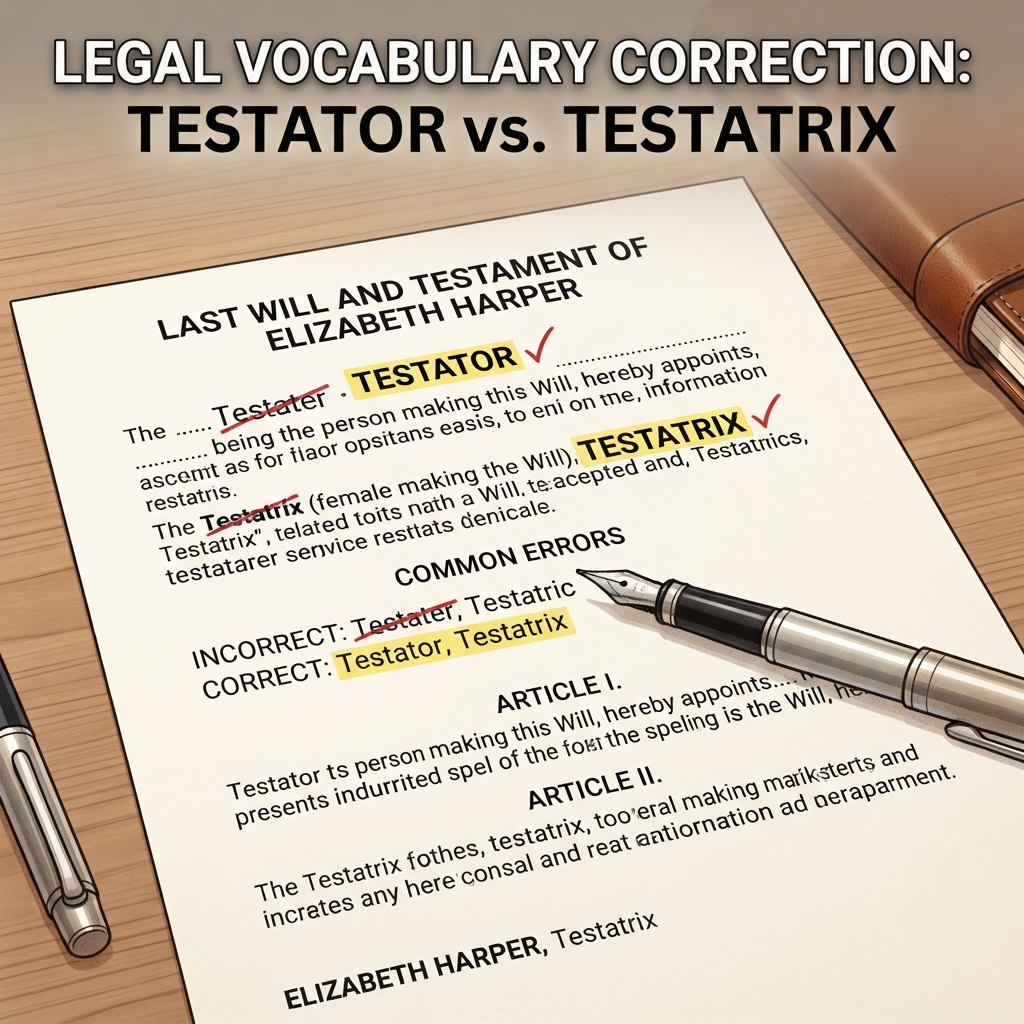
The unusual spelling of these words can lead to several mistakes.
1. Writing “testater”
❌ The testater signed the will.
✅ The testator signed the will.
Testator ends with -ator, not -ater.
2. Writing “testatrix” for every person
❌ The testatrix was the father of three children.
✅ The testator was the father of three children.
Testatrix is traditionally the feminine form.
3. Assuming testatrix is the American spelling
❌ Testatrix is the American spelling of testator.
✅ Testator and testatrix are different traditional forms, not British and American spellings.
4. Using “testator” and “testatrix” as verbs
These words are nouns.
❌ She testatored her property to her son.
✅ She made a will and left her property to her son.
5. Confusing testator with beneficiary
A testator makes a will.
A beneficiary receives something from the will.
They are not the same person.
Testator or Testatrix in Everyday Examples

These terms are mostly found in legal and formal writing, but they can appear in several contexts.
In an Email
“Please confirm whether the testator signed the final version of the will.”
This sounds appropriate for a legal or professional email.
In a News Article
“The testator left most of the estate to family members.”
News writers may use testator when discussing wills and inheritance.
On Social Media
A casual post might say:
“The testator named several people in the will.”
However, most social media users would simply say:
“The person who made the will named several people.”
In Formal Writing
“The testator appointed his daughter as the executor of the estate.”
This is a natural use in formal legal writing.
In a Legal Document
“The testator declares this document to be his last will and testament.”
Traditional legal documents may use formal language like this.
Testator or Testatrix – Google Trends & Usage Data
Search interest for testator or testatrix is mainly connected with legal topics rather than everyday conversation.
People are more likely to search these terms when they are:
- Reading a will
- Studying law
- Preparing probate documents
- Learning about inheritance
- Reviewing an estate
- Translating legal documents
- Comparing legal terminology
Testator generally has broader practical use because it can refer to a person who makes a will without focusing on gender.
Testatrix has a narrower use. It is more likely to appear in traditional legal language or searches specifically asking about the female form.
Search interest can also vary by country and legal system. Countries that use English legal terminology may show interest in both words, while modern legal writing tends to favor gender-neutral terminology.
For everyday writing, testator is the term most readers are likely to recognize and understand.
Testator vs Testatrix: Side-by-Side Comparison
| Feature | Testator | Testatrix |
|---|---|---|
| Word type | Noun | Noun |
| Meaning | Person who makes a will | Traditionally, woman who makes a will |
| Gender | Modern usage can be gender-neutral | Traditionally female |
| Origin | Latin | Latin |
| Legal use | Common | Traditional or specific |
| British spelling | Testator | Testatrix |
| American spelling | Testator | Testatrix |
| Plural | Testators | Testatrices |
| Everyday use | Rare | Very rare |
| Modern general choice | Yes | Usually unnecessary |
FAQs About Testator or Testatrix
1. What is the difference between a testator and a testatrix?
Traditionally, a testator is a man who makes a will, while a testatrix is a woman who makes a will. In modern legal English, testator can be used as a gender-neutral term.
2. Is testatrix still a correct word?
Yes. Testatrix is a recognized traditional legal term for a woman who makes a will. However, many modern writers prefer the gender-neutral term testator.
3. Is testator male or female?
Traditionally, testator was associated with a male person. Today, it can be used for a person of any gender who makes a will.
4. Is testatrix the British spelling of testator?
No. Testatrix is not a British spelling of testator. They are traditional gendered forms of the legal term.
5. What is the plural of testator?
The usual plural is testators.
6. What is the plural of testatrix?
The traditional plural of testatrix is testatrices.
7. Which word should I use in modern writing?
Testator is usually the simplest choice when you mean a person who makes a will. Use testatrix when a traditional feminine legal form is specifically required or relevant.
Conclusion
The difference between testator or testatrix is mainly about traditional legal terminology, not British versus American spelling. Testator means a person who makes a will, while testatrix traditionally refers specifically to a woman who makes a will.
Both words have Latin roots and have been used in legal English for a long time. The feminine form developed from older language patterns that created separate terms for individuals.
Modern legal writing often prefers clear and gender-neutral language. For this reason, testator is now commonly used as the general term for anyone who creates a will. Testatrix is still correct, but it has a more traditional and specific use.
If you are writing for a general audience, testator is usually the easiest term to understand. If you are working with an older legal document or a style that specifically distinguishes feminine terminology, testatrix may be appropriate. Always follow the terminology required by the relevant legal document or jurisdiction.

Walter de la Mare writes creative English captions for funcaptionz.com, sharing short ideas, thoughtful wording, and expressive lines for modern readers.









