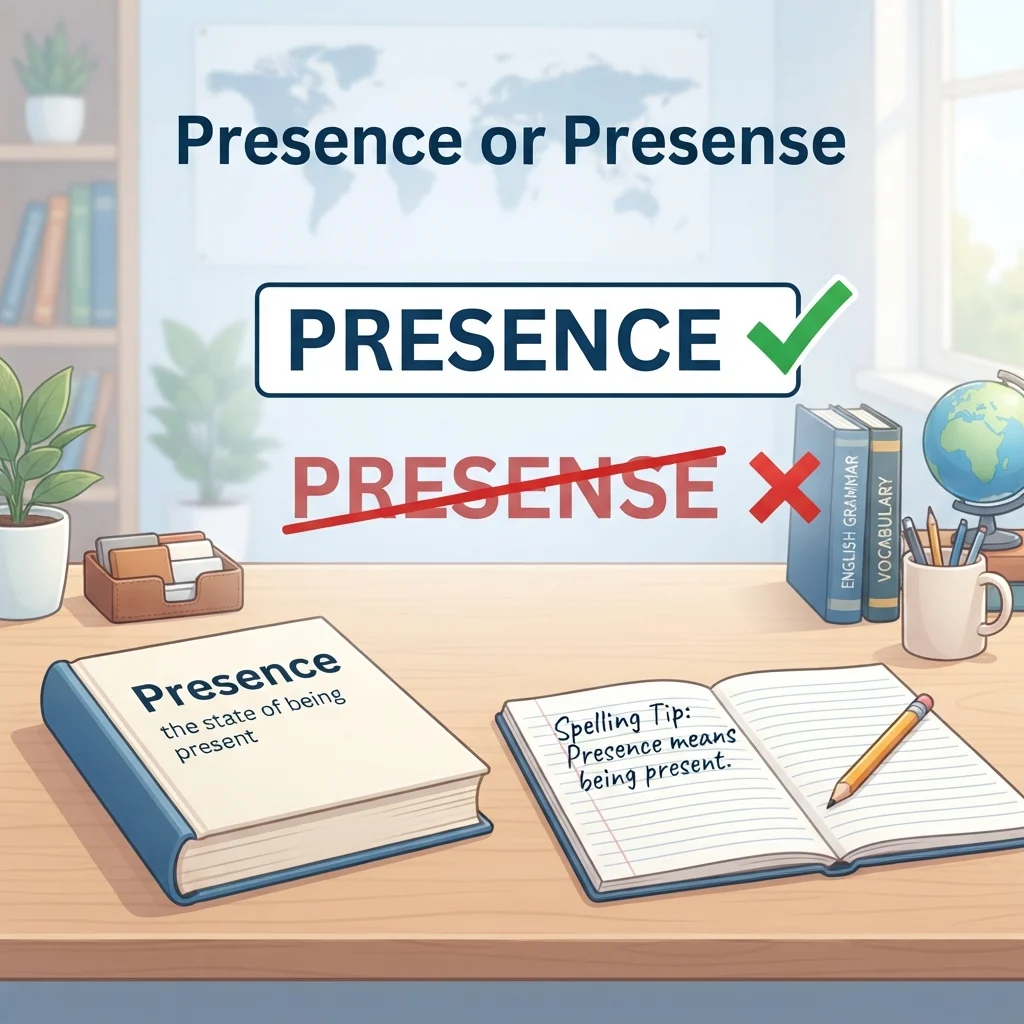
Presence is the correct English spelling, while “presense” is a misspelling. Presence means being in a particular place or the state of being present.
Have you ever wondered whether presence or presense is the correct spelling? You’re not alone—this is a common spelling confusion, especially when writing quickly. The correct word is presence, with a “c”, while presense is incorrect in standard English.
Presence is a real English noun used to describe the state of being present in a place, the fact that someone or something exists in a particular location, or the noticeable effect a person has on others. For example, you might say, “Her presence made everyone feel comfortable.”
The confusion often happens because presence is pronounced in a way that can make the spelling with “s” seem natural. However, remembering the correct -ence ending can help you avoid this mistake.
In this guide, you’ll learn the difference between presence and presense, the correct spelling, meaning, pronunciation, usage, and simple examples. You’ll also see common mistakes and an easy way to remember which spelling to use. If you’ve ever hesitated before typing presence, this quick guide will give you the clear answer you need.
Presence or Presense meanings
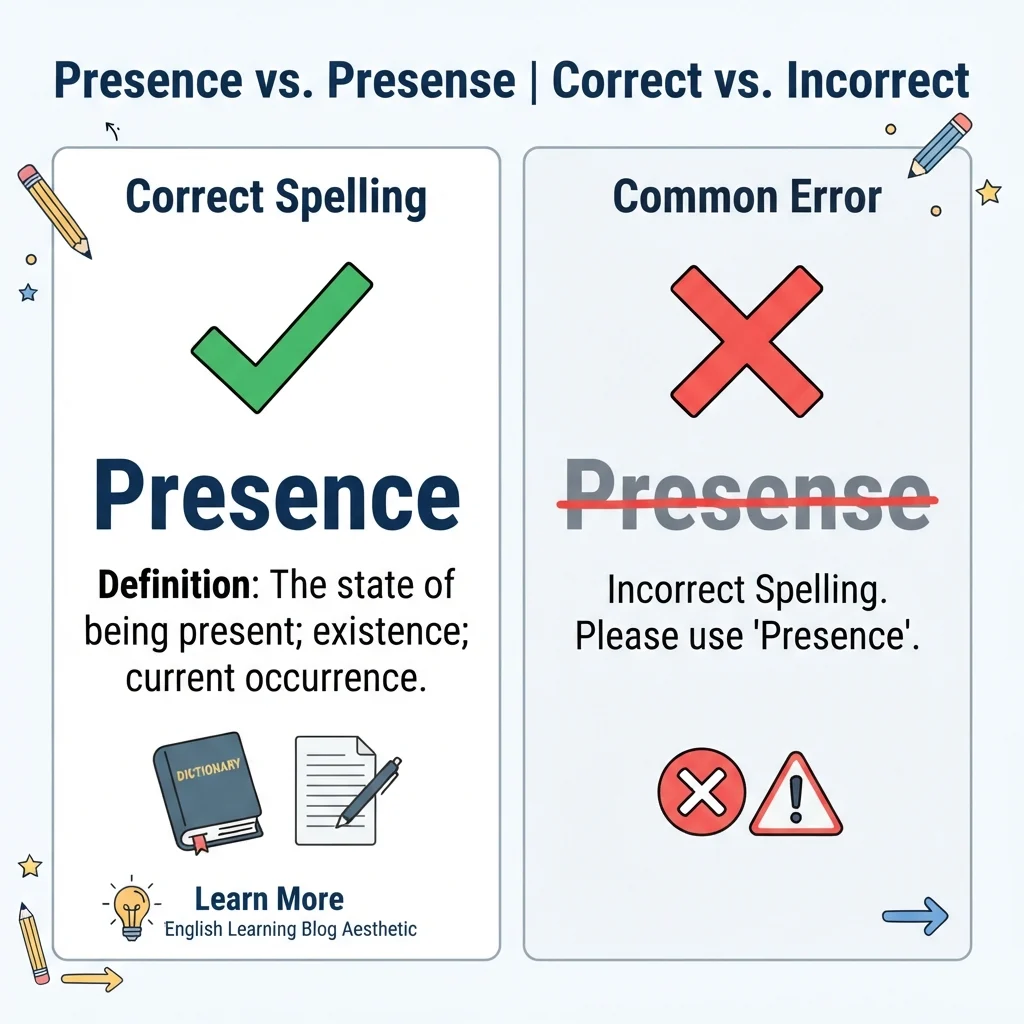
Presence is the correct spelling.
Presense is a common misspelling and should not be used in standard English.
| Spelling | Correct? | Example |
|---|---|---|
| Presence | ✅ Correct | Your presence means a lot to me. |
| Presense | ❌ Incorrect | Your presense means a lot to me. |
What Does “Presence” Mean?
Presence means the state of being in a place or the noticeable effect someone or something has.
Examples:
- Her presence made the room feel warm.
- The teacher noticed his presence in class.
- The company has a strong online presence.
- I enjoyed your presence at the party.
Easy Way to Remember
Think of the word present.
Present → Presence
The correct spelling keeps the “c”:
P-R-E-S-E-N-C-E
Not:
P-R-E-S-E-N-S-E
The Origin of Presence

The word presence comes from the Latin word praesentia, meaning “being present” or “presence.”
It entered English through Old French and Middle English. Over time, the spelling changed into the modern English form presence.
The word is related to present, which means being in a particular place or existing at a particular time.
This connection can help explain the spelling:
Present → Presence
The c in presence is important because it is part of the standard English spelling.
Why Does “Presense” Appear?
Presense is not a separate English word. It is usually created because people hear the final sound in presence and spell it as -sense.
The ending can sound similar to other words, such as:
- sense
- sentence
- defense
- license
This can make the spelling confusing. However, presence is the standard form.
British English vs American English Spelling
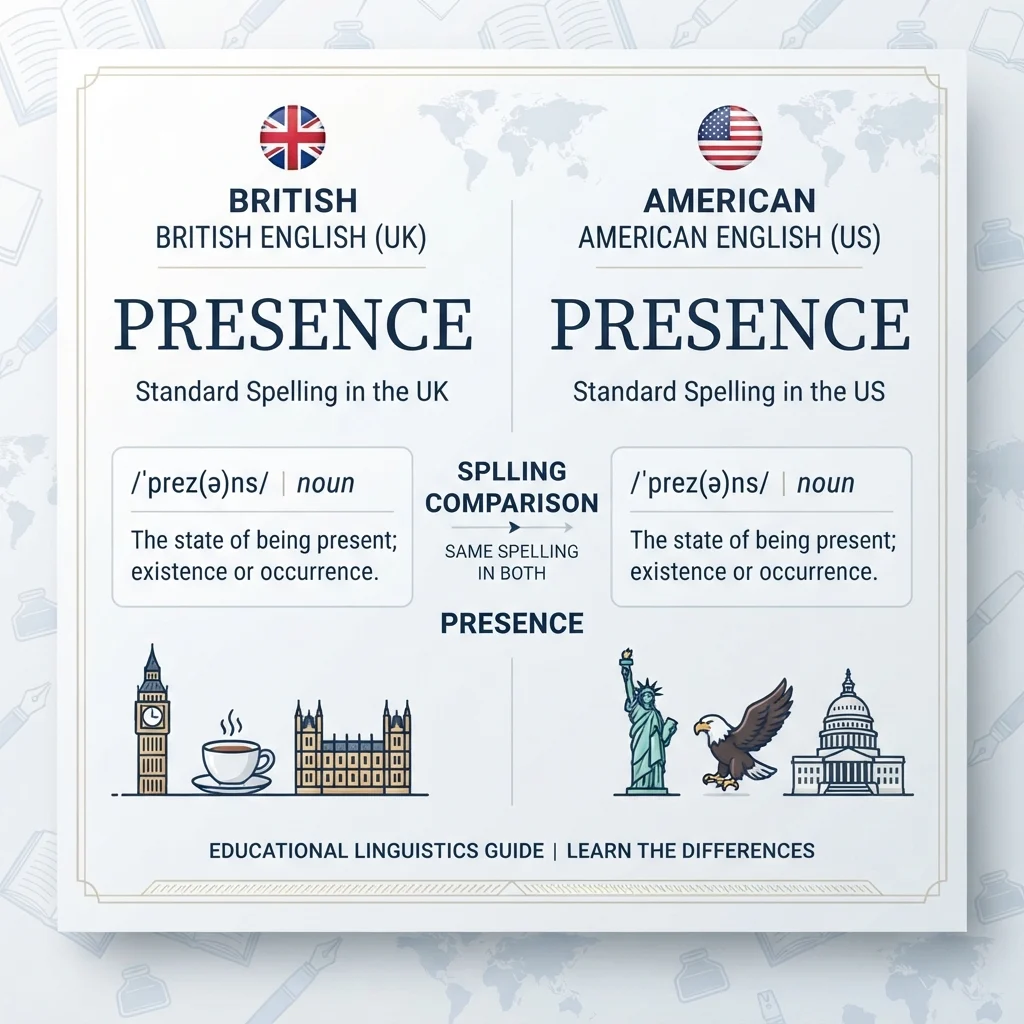
There is no spelling difference between British English and American English for this word.
Both use:
presence
The incorrect form presense is not the standard spelling in either variety.
| English Variety | Correct Spelling | Incorrect Spelling |
|---|---|---|
| British English | presence | presense |
| American English | presence | presense |
| Canadian English | presence | presense |
| Australian English | presence | presense |
| General international English | presence | presense |
Examples in British English
- Her presence was noticed immediately.
- The brand has a growing online presence.
- His presence at the meeting was important.
Examples in American English
- Her presence helped everyone relax.
- The company has a strong digital presence.
- His presence changed the mood.
So, unlike words such as colour/color or centre/center, presence stays the same in British and American English.
Which Spelling Should You Use?
The answer is simple: use presence.
If You Write for a US Audience
Use:
presence
Example:
We value your presence at our event.
If You Write for a UK or Commonwealth Audience
Use:
presence
Example:
Thank you for your presence at the meeting.
If You Write for a Global Audience
Use:
presence.
It is the standard spelling across major forms of English.
For School or College Writing
Always choose presence.
For Business Writing
Use presence in emails, reports, presentations, and documents.
For Social Media
Use presence when the word is needed.
For example:
Your presence makes every day better.
Common Mistakes with Presence or Presense
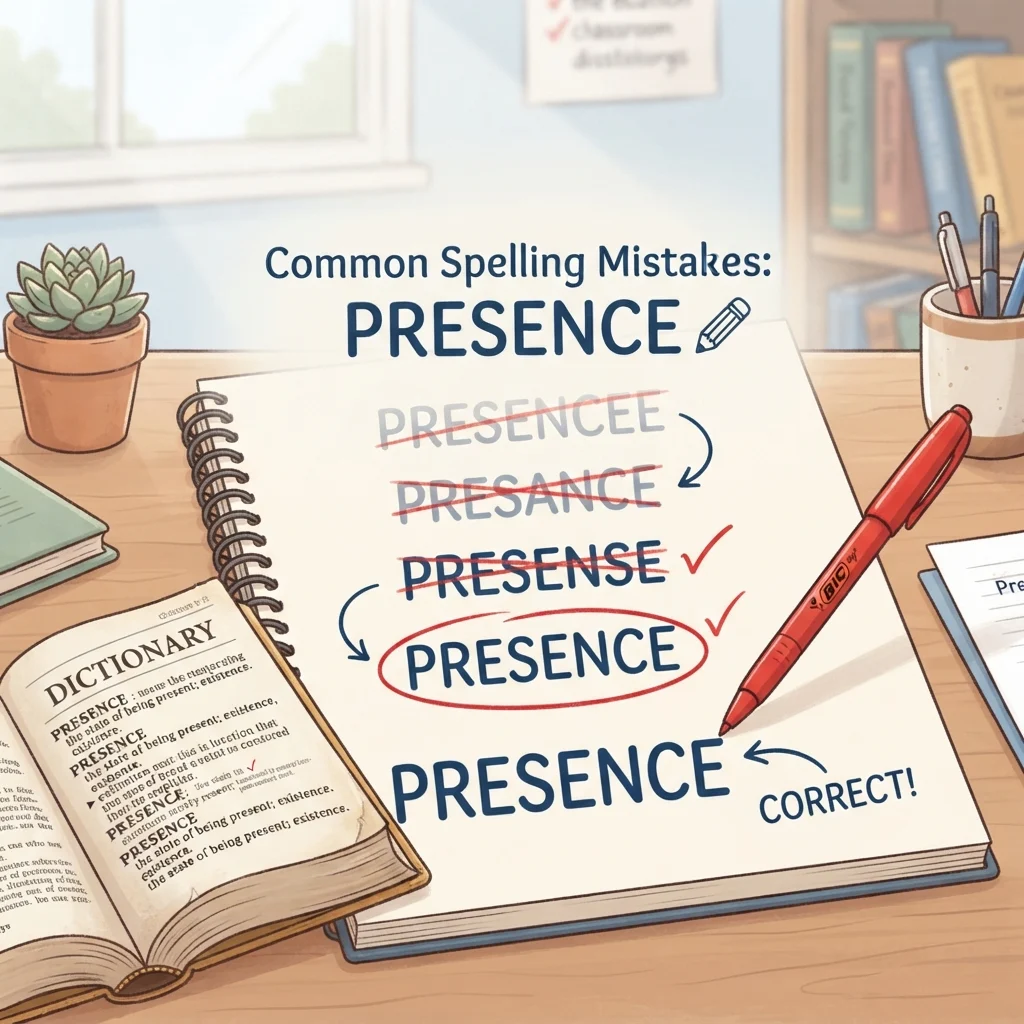
The most common mistake is adding s instead of c before the final e.
❌ Incorrect: Presense
Her presense was felt by everyone.
✅ Correct: Presence
Her presence was felt by everyone.
Mistake 2: Confusing Presence With Present
These words are related but have different uses.
Present can describe being somewhere:
She is present at the meeting.
Presence is the state or fact of being there:
Her presence was important.
Mistake 3: Confusing Presence With Sense
Sense is a different word.
I have a sense of danger.
Presence refers to being somewhere or having an effect.
I felt his presence nearby.
Mistake 4: Adding an Extra “s”
Remember:
presence ✅
Not:
presense ❌
A useful spelling pattern is:
present + ce = presence
Presence in Everyday Examples
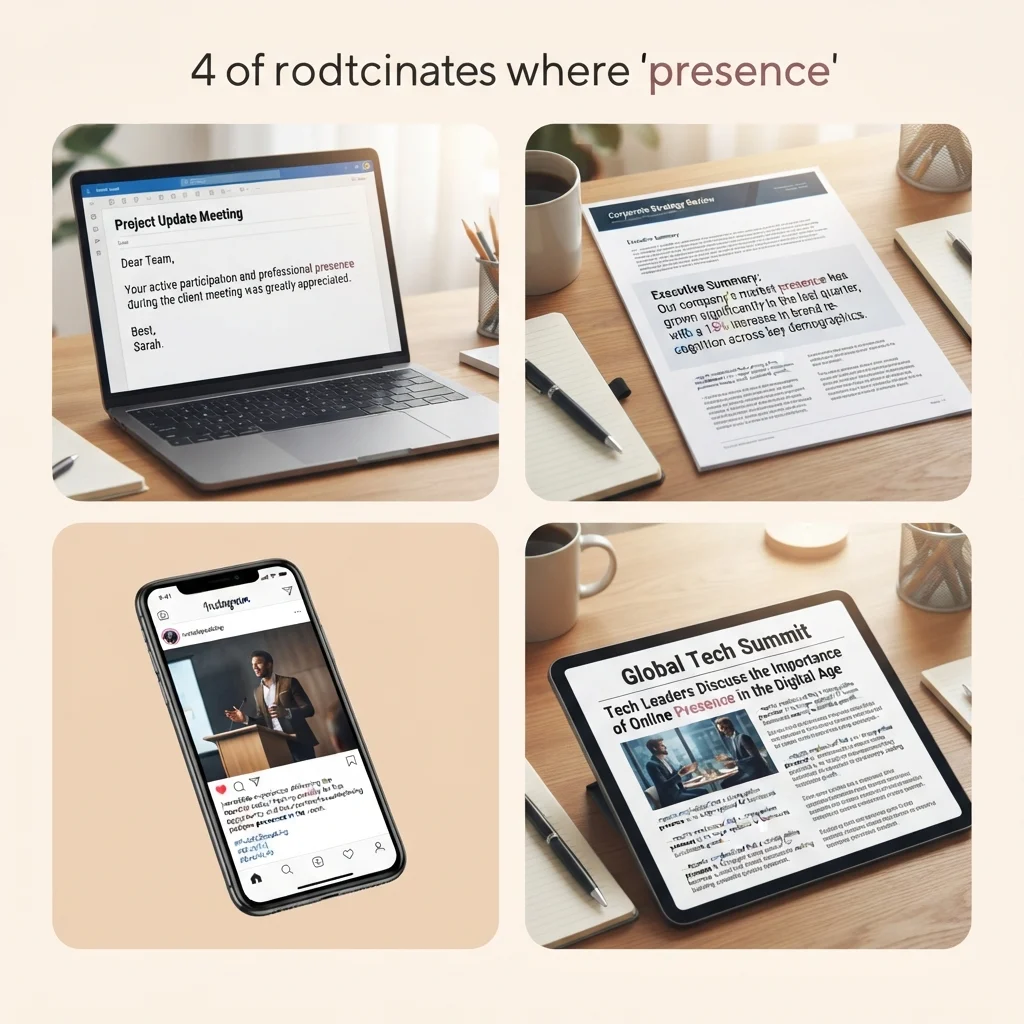
The word presence is useful in many types of writing.
In Emails
Thank you for your presence at our meeting.
We would be happy to have your presence at the event.
In News Writing
The police increased their presence in the area.
The company is expanding its presence in international markets.
In Social Media
Your presence makes everything better.
Grateful for everyone whose presence made this day special.
In Formal Writing
The presence of several experts improved the discussion.
The study examined the presence of harmful substances.
In Business Writing
Our online presence has grown significantly.
The company plans to increase its presence in new markets.
In Everyday Conversation
I could feel her presence in the room.
His presence made me feel safe.
Presence – Google Trends & Usage Data
People often search for “presence or presense” because they are unsure which spelling is correct.
Search interest for spelling questions can vary by country, language background, education level, and writing context. The correct form presence is used in normal English writing, while presense generally appears as a spelling mistake.
The word presence is also common in several contexts:
- Personal relationships
- Business
- Education
- News
- Technology
- Social media
- Formal writing
- Online marketing
One common phrase is online presence. Businesses, creators, and organizations use this phrase when talking about their activity and visibility on the internet.
Another common phrase is physical presence, which refers to someone or something being physically present in a place.
Search Intent Behind “Presence or Presense”
Most people searching this phrase want one simple answer:
Which spelling is correct?
The answer remains:
Presence ✅
Presense ❌
Presence or Presense – Word Variations Compared
| Word or Phrase | Correct? | Meaning |
|---|---|---|
| presence | ✅ | Being in a place or having an effect |
| presense | ❌ | Common misspelling of presence |
| present | ✅ | Existing or being in a place |
| presently | ✅ | Currently; also used differently in some contexts |
| physical presence | ✅ | Being physically in a place |
| online presence | ✅ | Visibility or activity online |
| strong presence | ✅ | Noticeable influence or effect |
| presence of | ✅ | Used to show that something exists or is there |
Examples: Presence vs Presense
Here are some quick corrections to make the difference clear.
| Incorrect | Correct |
|---|---|
| Her presense was missed. | Her presence was missed. |
| We felt his presense. | We felt his presence. |
| The company has an online presense. | The company has an online presence. |
| Your presense matters. | Your presence matters. |
| Police increased their presense. | Police increased their presence. |
| The presense of water was detected. | The presence of water was detected. |
FAQs About Presence or Presense
1. Is “presence” or “presense” correct?
Presence is correct. Presense is a common spelling mistake.
2. Is presense a real word?
No. Presense is not the standard spelling of an English word. It is usually a misspelling of presence.
3. How do you spell presence correctly?
Spell it:
P-R-E-S-E-N-C-E
The correct word is presence.
4. Why do people spell presence as presense?
The mistake often happens because the ending of presence can sound like sense. This can lead people to write presense.
5. Is presence the same in British and American English?
Yes. Both British and American English use presence.
6. What is an example of presence?
Her presence made everyone feel comfortable.
Here, presence means that she was there and had an effect on the people around her.
7. What is the easiest way to remember the spelling?
Connect it with present:
present → presence
Remember the c in presence.
Conclusion
When choosing between presence or presense, the correct answer is clear: presence.
Presence is the standard English spelling. It means being in a place or having a noticeable effect, quality, or influence. The word can be used in many situations, from personal conversations to business reports and formal writing.
The spelling does not change between British and American English. Whether you are writing for readers in the US, UK, Australia, Canada, or another English-speaking region, presence is the form you should use.
The spelling presense is a common mistake. It may look natural because of the sound of the word, but it is not the standard spelling.
A simple way to remember the correct form is to connect presence with present. When you are unsure, remember:
Presence ✅
Presense ❌
Using the correct spelling will make your writing clearer, cleaner, and more professional.

Robert Walser creates meaningful English captions for funcaptionz.com, delivering creative wording, short ideas, and expressive lines for everyday inspiration..









