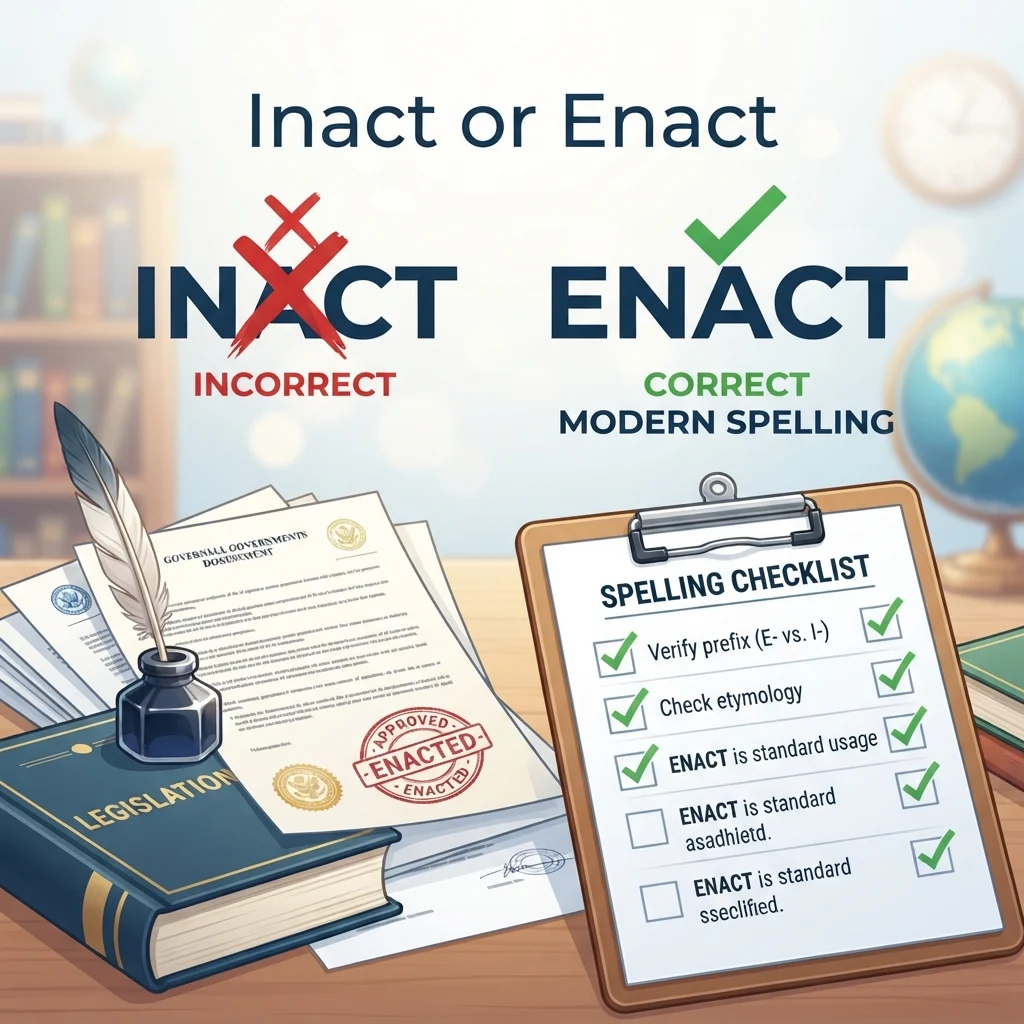
“Inact” or “enact” is a common spelling confusion, but the two forms are not interchangeable.
Enact is the standard modern English word meaning to make a law official or put a plan, rule, or idea into action.
“Inact” is rarely encountered in modern English, so it should not normally be used when you mean “enact.”
Have you ever typed inact or enact and stopped because you weren’t sure which one was correct? The confusion is understandable: the words look almost identical, but enact is the form you’ll normally need in everyday and formal writing. It is commonly used when talking about laws, policies, rules, and actions, while inact is not the usual modern choice.
In this guide, you’ll learn the difference between inact and enact, including their meanings, origins, correct usage, and clear example sentences. You’ll also see why inact can be confused with inactive and how to remember the correct spelling. Whether you’re writing an email, essay, article, report, or formal document, this simple guide will help you choose enact with confidence.
Inact or Enact meanings
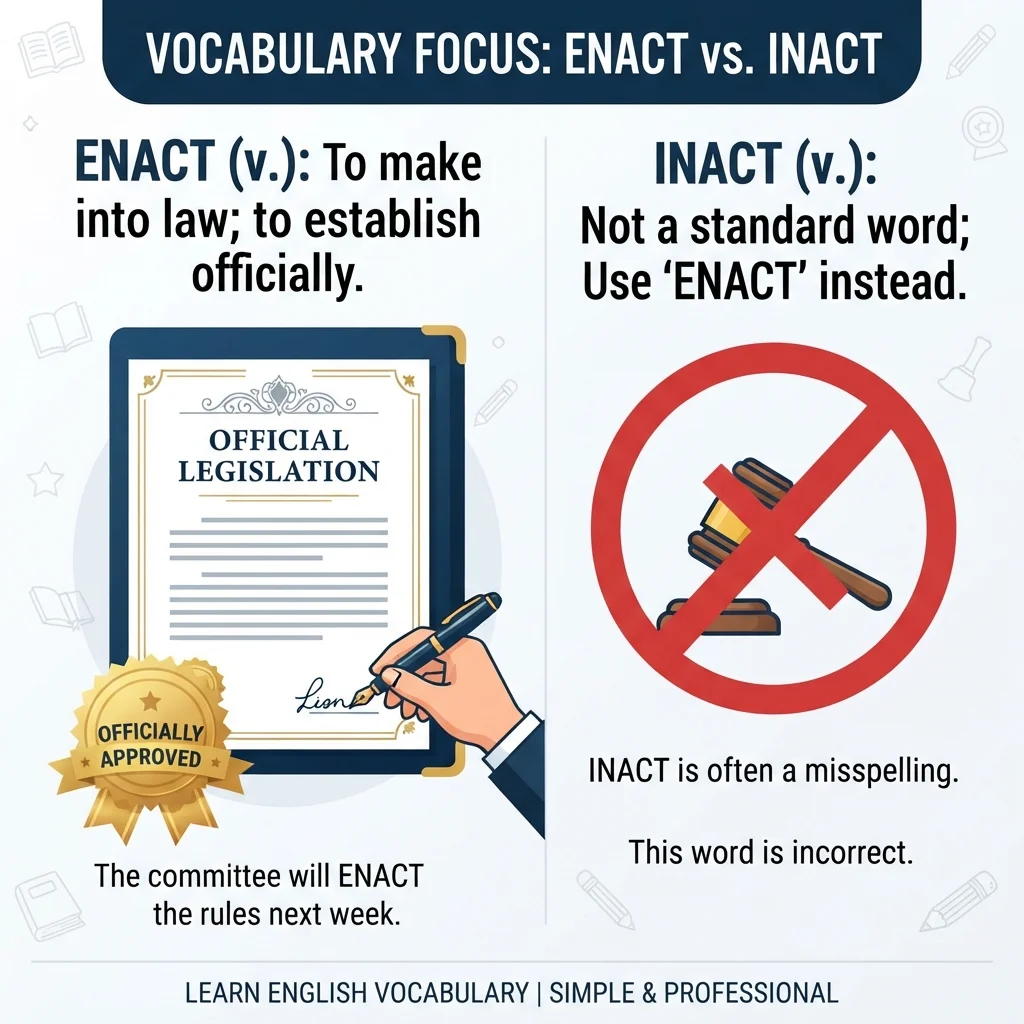
Enact is the correct standard spelling in modern English.
Enact means to make something official, especially a law, or to put a plan or idea into action.
Examples
- The government enacted a new law.
- Congress enacted new rules.
- The company enacted a safety policy.
- The school enacted a new attendance rule.
Inact is not the normal modern English form. If you are writing today, use enact.
Easy Rule
Use “enact” when you mean make a law or put something into action.
Correct: The law was enacted last year.
Incorrect: The law was inacted last year.
The Origin of Inact or Enact

The word enact has a long history in English. It comes from older French and Latin roots connected with the idea of making something into an official act.
The prefix en- can carry the sense of putting something into a state or causing something to happen. The word act comes from Latin actus, meaning an action or deed.
Together, enact developed the meaning of making something official through an act. Over time, it became strongly connected with laws, rules, and official decisions.
For example:
- A government enacts a law.
- An organization enacts a policy.
- A group can enact a plan.
- A person can enact a role or scene.
The form inact has appeared in older English, but it is not the normal spelling used in modern standard English. This is why people may find it in historical material and assume that it is a common modern alternative.
Today, enact is the safe and accepted choice.
British English vs American English Spelling
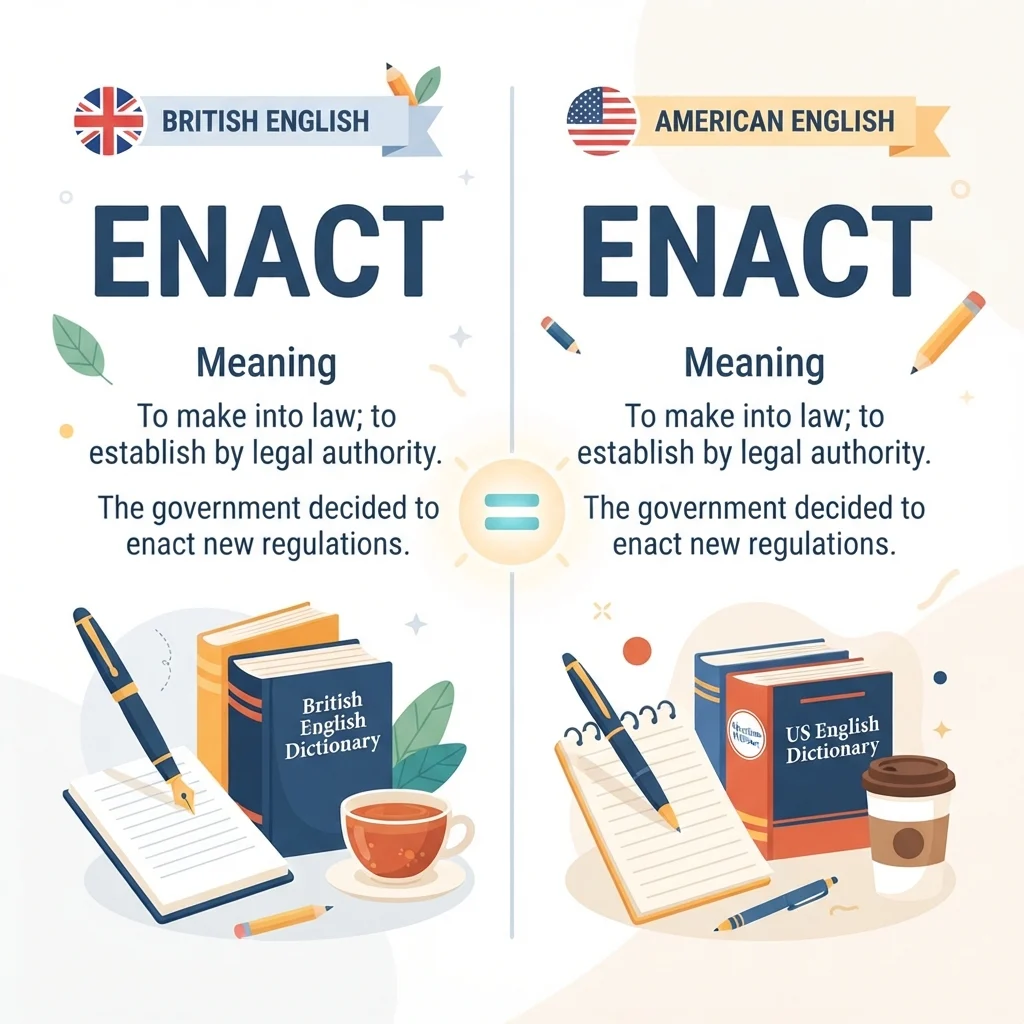
There is no major British vs American spelling difference between enact and its normal forms.
Both British English and American English use:
- enact
- enacts
- enacted
- enacting
- enactment
The same spelling is used in both varieties of English.
Comparison Table
| Meaning | British English | American English |
|---|---|---|
| Make a law official | enact | enact |
| Put a policy into action | enact | enact |
| Past form | enacted | enacted |
| -ing form | enacting | enacting |
| Noun | enactment | enactment |
| Common incorrect form | inact | inact |
Examples
British English:
The government enacted a new education law.
American English:
The government enacted a new education law.
There is no need to change enact based on whether your readers use British or American English.
Which Spelling Should You Use?
Use enact in almost every modern English situation where you mean “make official” or “put into action.”
For US Readers
Use enact in:
- Government writing
- News articles
- School assignments
- Business documents
- Legal writing
- Everyday English
For UK and Commonwealth Readers
Use enact as well.
The spelling does not change to inact in British English.
For Global Readers
Enact is the clearest choice because it is widely recognized in modern English.
If you are writing for an international audience, avoid inact unless you are discussing historical English or quoting an old text.
Simple Advice
If you are unsure, remember:
Law + official action = enact
Common Mistakes with Inact or Enact
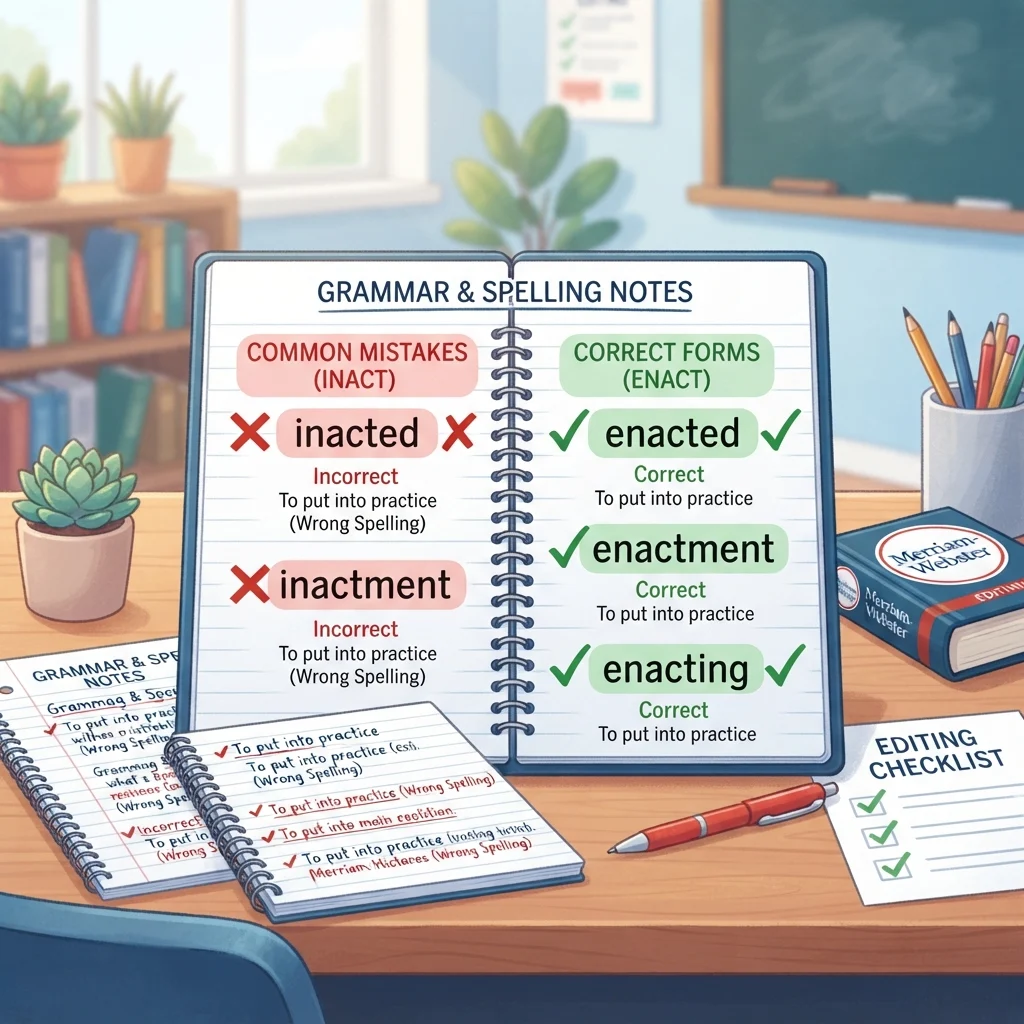
The biggest mistake is using inact instead of enact.
Mistake 1: Inacted
❌ The government inacted a new law.
✅ The government enacted a new law.
Mistake 2: Inacting
❌ The company is inacting a new policy.
✅ The company is enacting a new policy.
Mistake 3: Inactment
❌ The inactment of the law took place in June.
✅ The enactment of the law took place in June.
Mistake 4: Using Enact for Every Kind of Action
Although enact can mean “put into action,” it is often used for laws, rules, policies, plans, and formal measures.
For simple physical actions, another verb may be better.
Less natural:
She enacted the door.
Natural:
She opened the door.
Mistake 5: Confusing Enact With Act
Act is a broad word for doing something.
Enact often means making something official or putting something into effect.
Act: The student acted quickly.
Enact: The government enacted a new law.
Insight or Insite: Which Spelling Is Correct? Meaning & Use 🔍
Inact or Enact in Everyday Examples

In Emails
Correct:
“The new safety policy was enacted this month.”
Correct:
“We will enact the updated procedure next week.”
For professional emails, enact sounds clear and formal.
In News Writing
Correct:
“Lawmakers enacted new rules to protect consumers.”
Correct:
“The new law was enacted after months of discussion.”
News writing often uses enacted when discussing laws and government action.
On Social Media
Correct:
“The city finally enacted the new parking rules.”
Correct:
“New rules have been enacted for the event.”
Social media posts can use simpler language when the meaning is clear, but enacted is still correct.
In Formal Writing
Correct:
“The policy was enacted to improve workplace safety.”
Correct:
“The committee recommended enacting new standards.”
In School Writing
Correct:
“The government enacted the law in 2025.”
This is a good choice for essays and reports when discussing legislation.
Inact or Enact – Google Trends & Usage Data
When people compare inact or enact, the modern usage pattern is very clear: enact is the established standard word.
Search interest for enact is connected with topics such as:
- Laws
- Government
- Politics
- Legal writing
- Public policy
- Rules
- Regulations
- Formal decisions
The search phrase “inact or enact” often comes from people checking whether inact is a real modern spelling or a mistake.
In general, enact has much stronger modern usage than inact. This difference is expected because enact is the standard word found in current English, while inact is rare, historical, or treated as nonstandard in ordinary modern writing.
Usage Context Table
| Word | Modern Use | Common Context |
|---|---|---|
| Enact | Standard | Laws and policies |
| Enacted | Standard | Past actions |
| Enacting | Standard | Current or planned action |
| Enactment | Standard | Official action or law |
| Inact | Rare/obsolete | Historical or unusual use |
| Inacted | Nonstandard today | Usually a spelling mistake |
| Inacting | Nonstandard today | Usually a spelling mistake |
Inact or Enact – Word Variations
| Form | Correct Modern English? | Example |
|---|---|---|
| enact | Yes | They will enact the law. |
| enacts | Yes | The government enacts new rules. |
| enacted | Yes | The law was enacted. |
| enacting | Yes | They are enacting new rules. |
| enactment | Yes | The enactment of the law was announced. |
| inact | Rare/obsolete | Avoid in normal modern writing. |
| inacted | No, in standard modern use | Use enacted. |
| inacting | No, in standard modern use | Use enacting. |
| inactment | No, in standard modern use | Use enactment. |
FAQs About Inact or Enact
1. Is “inact” a correct word?
Inact is not the standard word for modern everyday English. Use enact when you mean to make a law official or put something into action.
2. Is it “inact or enact”?
The correct modern spelling is enact.
3. What does enact mean?
Enact means to make something official, especially a law, or to put a plan, rule, or policy into action.
4. Is “inacted” correct?
No, inacted is not the standard modern form. The correct past tense is enacted.
5. Is “enacted” British or American English?
Enacted is used in both British and American English. The spelling does not change between them.
6. What is the noun form of enact?
The noun is enactment.
Example:
“The enactment of the new law changed the rules.”
7. Can enact mean perform?
Yes. Enact can also mean to perform or represent a role, scene, or event.
Example:
“The students enacted a short scene from the story.”
Conclusion
When choosing between inact or enact, the answer is straightforward: use enact in modern English. It is the standard spelling used when talking about making laws official or putting rules, plans, and policies into action.
The word enact is used in both British and American English, so you do not need a different spelling for either audience. Its common forms include enacts, enacted, enacting, and enactment.
The form inact may appear in old or unusual texts, but it is not the normal choice for modern writing. Forms such as inacted and inactment should also be avoided when you mean enacted and enactment.
For school essays, business emails, news articles, legal writing, and everyday communication, remember one simple rule: laws are enacted, not inacted. If you are ever unsure, choose enact. It is clear, standard, and widely understood by modern English readers.

Storm Jameson writes engaging English captions for funcaptionz.com, sharing creative wording, short ideas, and expressive lines for modern readers online Today.









