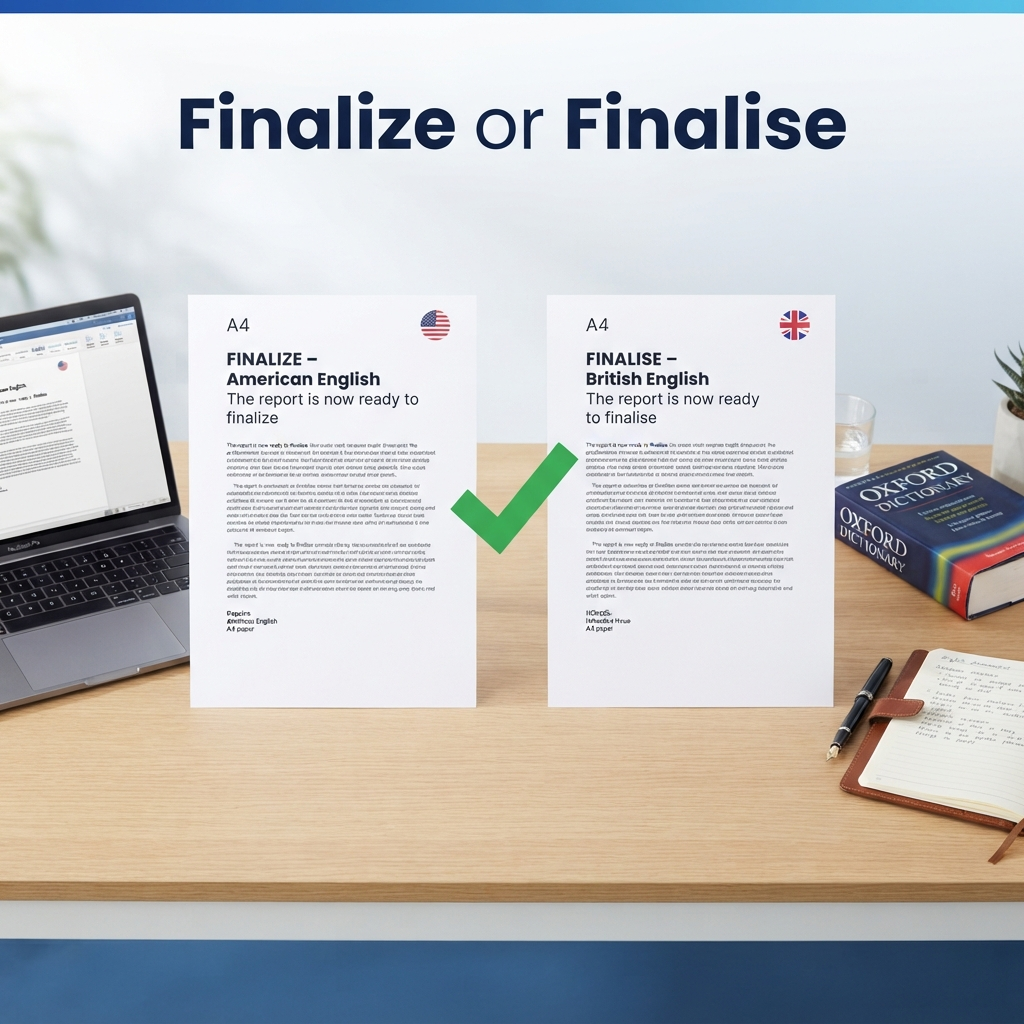
“Finalize” and “finalise” are both correct spellings. “Finalize” is preferred in American English, while “finalise” is preferred in British English and many other varieties.
Finalize or finalise—which spelling is correct? The answer is simpler than it first appears: both are correct. The difference is mainly based on the type of English you are using. If you’re writing in American English, use finalize. If you’re following British English, use finalise.
Both words have exactly the same meaning: to complete something, settle a final decision, or bring a process to its final stage. The only noticeable difference is the spelling of the ending: -ize in finalize and -ise in finalise. This same spelling pattern appears in several other English words, which can make the choice confusing when writing for an international audience.
Choosing the right version is especially important when writing emails, academic assignments, business documents, websites, reports, or professional content. Using the spelling that matches your target audience also helps keep your writing consistent and polished.
But why do American and British English use different spellings in the first place? And is finalise actually wrong in American English—or is finalize acceptable in British English? These are common questions, and the answer is more interesting than simply choosing one spelling over the other.
In this guide, you’ll discover the exact difference between finalize and finalise, their meanings, origins, British and American usage, clear examples, common mistakes, and practical guidance on which spelling to use in different situations. By the end, you’ll know exactly which form fits your writing and why.
Finalize or Finalise meanings
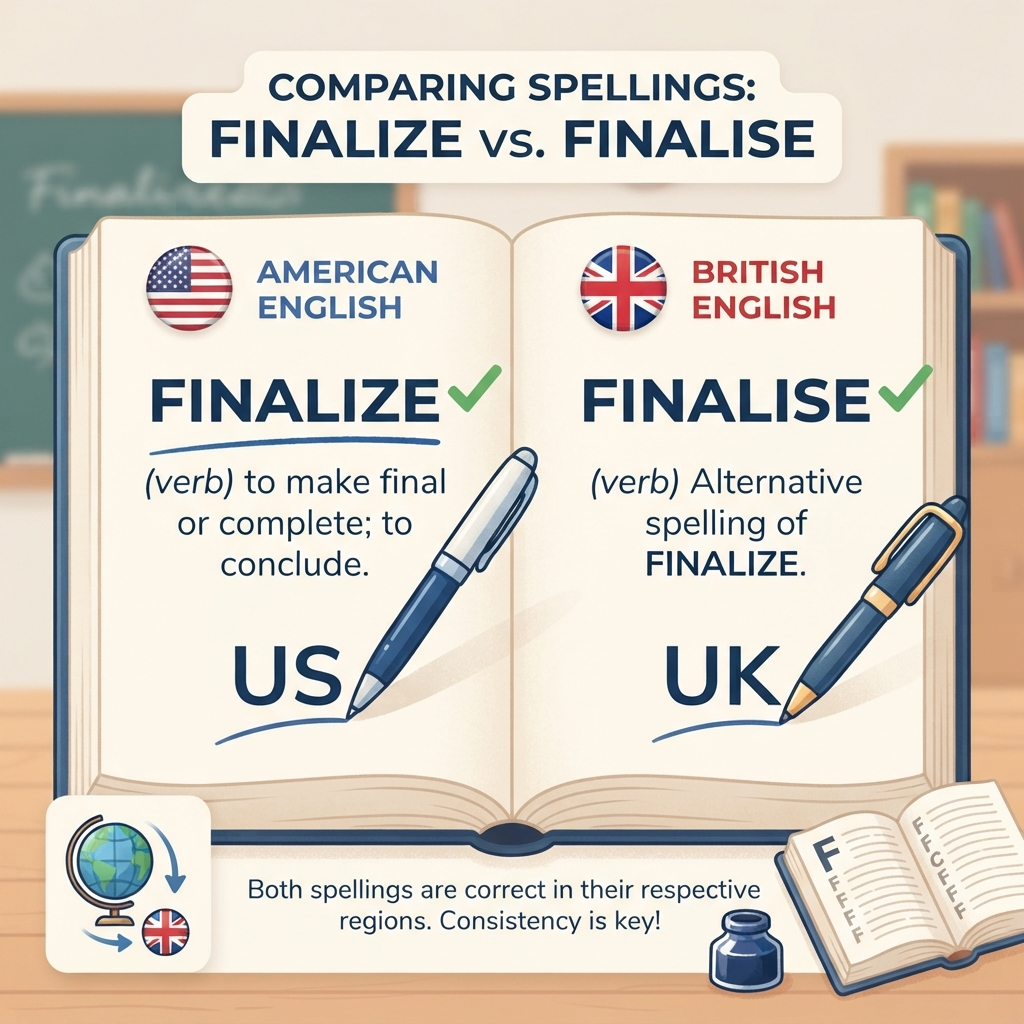
Finalize and finalise are both correct spellings.
The difference is mainly based on English variety:
- Finalize → American English
- Finalise → British English
- Finalize → Also common in international business writing
- Finalise → Common in the UK, Australia, and other British-English settings
Both words mean to complete something or make it final.
Examples
American English:
We need to finalize the report today.
British English:
We need to finalise the report today.
The meaning does not change. Only the spelling changes.
So, if you are writing for readers in the United States, finalize is usually the better choice. If your audience uses British English, finalise is usually preferred.
The Origin of Finalize or Finalise

The word finalize comes from final, which comes from the Latin word finalis, meaning “last” or “ending.”
The verb developed from the idea of bringing something to its final stage. Over time, English speakers began using the word to mean completing plans, decisions, documents, agreements, and other tasks.
The difference between -ize and -ise comes from different spelling traditions.
American English often prefers -ize endings. British English commonly uses -ise endings, although British dictionaries and writers may also use some -ize forms.
This is why you may see:
- finalize / finalise
- organize / organise
- realize / realise
- recognize / recognise
These pairs usually have the same meaning. The spelling depends on the English style being followed.
British English vs American English Spelling
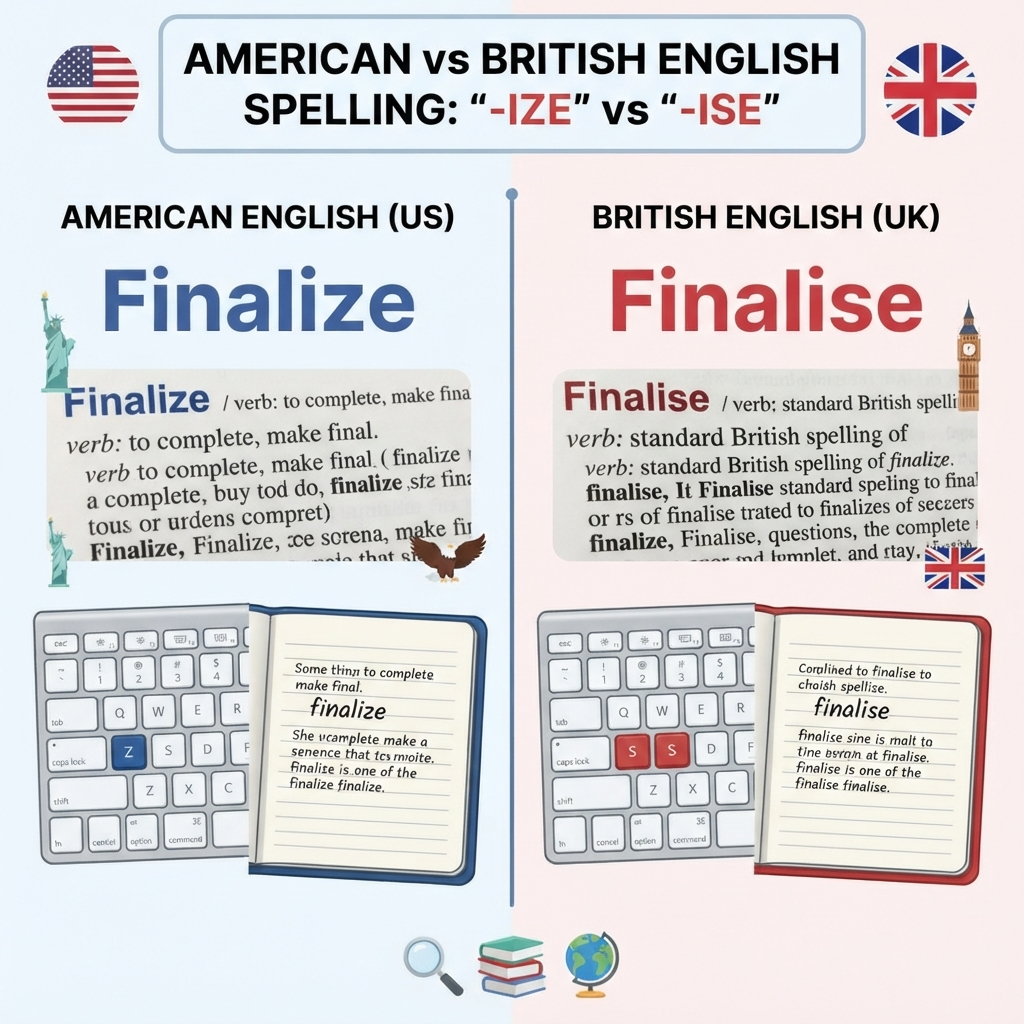
The main difference is easy to remember.
American English usually uses -ize, while British English commonly uses -ise.
| Meaning | American English | British English |
|---|---|---|
| Complete something | Finalize | Finalise |
| Arrange something | Organize | Organise |
| Understand or become aware | Realize | Realise |
| Identify something | Recognize | Recognise |
| Make something official | Authorize | Authorise |
There are also other spelling differences between American and British English. For example:
- color → colour
- center → centre
- traveled → travelled
- canceled → cancelled
However, finalize and finalise have the same basic meaning and pronunciation.
Important Point
Do not mix styles without a reason. If your article uses British spelling, keep the same style throughout. If you use American spelling, stay consistent with it.
Which Spelling Should You Use?
The right spelling depends on your readers.
If You Write for a US Audience
Use finalize.
Example:
We will finalize the contract tomorrow.
This spelling fits American English.
If You Write for a UK Audience
Use finalise.
Example:
We will finalise the contract tomorrow.
This spelling fits common British English usage.
If You Write for Australia or Other Commonwealth Audiences
Finalise is commonly used in British-style English varieties.
If You Write for a Global Audience
Choose one English style and use it consistently.
For many international websites, finalize is widely understood. But if your website follows British English, finalise may fit better.
The most important rule is consistency.
Common Mistakes with Finalize or Finalise
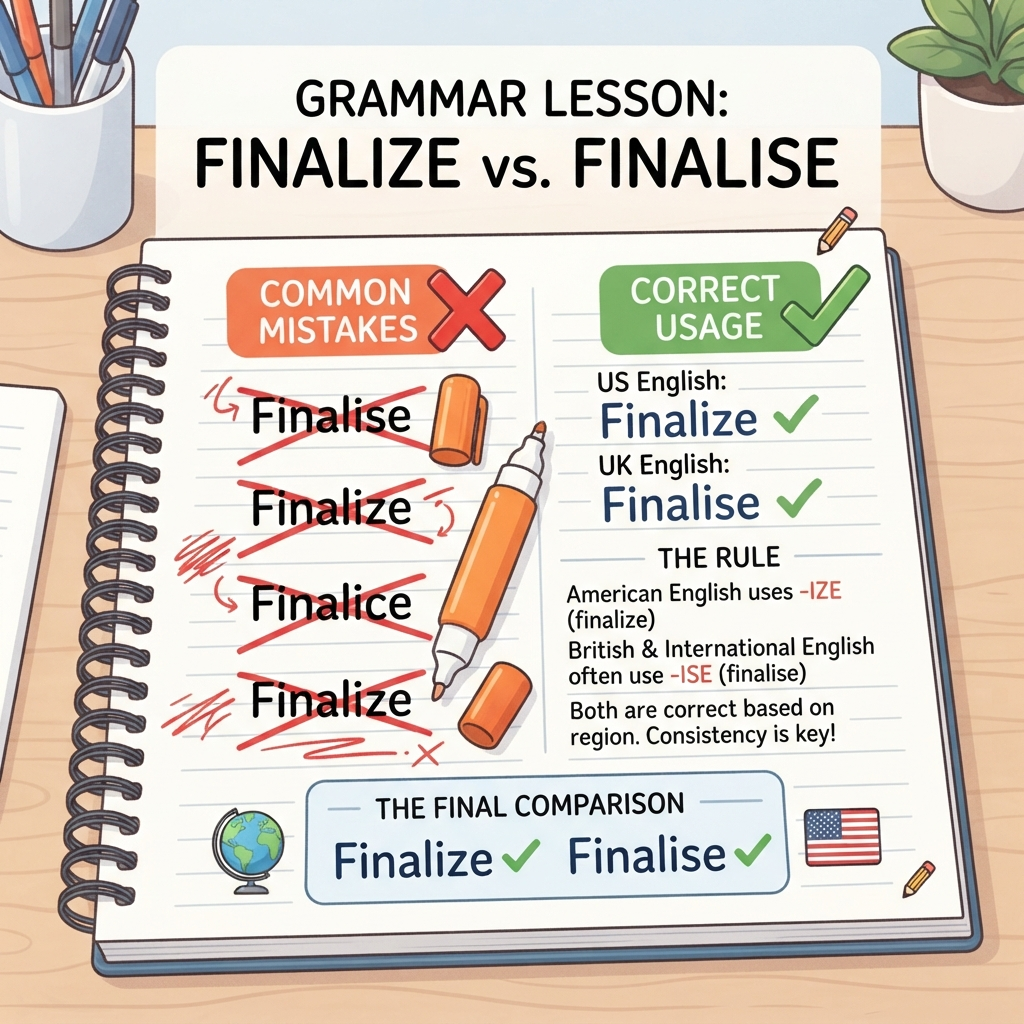
People often make mistakes because both spellings look correct.
Mistake 1: Treating One Spelling as Wrong
Incorrect idea:
Finalise is always wrong.
That is not true. Finalise is a standard spelling in British English and related varieties.
Mistake 2: Mixing Both Spellings
For example:
We will organize the files and finalize the report.
This is fine in American English.
But in British English, a consistent version would be:
We will organise the files and finalise the report.
Mistake 3: Changing the Meaning
Finalize and finalise do not have different meanings.
Both can mean:
To complete something or make it final.
Mistake 4: Using “Finalized” Incorrectly
The past form is:
- finalize → finalized
- finalise → finalised
Examples:
The team finalized the plan.
The team finalised the plan.
Both sentences are correct when used with the matching English style.
Finalize or Finalise in Everyday Examples

These words appear often in everyday and professional writing.
In Emails
American English:
Please review the document before we finalize it.
British English:
Please review the document before we finalise it.
In News Writing
Officials are expected to finalize the agreement soon.
Or:
Officials are expected to finalise the agreement soon.
Both forms can communicate the same idea.
On Social Media
A casual post might say:
Finally ready to finalize my plans!
A British-English user might write:
Finally ready to finalise my plans!
In Formal Writing
American style:
The committee will finalize the proposal next week.
British style:
The committee will finalise the proposal next week.
In Business Writing
We need to finalize the contract before Friday.
Or:
We need to finalise the contract before Friday.
Both are natural. Your audience decides which spelling fits best.
Finalize or Finalise – Google Trends & Usage Data
Search interest for finalize and finalise is closely linked to regional English usage.
In general, finalize has stronger visibility in the United States because American English commonly uses the -ize spelling. Finalise is more closely associated with the United Kingdom and other regions that commonly follow British English spelling.
Search results can also vary by topic. Business, education, writing, grammar, and proofreading searches may show both forms because people often search for the spelling used in their country.
For website writers, the key point is not simply to choose the spelling with more searches. Your spelling should match your target audience and overall English style.
If your website mainly targets American readers, use finalize consistently. If it targets British-English readers, finalise is a natural choice.
Finalize vs Finalise: Side-by-Side Comparison
| Feature | Finalize | Finalise |
|---|---|---|
| Meaning | Make something final | Make something final |
| Main style | American English | British English |
| Common in the US | Yes | Less common |
| Common in the UK | Less common | Yes |
| Pronunciation | Same | Same |
| Present form | Finalize | Finalise |
| Past form | Finalized | Finalised |
| -ing form | Finalizing | Finalising |
| Meaning difference | None | None |
FAQs About Finalize or Finalise
1. Is finalize or finalise correct?
Both are correct. Finalize is common in American English, while finalise is common in British English.
2. Is finalize American or British?
Finalize is most strongly associated with American English, although it is also used in other English varieties.
3. Is finalise British English?
Yes. Finalise is a common British English spelling.
4. Do finalize and finalise mean the same thing?
Yes. Both mean to complete something or make it final.
5. Should I use finalize or finalise in a business email?
Use the spelling that matches your audience. Use finalize for American English and finalise for British English.
6. Is finalized correct?
Yes. Finalized is the American English past form of finalize. The British form is finalised.
7. Can I use finalize and finalise in the same article?
You can, but it is better to choose one English style and stay consistent throughout the article.
Conclusion
The choice between finalize or finalise is simple once you understand regional English spelling. Both words have the same meaning: they describe the act of completing something or making it final.
Use finalize when writing in American English. Use finalise when following British English spelling. The same pattern appears in words such as organize/organise, realize/realise, and recognize/recognise.
Neither spelling is automatically wrong. The important thing is to know your audience and keep your writing consistent. This matters especially in business emails, formal documents, schoolwork, websites, and professional communication.
If you are writing for an international audience, either form can be understood. However, following one spelling style across your entire piece makes your writing cleaner and more professional.
So, when you next wonder whether to write finalize or finalise, check your English style first. Then choose the spelling that fits your readers.

Elizabeth Bowen is a creative writer at funcaptionz.com, sharing thoughtful English captions, short content, and inspiring ideas for modern readers.









