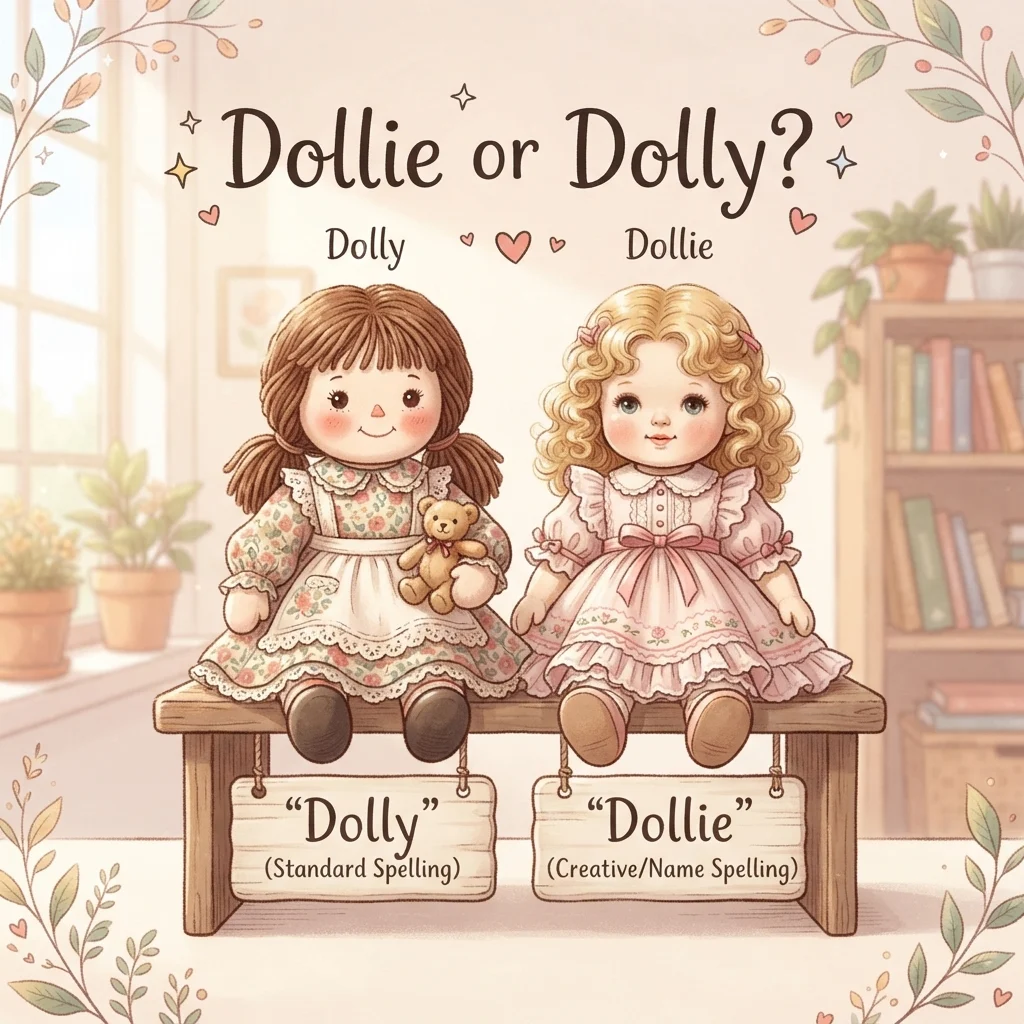
Dollie or Dolly? Dolly is the standard and more commonly used English spelling, while Dollie is a less common variant that may appear as a personal name or alternative spelling.
Wondering whether you should write Dollie or Dolly? The difference looks tiny, but that single letter can make a big difference when you’re trying to choose the natural spelling. Dolly is the familiar standard form used for a doll, a doll-like figure, and also as a name or nickname. Dollie is much less common and is more often seen as a variant spelling or personal name.
So, is Dollie actually wrong? Not necessarily. The right choice depends on what you mean and how the word is being used. If you’re writing general English content and referring to a doll or using the commonly recognized spelling, Dolly is usually the form you want. If Dollie is someone’s chosen name or appears as an established name, keeping that exact spelling is appropriate.
This small spelling difference can easily cause confusion, especially when you’re writing an article, school assignment, social media post, or everyday message. One quick rule can make the choice much easier: use Dolly for standard general usage, and use Dollie when the specific name or context calls for it.
In this guide, you’ll discover the clear difference between Dollie and Dolly, their meanings, correct usage, example sentences, common mistakes, and when each spelling is appropriate. By the end, you’ll know exactly which spelling to choose without second-guessing yourself.
Dollie or Dolly meanings
Dolly is the standard English spelling.
It usually means a small toy that looks like a person. It can also be a nickname or an informal name.
Examples:
- The little girl played with her dolly.
- She bought a new dolly for her daughter.
- Dolly is a common nickname.
Dollie is not normally used as the standard spelling of the common word. You may see it as a person’s name, nickname, business name, or creative spelling.
Quick comparison
| Spelling | Standard word? | Common use |
|---|---|---|
| Dolly | Yes | Toy, nickname, informal name |
| Dollie | No, not as the standard noun | Personal or creative spelling |
So, if you mean the toy, choose dolly.
The Origin of Dolly
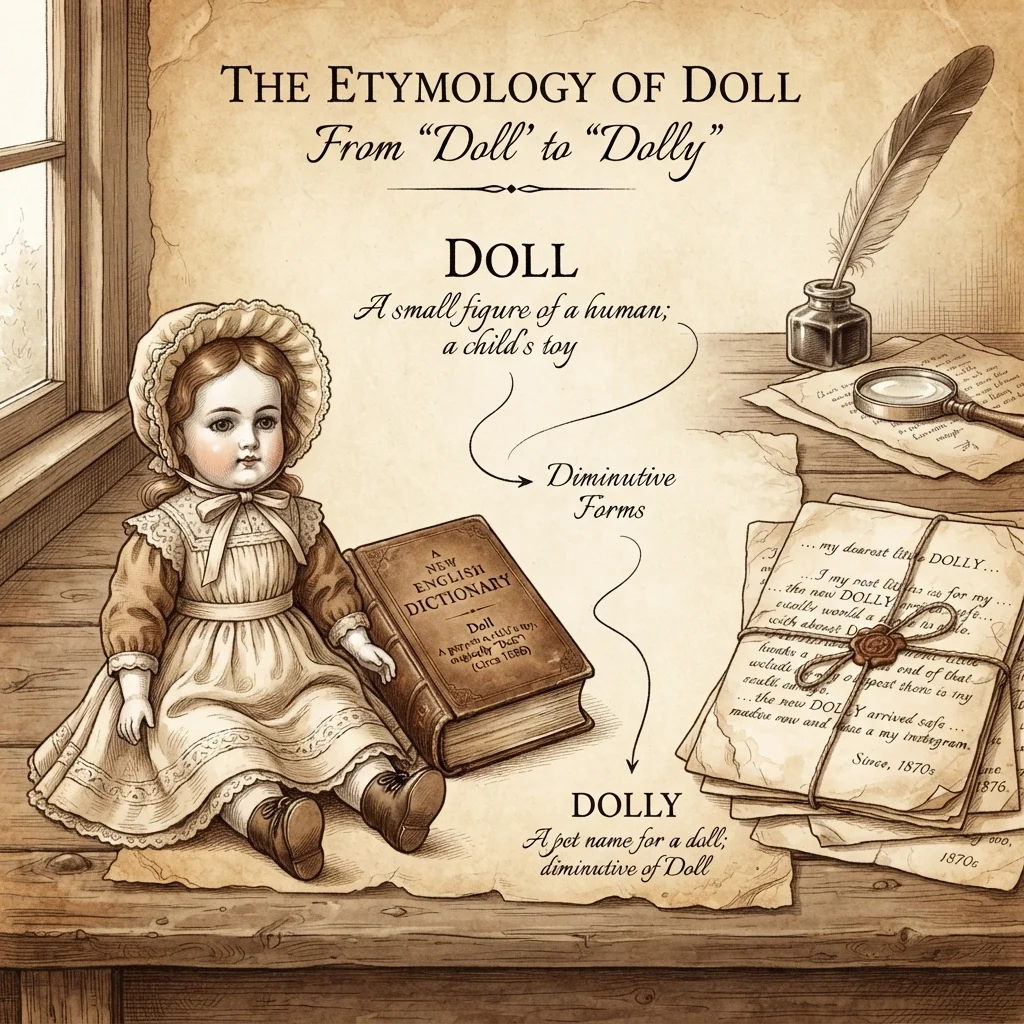
The word dolly has a long history in English. It is closely connected with the word doll.
The word doll came into English as a short form of Dorothy, a traditional female name. Over time, the word developed a second meaning: a small figure made as a toy.
The ending -y is common in English nicknames and familiar forms. This helped produce dolly as a familiar form of doll.
The spelling dollie can appear because English names and nicknames often have creative spellings. Some people may choose Dollie as a personal name because it looks softer or more distinctive.
However, creative spelling does not change the standard dictionary spelling. For the common noun referring to the toy, dolly remains the normal choice.
British English vs American English Spelling
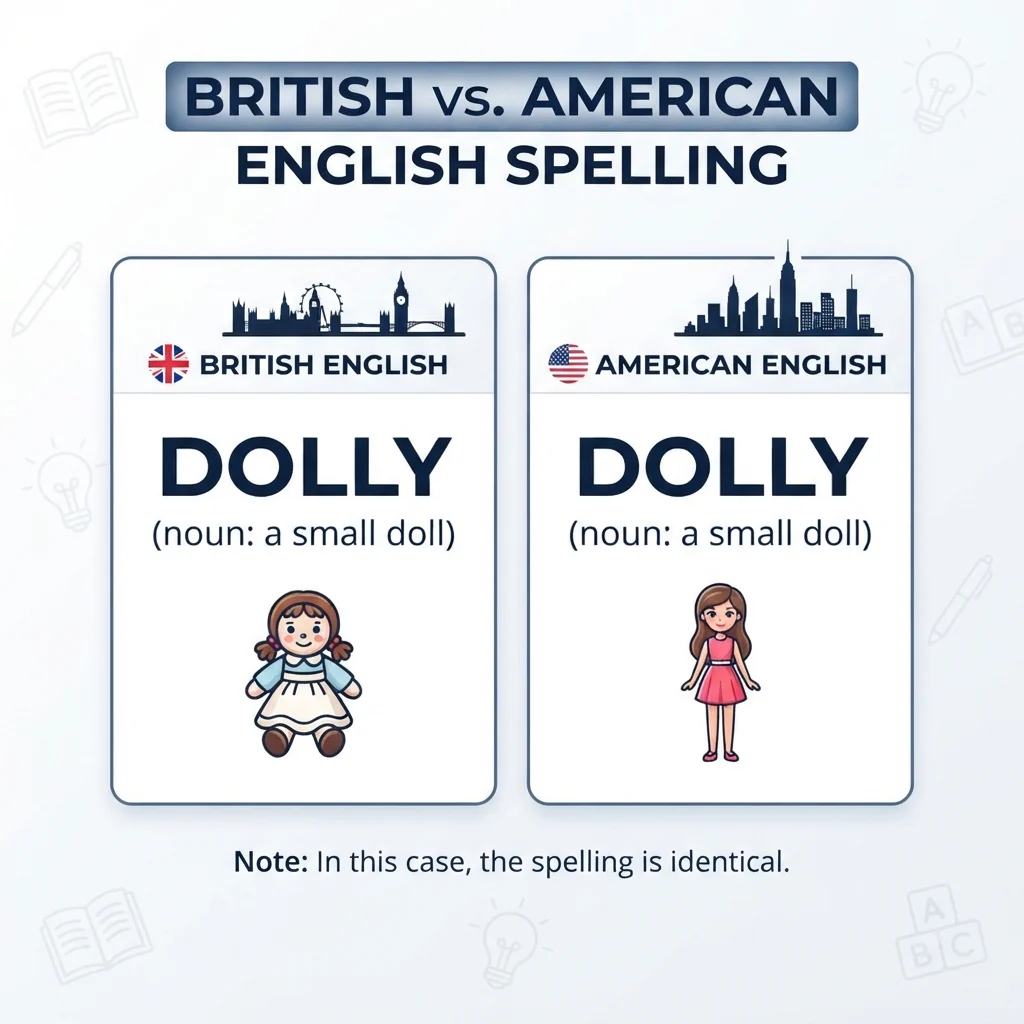
There is no major British-American spelling difference for this word.
Both British English and American English normally use dolly.
| English variety | Standard spelling | Example |
|---|---|---|
| British English | dolly | She has a new dolly. |
| American English | dolly | She has a new dolly. |
| Canadian English | dolly | The child loves her dolly. |
| Australian English | dolly | He bought a dolly. |
| General English | dolly | The dolly is on the bed. |
The spelling dollie does not become correct simply because of British or American English rules.
If you are writing normal English, dolly is the safe standard spelling.
Which Spelling Should You Use?
Your choice depends on what you mean.
For US English
Use dolly when referring to a toy or using the word in normal writing.
Example:
“My daughter has a favorite dolly.”
For UK and Commonwealth English
Use dolly as well.
Example:
“The child carried her dolly everywhere.”
For Names and Nicknames
If Dollie is someone’s chosen name or nickname, keep that spelling.
Example:
“Dollie Smith joined the event.”
A person’s chosen spelling should not be changed to Dolly.
For Global Writing
Use dolly for the standard English word. It is clear and widely understood.
Use Dollie only when it is an intentional name, brand, or creative spelling.
Common Mistakes with Dollie or Dolly
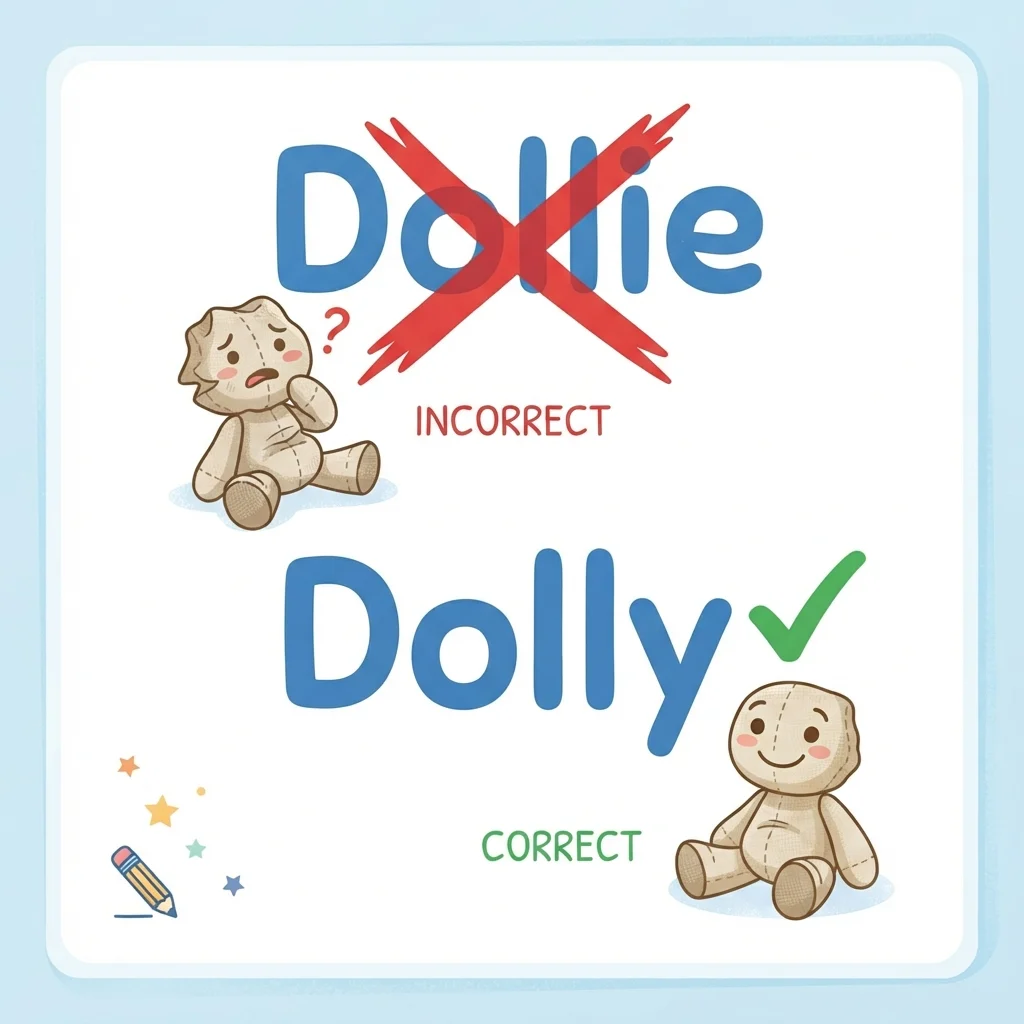
These are some common mistakes people make.
Mistake 1: Using Dollie as the normal noun
❌ She bought a dollie for her daughter.
✅ She bought a dolly for her daughter.
Mistake 2: Assuming both spellings are equal
Dolly is the standard word. Dollie may be a name or creative variation.
Mistake 3: Changing a person’s name
If someone’s name is Dollie, do not automatically change it to Dolly.
Names can have different spellings.
Mistake 4: Using random spelling in formal writing
In school, work, or professional writing, use dolly when you mean the common noun.
Mistake 5: Confusing spelling with pronunciation
Both forms may look similar when spoken, but spelling depends on context. Standard English uses dolly for the common word.
Dolly in Everyday Examples
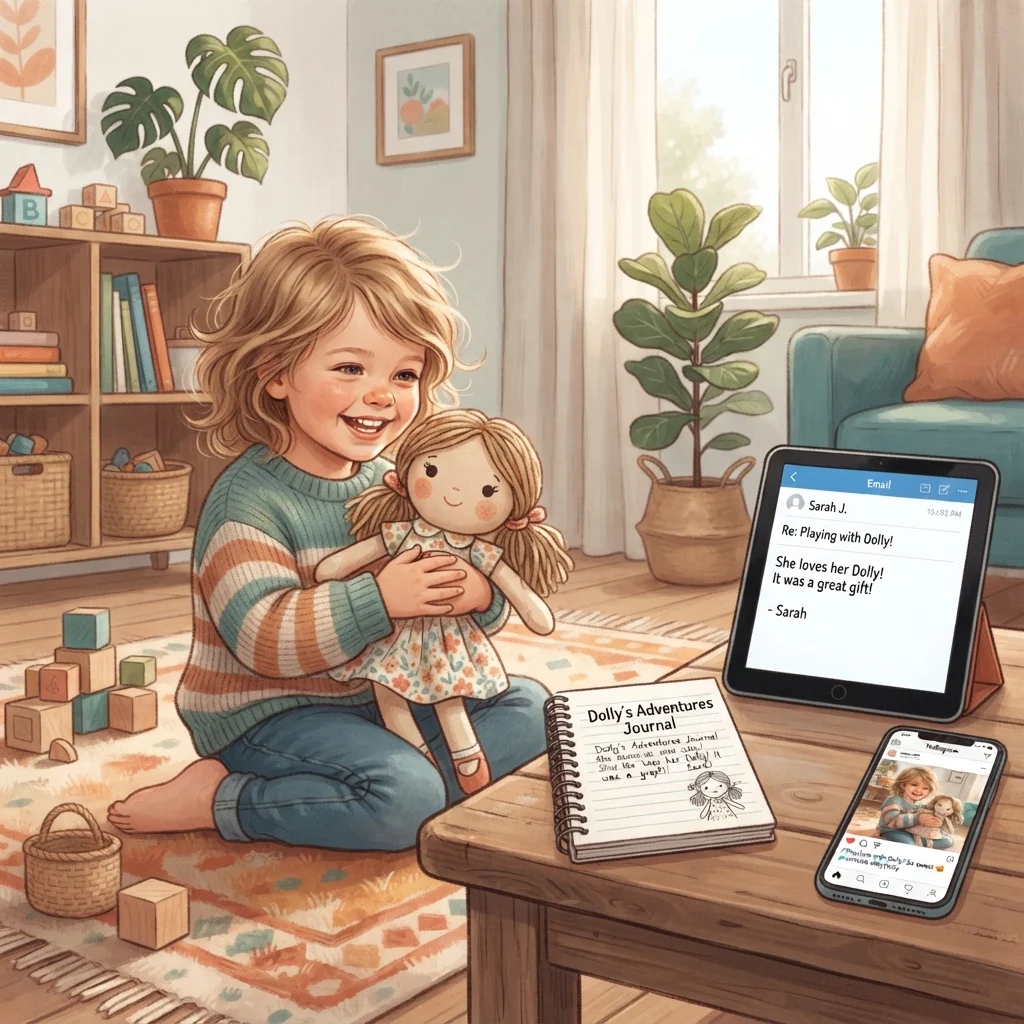
In Emails
Correct:
“Please place the dollies in the children’s room.”
If you are using Dolly as a person’s name:
“Dolly will join the meeting at noon.”
In News Writing
Correct:
“The child received a new dolly as a gift.”
If Dolly is a person’s name, capitalize it:
“Dolly announced the new project.”
On Social Media
Informal posts may use either spelling for creative reasons.
Standard:
“My little one loves her new dolly! ❤️”
Creative/name use:
“Meet Dollie, my new character!”
In Formal Writing
Use the standard spelling:
“The child played with a wooden dolly.”
If Dollie is a proper name, keep the person’s official spelling.
Dollie or Dolly – Google Trends & Usage Data
Search interest for “dollie or dolly” usually comes from people checking spelling rather than searching for a completely different word.
The term dolly has much broader everyday use. It can refer to a toy, a nickname, a person’s name, and other meanings in different contexts.
Dollie tends to appear more often in contexts involving names, usernames, brands, or creative spellings.
Search results can also vary by country and context. A search for Dolly may return information about people, toys, names, and other meanings. A search for Dollie may be more focused on names or specific uses.
Because search interest changes over time, Google Trends should be treated as a snapshot rather than a permanent measure of language correctness.
For standard English writing, frequency alone does not decide the correct spelling. The meaning and context matter most.
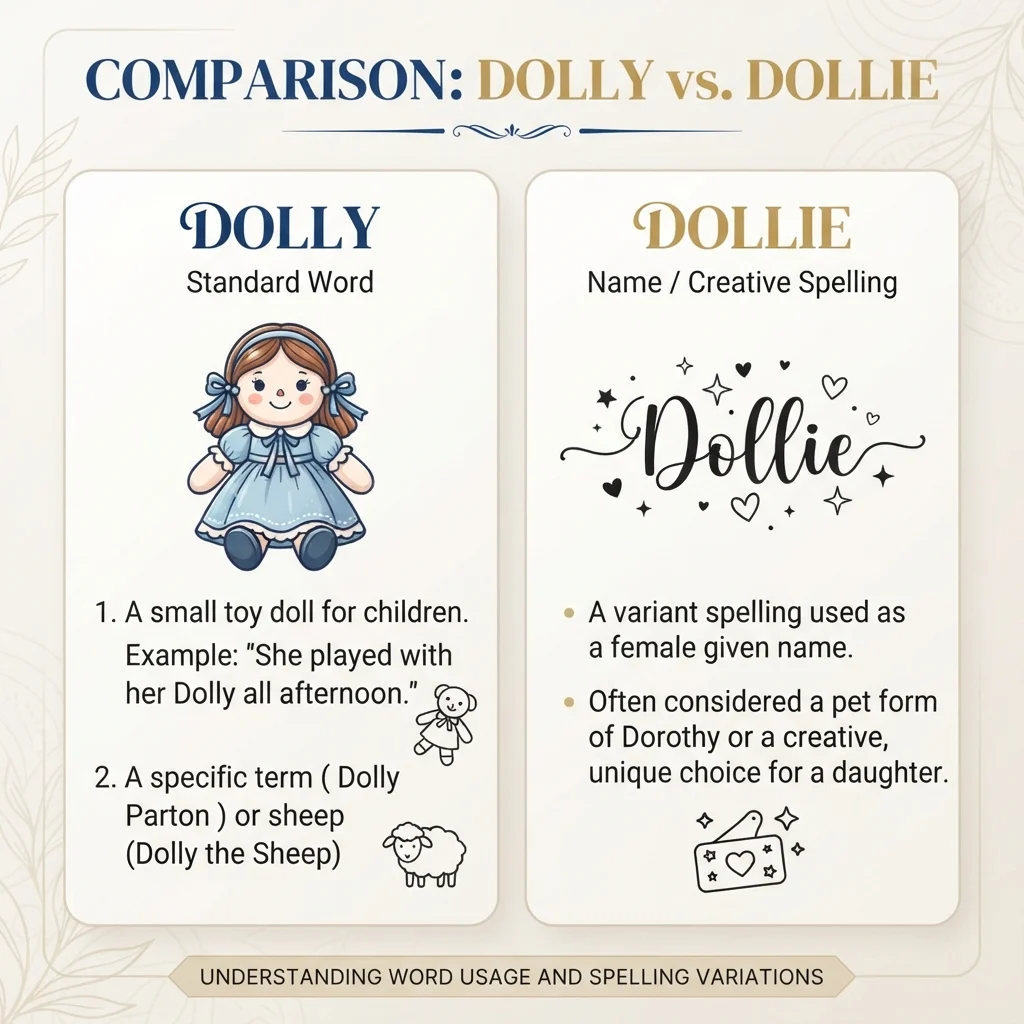
Dollie vs Dolly: Side-by-Side Comparison
| Feature | Dolly | Dollie |
|---|---|---|
| Standard English word | Yes | No |
| Refers to a toy | Yes | Usually no |
| Used as a nickname | Yes | Yes |
| Used as a person’s name | Yes | Yes |
| Used as a creative spelling | Sometimes | Yes |
| Suitable for formal standard English | Yes | Only when it is a proper name |
| Common dictionary form | Yes | Not as the standard noun |
Simple rule
Dolly = standard English word
Dollie = name or creative spelling
FAQs About Dollie or Dolly
1. Is Dolly or Dollie correct?
Dolly is the standard spelling for the common English word. Dollie can be used as a name or creative spelling.
2. Is Dollie a real name?
Yes. Dollie can be used as a personal name or nickname. Names can have different spellings.
3. How do you spell the toy doll?
The standard spelling is dolly.
4. Is Dolly used in British English?
Yes. Dolly is also the standard spelling in British English.
5. Is Dolly used in American English?
Yes. American English uses dolly too.
6. Can I use Dollie instead of Dolly?
You can use Dollie when it is someone’s chosen name, a brand name, or a creative spelling. For the standard noun, use dolly.
7. Should Dolly be capitalized?
Use Dolly with a capital letter when it is a person’s name. Use dolly with a lowercase letter when it is the common noun.
Conclusion
When choosing between dollie or dolly, the standard answer is simple: dolly is the correct spelling for the common English word.
Use dolly when you mean a small toy or when the word is being used as a standard noun. This spelling works in American English, British English, and other major forms of English. It is also the clearest choice for schoolwork, websites, emails, articles, and formal writing.
Dollie is different. It can be a personal name, nickname, brand name, or creative spelling. If a person officially uses Dollie, keep that spelling because names do not have to follow the standard noun form.
The key is to look at the context. If you are talking about the toy, choose dolly. If you are referring to someone named Dollie, use their chosen spelling.
In short, remember this easy rule: Dolly is the standard word; Dollie is mainly a name or creative variation.

Storm Jameson writes engaging English captions for funcaptionz.com, sharing creative wording, short ideas, and expressive lines for modern readers online Today.









