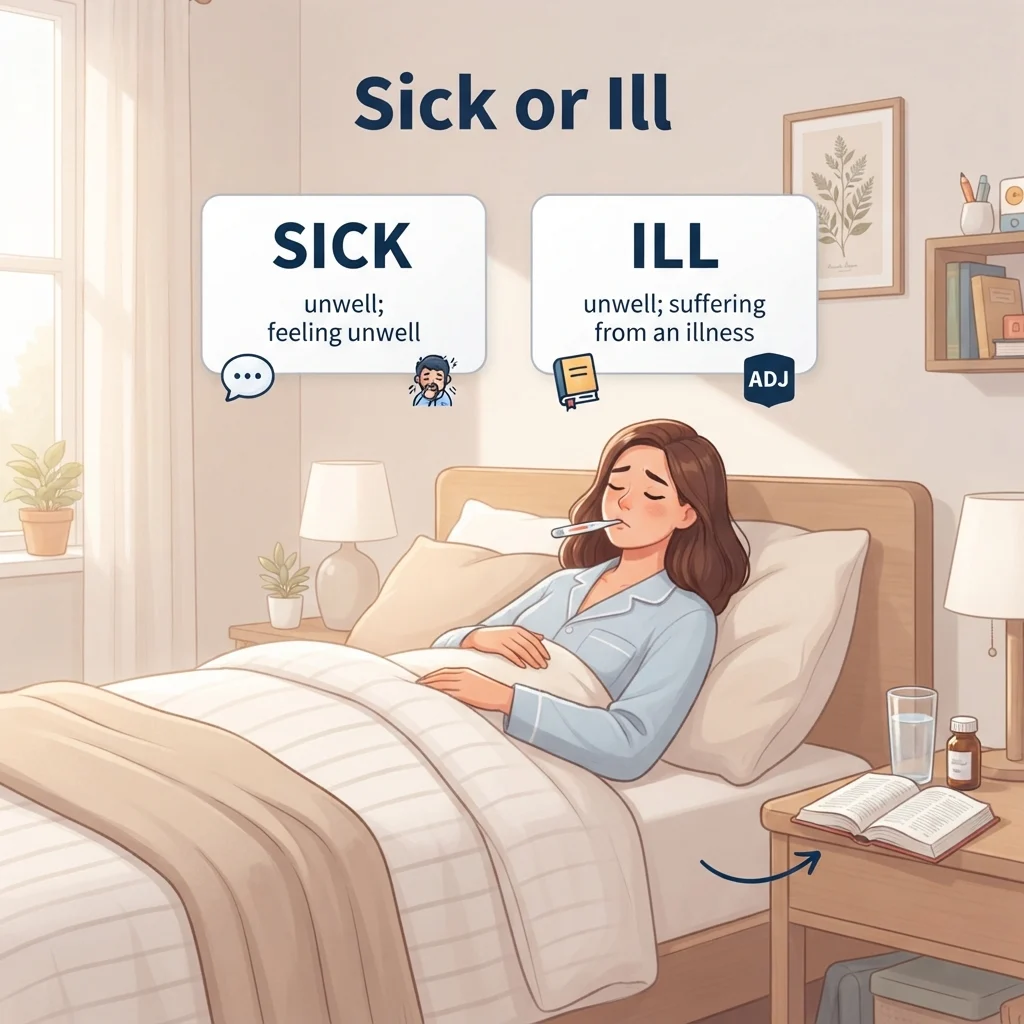
“Sick” and “ill” both mean unwell, but “sick” is more common in everyday American English, while “ill” is especially common in British English. “Sick” can also mean feeling nauseous.
Confused about sick or ill? The two words are often treated as exact synonyms, but there are small differences that can make one sound more natural than the other. The biggest difference is simple: “sick” is very common in everyday American English, while “ill” is frequently used in British English and can sound more formal. There is also an important meaning to remember—“sick” can describe feeling nauseous or wanting to vomit, while “ill” generally means being physically unwell.
For example, “I’m sick today” and “I’m ill today” can both mean that you are unwell, but the most natural choice can depend on where you are and the context. If you’re writing an email, speaking casually, completing schoolwork, or choosing between British and American English, knowing this difference can help you avoid awkward wording.
So, is it better to say sick or ill? There isn’t one choice that works in every situation. The right word depends on the meaning you want, your audience, and the variety of English you’re using.
In this complete guide, you’ll learn the difference between sick and ill, their meanings, British vs. American usage, when to use each word, common mistakes, and clear examples you can use in real sentences. By the end, you’ll know exactly when “sick” or “ill” sounds more natural and how to use both words confidently.
Sick or Ill meanings
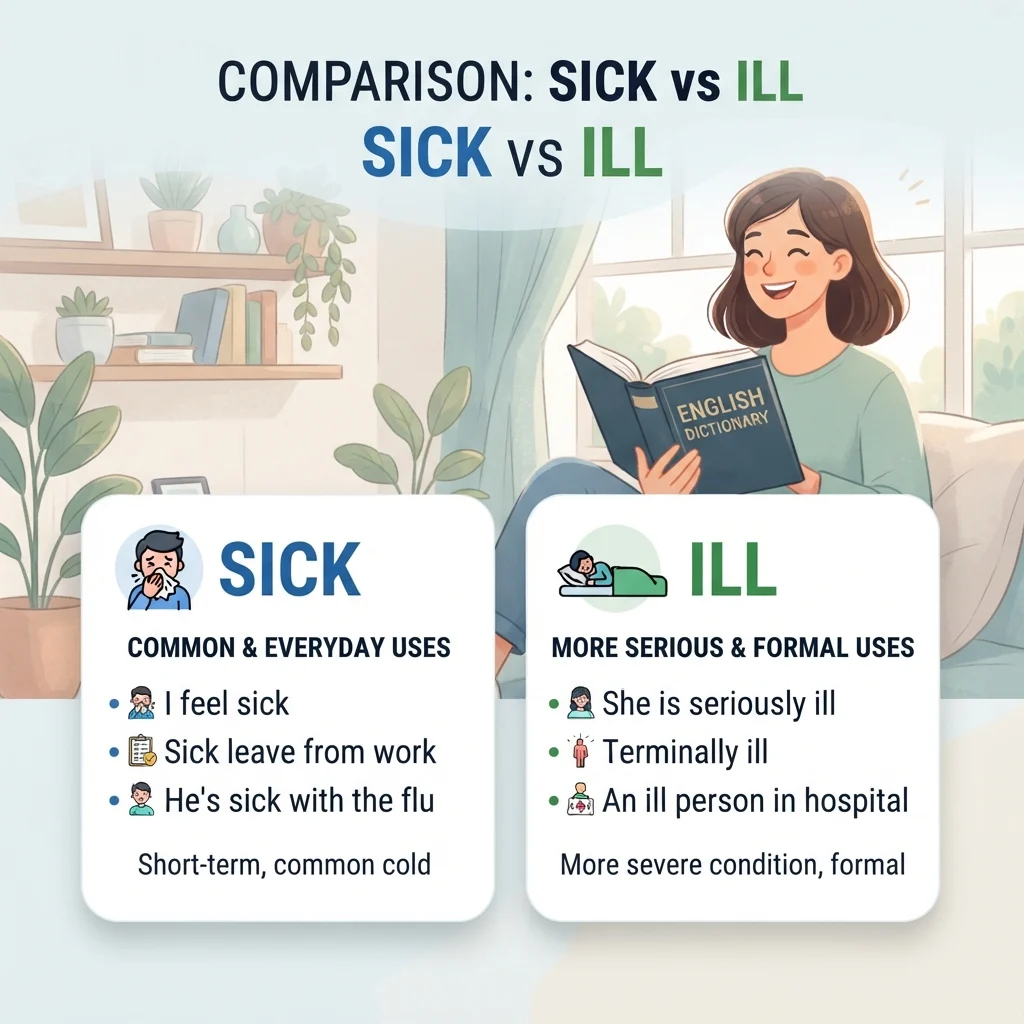
Sick and ill both mean that someone is not in good health.
Examples:
- I am sick today.
- I am ill today.
- She feels sick.
- He was ill last week.
The biggest difference is usage and tone.
| Word | Common Use | Example |
|---|---|---|
| Sick | Very common in everyday American English | I feel sick today. |
| Ill | Common in British English and formal contexts | She is seriously ill. |
There is also an important difference with sick. In some situations, sick can mean feeling like you may vomit.
Example:
“I feel sick after the boat ride.”
Here, sick may mean nausea rather than a general illness.
Ill usually focuses more directly on having a health problem.
The Origin of Sick or Ill

The words sick and ill have different histories.
Sick comes from Old English “sēoc.” It was used to describe someone who was suffering from disease or poor health. Over time, its spelling and pronunciation changed into the modern word sick.
Ill has a different history. It developed from Middle English forms related to the meaning bad, evil, or harmful. Later, it became strongly connected with poor health.
Both words have been used in English for many centuries.
The words are not spelling variations of each other. They are two different words with similar meanings.
This is why you may see both:
- sick person
- ill person
- sick child
- ill child
- sick leave
- ill health
The choice depends on the sentence, region, and level of formality.
British English vs American English Spelling
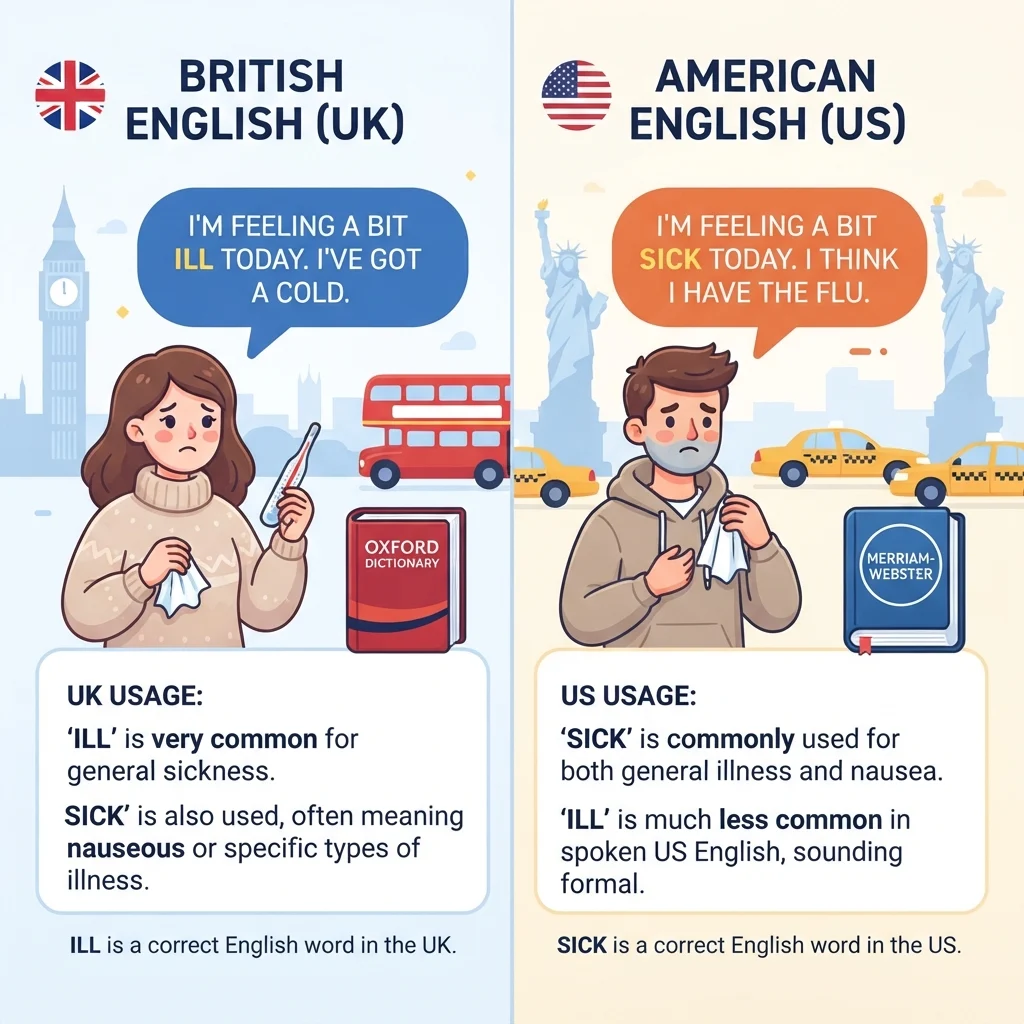
There is no spelling difference between British and American English for sick or ill.
Both countries spell the words in exactly the same way:
- sick
- ill
The difference is mainly in frequency and natural usage.
| Meaning | British English | American English |
|---|---|---|
| Not feeling well | ill / sick | sick / ill |
| Everyday speech | ill is common | sick is very common |
| Serious health problem | seriously ill | seriously ill / seriously sick |
| Feeling like vomiting | sick | sick |
| Time away from work | sick leave | sick leave |
For example:
British English:
“She has been ill for several days.”
American English:
“She has been sick for several days.”
Both sentences are correct.
Which Spelling Should You Use?
You do not need to choose a different spelling. Both sick and ill are spelled correctly.
Your choice should depend on your audience and sentence.
For American English
Use sick often in casual and everyday speech.
Example:
“I am sick today, so I cannot come to work.”
For British English
Ill is often natural when describing a person’s health.
Example:
“She became ill during the trip.”
However, British speakers also use sick in many situations.
For Formal Writing
Ill can sound more formal or neutral.
Example:
“The patient became seriously ill.”
For Global English
Both words are understood around the world. If your goal is clear communication, choose the word that best fits your sentence.
Common Mistakes with Sick or Ill
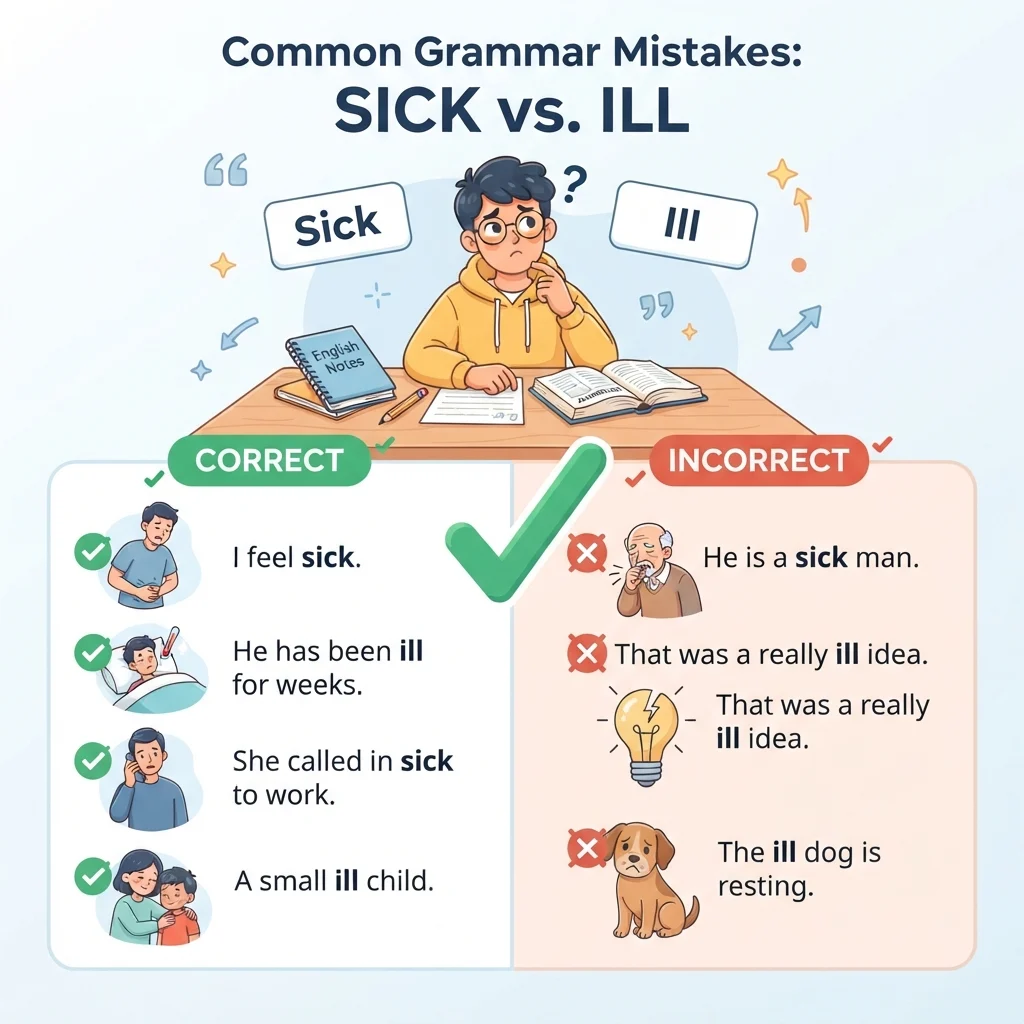
1. Thinking one word is wrong
❌ “Ill is wrong in American English.”
✅ “Ill is also correct in American English.”
Both words are valid.
2. Using “sick” only for disease
Sick can also mean nausea.
Example:
“The food made me sick.”
This may mean the food caused illness or made the person feel like vomiting.
3. Forgetting the adjective form
Both words can describe a person.
✅ She is sick.
✅ She is ill.
Do not use them as if they were always nouns.
4. Confusing “sick” with “sickness”
Sick is an adjective.
Sickness is a noun.
✅ He is sick.
✅ His sickness lasted three days.
5. Using “ill” in every casual sentence
“Ill” is correct, but sick may sound more natural in some everyday American conversations.
Lacey or Lacy: Which Is Correct? Meaning, Spelling & Examples
Sick or Ill in Everyday Examples
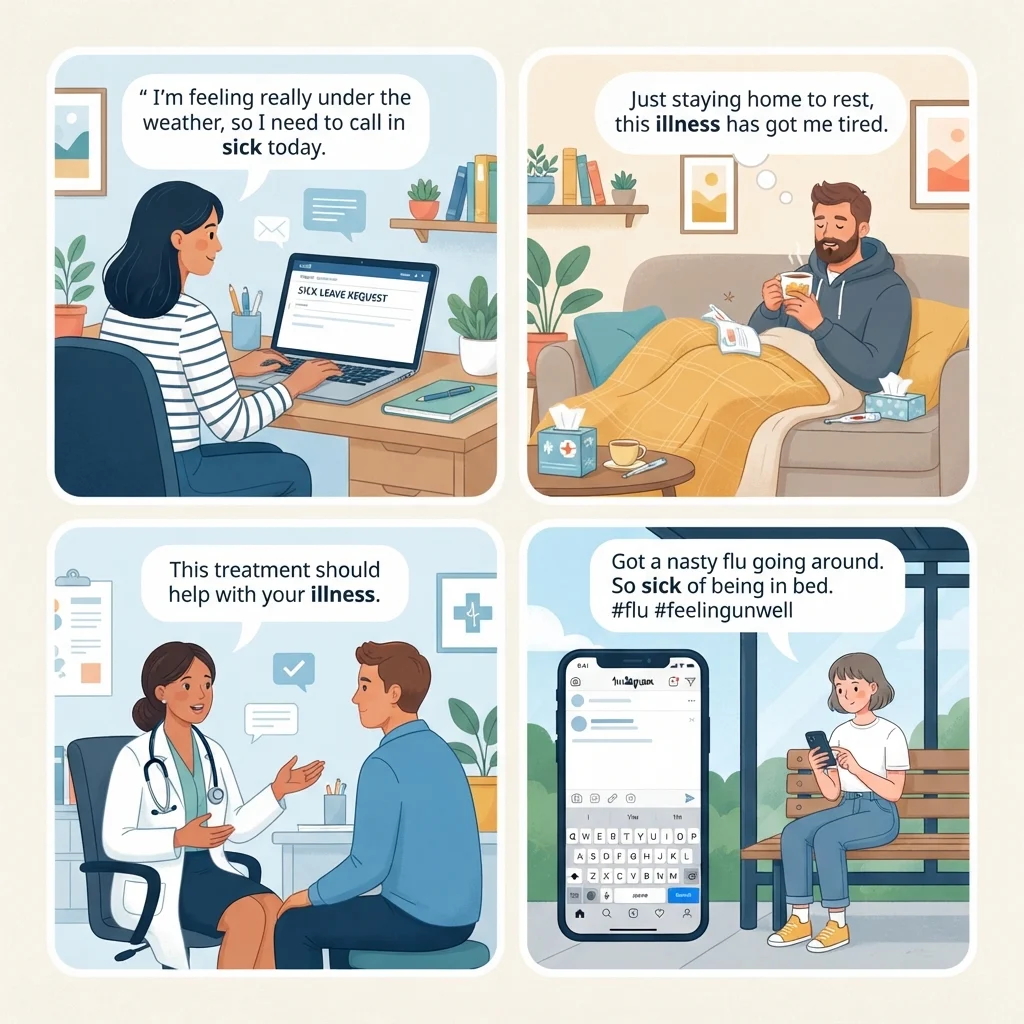
In Emails
Casual email:
I am feeling sick today, so I will stay home.
More formal email:
I am ill today and will not be able to attend the meeting.
In News Writing
News reports may use ill when discussing serious health conditions.
Example:
The actor was seriously ill for several months.
On Social Media
People often use sick in casual posts.
Examples:
- Feeling sick today.
- My little brother is sick.
- I have been sick all week.
In Formal Writing
Ill can sound more formal.
Example:
The organization provides support for elderly and ill people.
In Everyday Conversation
Both are possible.
American English:
“I feel sick.”
British English:
“I feel ill.”
The exact choice depends on the speaker and situation.
Sick or Ill – Google Trends & Usage Data
Search interest for sick and ill can vary by country and by meaning.
The word sick is especially common in searches connected with everyday health, symptoms, children, work, and school.
Examples include:
- why am I sick
- feeling sick
- sick leave
- sick child
- feeling sick after eating
The word ill often appears in searches connected with more formal health language.
Examples include:
- seriously ill
- mentally ill
- terminally ill
- ill health
- become ill
Country also affects usage. Sick is strongly associated with everyday American English, while ill is widely used in British English.
Search behavior can also change because sick has another meaning related to nausea. This gives the word a wider range of search contexts.
Sick vs Ill: Comparison Table
| Feature | Sick | Ill |
|---|---|---|
| Basic meaning | Not healthy | Not healthy |
| Spelling | Sick | Ill |
| Part of speech | Adjective | Adjective |
| American English | Very common | Common |
| British English | Common | Very common |
| Casual speech | Very common | Common |
| Formal writing | Common | Often preferred |
| Nausea meaning | Yes | Usually no |
| Serious illness | Yes | Yes |
| Sick leave | Yes | No, not normally “ill leave” |
FAQs About Sick or Ill
1. Is “sick” or “ill” correct?
Both are correct. They are adjectives that can describe someone who is not healthy.
2. Is “sick” more American than “ill”?
Yes. Sick is especially common in everyday American English. Ill is also correct in American English.
3. Do British people say “sick” or “ill”?
British speakers use both words. Ill is often common when talking about general poor health, while sick can have specific meanings, including nausea.
4. Does “sick” mean vomiting?
It can. In many contexts, sick can describe nausea or the feeling that you may vomit.
Example:
“I feel sick after the ride.”
5. Can I say “I am ill”?
Yes. “I am ill” is grammatically correct and natural, especially in British English and more formal contexts.
6. Can I say “I am sick”?
Yes. “I am sick” is very common, especially in American English.
7. Which word is better for formal writing?
Ill can sound more formal or neutral, but sick is also correct in many formal contexts. Choose the word that fits your sentence and audience.
Conclusion
The words sick and ill have almost the same basic meaning: they describe someone who is not in good health. Neither word is a spelling mistake or an incorrect version of the other.
The main difference is usage. Sick is very common in everyday American English and can also describe nausea. Ill is widely used in British English and can sound more formal or neutral when discussing health.
There is no British-versus-American spelling difference here. Both words are spelled sick and ill in both forms of English.
For casual American conversation, sick is often the natural choice. For British English or more formal health-related writing, ill may sound more natural. Still, both words are widely understood.
The key is to consider your audience, context, and meaning. Once you understand these small differences, choosing between sick and ill becomes much easier.

Robert Walser creates meaningful English captions for funcaptionz.com, delivering creative wording, short ideas, and expressive lines for everyday inspiration..









