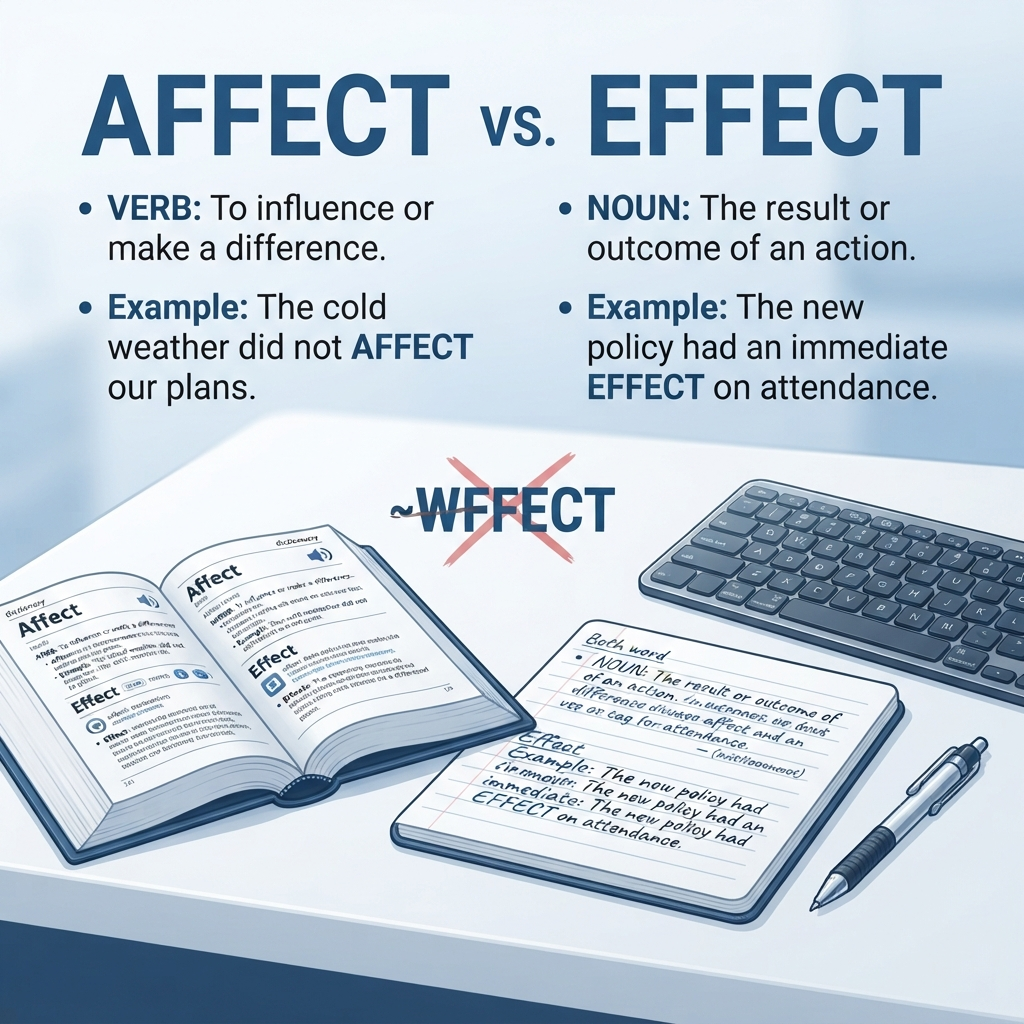
Affect or wffect? “Affect” is a correct English word, but “wffect” is not. If you mean the word for a result or consequence, the correct spelling is “effect.”
Affect or wffect—which spelling is correct? If you’ve ever typed these words quickly and wondered whether wffect is a real English word, the answer is surprisingly simple. Affect is a standard English word, while wffect is not a standard spelling and is generally a typo for effect. But there is another important detail: affect and effect are both correct words, yet they usually have different meanings and grammatical roles.
In most everyday writing, affect is used as a verb meaning “to influence.” For example, you can say, “Lack of sleep can affect your concentration.” Effect, meanwhile, is commonly used as a noun meaning “a result” or “consequence,” as in, “Lack of sleep can have a negative effect on concentration.” Knowing this simple distinction can prevent an easy spelling mistake from making your writing look less polished.
So, if you’re searching for affect or wffect, don’t worry—the confusion is easy to solve. This guide breaks down the difference between affect, effect, and wffect in clear, simple English. You’ll discover which spelling is correct, what each word means, how to use them in sentences, why wffect is incorrect, common mistakes to avoid, and easy examples that make the difference stick.
By the end, you’ll be able to spot wffect as a misspelling instantly and confidently choose between affect and effect whenever you’re writing, editing, studying, or publishing content.
Affect or Wffect meanings
The spelling “wffect” is incorrect. It is usually a typing or spelling mistake for affect or effect.
Affect
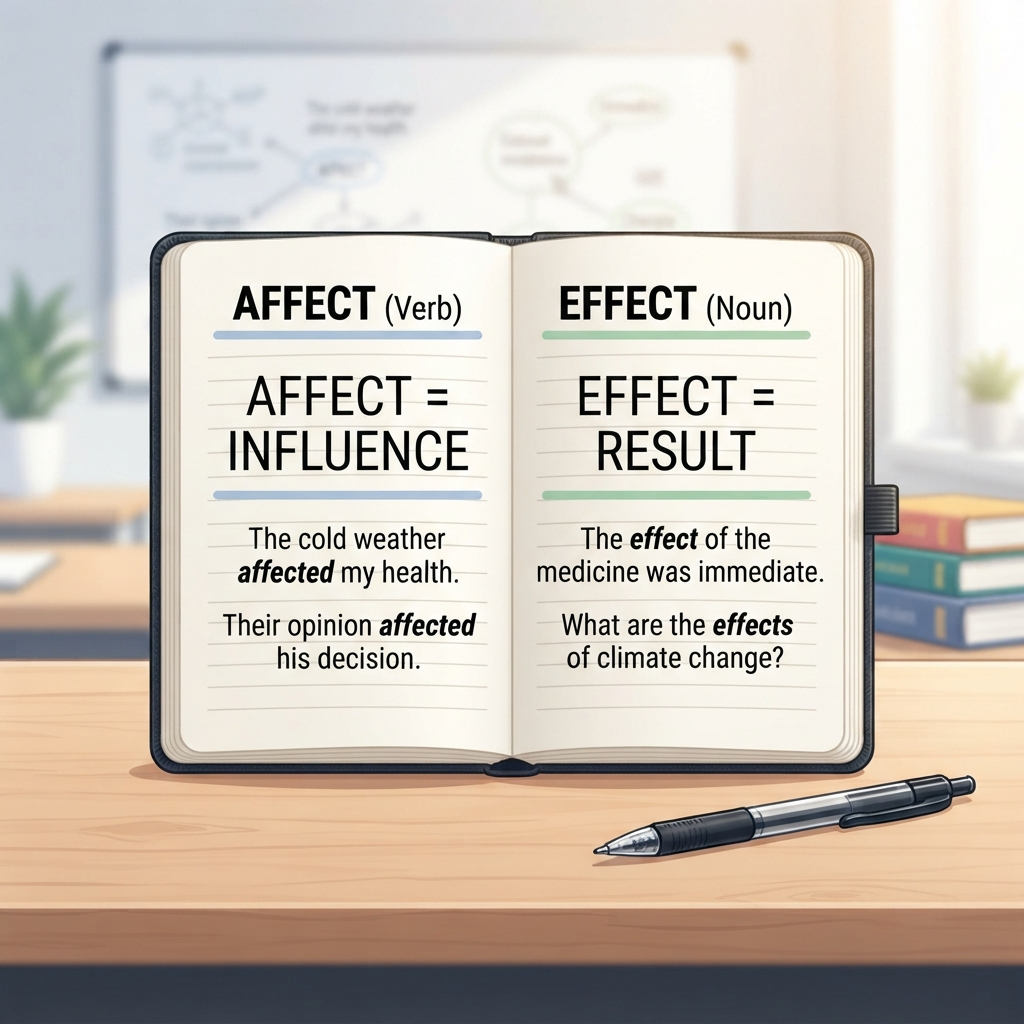
Affect is most often used as a verb. It means to influence or change something.
Example:
- Lack of sleep can affect your mood.
- Rain may affect our travel plans.
- Stress can affect your health.
Effect
Effect is most often used as a noun. It means a result or outcome.
Example:
- Lack of sleep can have an effect on your mood.
- The new rule had a strong effect on workers.
- The medicine had a quick effect.
Wffect
Wffect is not a standard English spelling.
If you write wffect, check the sentence and decide whether you mean affect or effect.
Easy memory trick
Think:
Affect = Action
Effect = End result
So:
The storm affected the flight.
The delay was an effect of the storm.
The Origin of Affect or Wffect
The word affect comes from Latin and entered English through Old French. It has been used in English for centuries with meanings linked to influence, emotion, and change.
The word effect also comes from Latin. It developed from a word meaning to accomplish, bring about, or produce a result.
Although affect and effect have different uses, they are closely related. This is one reason they can be confusing.
The spelling wffect does not have a separate historical origin in standard English. It is simply an incorrect spelling.
The confusion may happen because the first letters of affect and effect are easy to mistype. On a keyboard, adding w at the beginning can create wffect by accident.
Why do people confuse them?
There are three main reasons:
- Affect and effect sound similar.
- Both words relate to change or results.
- Wffect looks similar to effect when typed quickly.
The safest approach is to look at the role of the word in your sentence.
British English vs American English Spelling
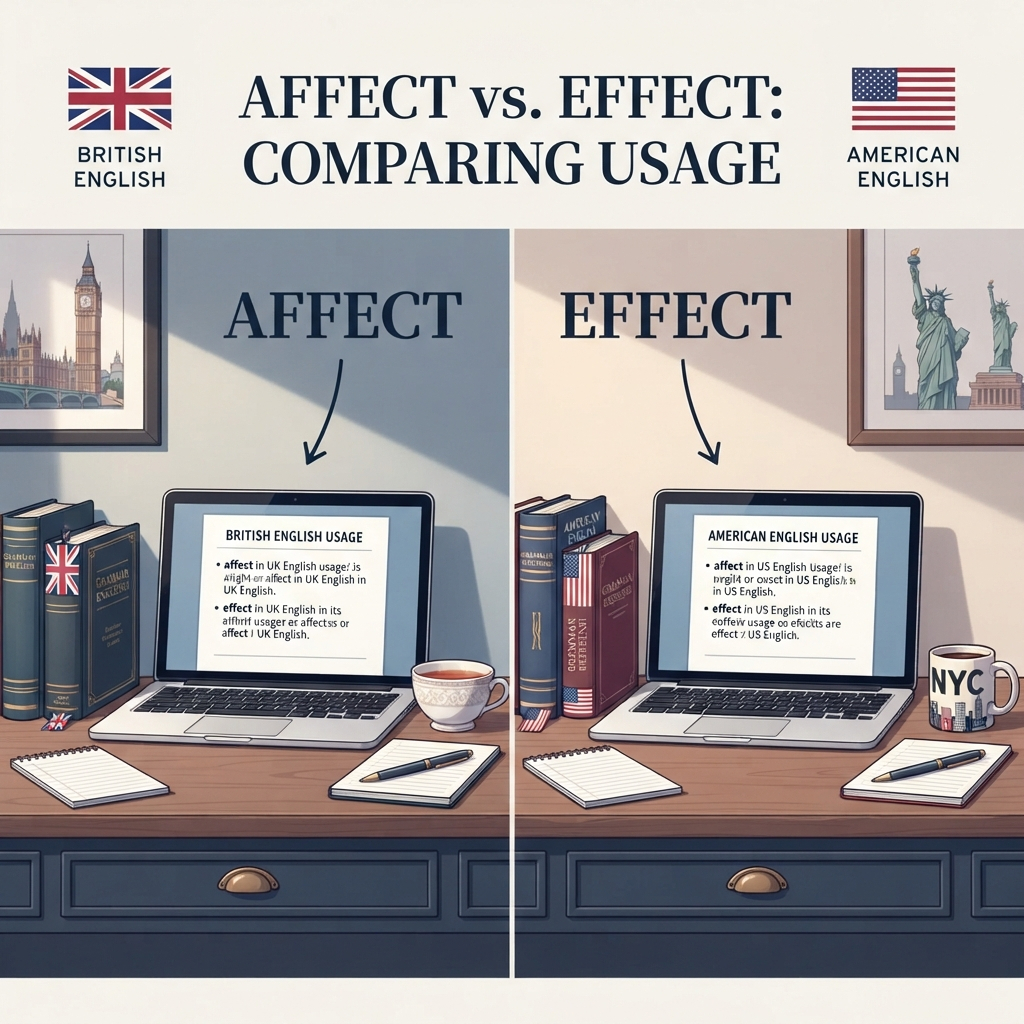
There is no major British vs American spelling difference between affect and effect.
Both British and American English use:
- affect
- effect
The incorrect form wffect is not a standard spelling in either variety.
| Word | British English | American English | Correct? |
|---|---|---|---|
| Affect | Affect | Affect | Yes |
| Effect | Effect | Effect | Yes |
| Wffect | Wffect | Wffect | No |
There are some differences between British and American English in words such as colour/color and organise/organize, but affect and effect are not normally changed in this way.
Examples
British English:
The weather may affect the event.
American English:
The weather may affect the event.
Both use the same spelling.
Which Spelling Should You Use?
Your choice should depend on what you mean, not on whether you are writing for a British or American audience.
For a US audience
Use affect when you mean “influence.”
The price may affect sales.
Use effect when you mean “result.”
The price had an effect on sales.
For a UK or Commonwealth audience
The same basic rule applies.
The news affected her deeply.
The news had a strong effect on her.
For a global audience
Use the same standard spellings:
- affect
- effect
Avoid wffect because readers may see it as a typing error.
Quick rule
If you can replace the word with influence, use affect.
If you can replace it with result, use effect.
Common Mistakes with Affect or Wffect
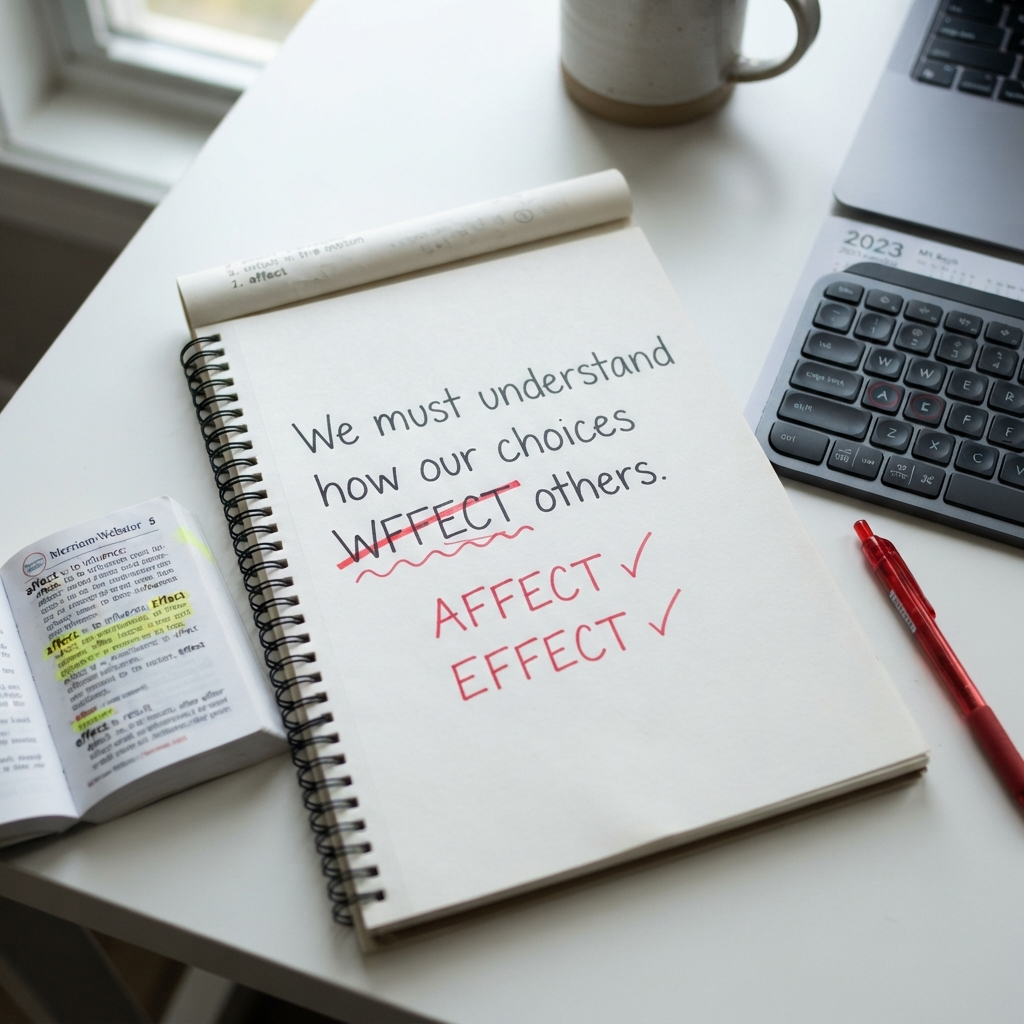
Here are some frequent mistakes and their corrections.
Mistake 1: Writing Wffect
❌ The medicine had a strong wffect.
✅ The medicine had a strong effect.
Wffect is incorrect.
Mistake 2: Using Effect as a Verb
❌ The weather will effect our plans.
✅ The weather will affect our plans.
Here, the meaning is “influence,” so affect is correct.
Mistake 3: Using Affect for a Result
❌ The new law had a major affect on business.
✅ The new law had a major effect on business.
Here, the word means “result,” so effect is correct.
Mistake 4: Confusing “Affected” and “Effected”
Affected usually means influenced.
The storm affected thousands of people.
Effected is a less common verb. It can mean caused something to happen or brought about a change.
The new manager effected several changes.
For everyday writing, affected is much more common.
Affect or Wffect in Everyday Examples
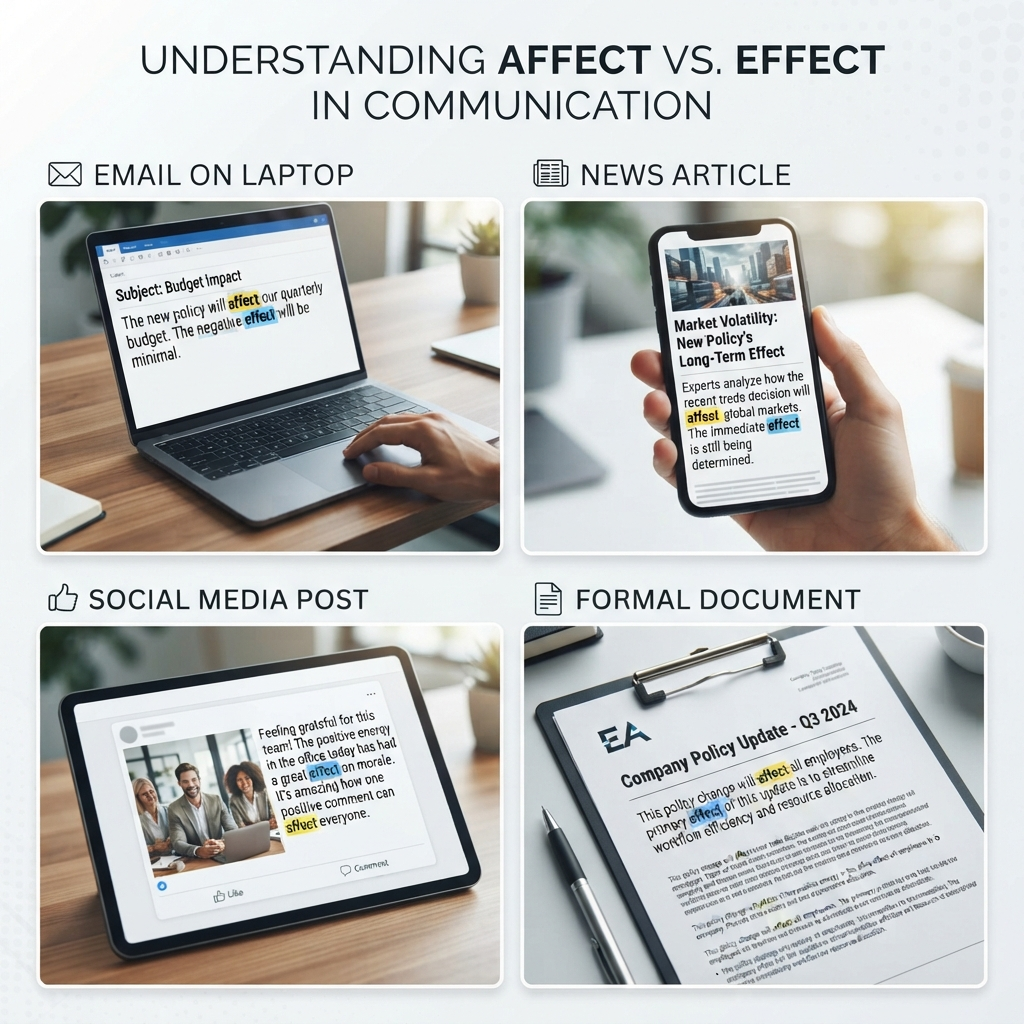
Knowing the difference becomes easier when you see these words in real situations.
In Emails
Affect:
The delay may affect our meeting time.
Effect:
Please explain the effect of this change on our schedule.
In News Writing
Affect:
Higher prices could affect families across the country.
Effect:
The policy had a major effect on local businesses.
On Social Media
Affect:
Does rainy weather affect your mood?
Effect:
That movie had a huge effect on me.
In Formal Writing
Affect:
The study examined how stress can affect memory.
Effect:
The research measured the effect of stress on memory.
In Everyday Speech
Loud noise can affect your sleep.
The noise had a negative effect on my sleep.
These examples show the basic pattern clearly: affect usually describes an influence, while effect usually describes a result.
Affect or Wffect – Google Trends & Usage Data

Search interest around “affect or effect” is much more common than interest around “affect or wffect.” This makes sense because affect and effect are both real English words that learners and native speakers often compare.
The phrase “affect or effect” is commonly searched in English-speaking regions, including the United States, United Kingdom, Canada, Australia, and other countries where English is widely used.
Searches for “wffect” are generally associated with spelling checks or accidental typing. It is not normally treated as a standard English vocabulary word.
What does this tell writers?
If you are creating educational content, the useful topic is:
Affect vs Effect
rather than treating wffect as a separate English word.
| Search Variation | Meaning | Standard English? | Best Use |
|---|---|---|---|
| Affect | Influence or change | Yes | Verb |
| Effect | Result or outcome | Yes | Usually noun |
| Affect or effect | Word-choice question | Yes | Grammar help |
| Affect or wffect | Spelling confusion | Partly | Correction guide |
| Wffect | Typing/spelling error | No | Avoid |
Usage patterns also show why short grammar explanations are useful: people often know the words but still need help deciding which one belongs in a specific sentence.
Affect or Wffect – Comparison Table
| Word | Part of Speech | Basic Meaning | Example |
|---|---|---|---|
| Affect | Verb | To influence | Stress can affect sleep. |
| Effect | Noun | A result | Stress can have an effect on sleep. |
| Effect | Verb | To bring about | The team effected major changes. |
| Wffect | — | Incorrect spelling | Do not use it. |
The fastest way to remember
Affect → Influence
The noise affected my concentration.
Effect → Result
The noise had an effect on my concentration.
Wffect → Wrong
❌ The noise had a wffect.
FAQs About Affect or Wffect
1. Is “wffect” a correct English word?
No. Wffect is not a standard English word. It is usually a spelling or typing mistake.
2. Should I use affect or effect?
Use affect when you mean influence. Use effect when you mean result.
3. Is affect a verb or noun?
Affect is most commonly a verb.
The news affected him.
It can also be a noun in specific psychology-related contexts, but this use is less common in everyday writing.
4. Is effect a verb or noun?
Effect is most commonly a noun.
The change had an effect.
It can also be a verb meaning to bring about a change.
5. Is “wffect” used in British English?
No. Wffect is not a standard British English spelling.
6. Is “affect or effect” the correct phrase?
Yes. Affect or effect is the standard phrase when asking which of these two words should be used.
7. What is the easiest way to remember affect and effect?
Remember:
Affect = Action or influence
Effect = End result
This simple trick works for many everyday sentences.
Conclusion
The answer to “affect or wffect” is straightforward: wffect is not the correct spelling. In most cases, you are looking for either affect or effect.
Use affect when you mean to influence or change something. For example, “The weather may affect our plans.” Use effect when you mean a result or outcome. For example, “The weather had an effect on our plans.”
Both affect and effect are spelled the same in British and American English. The main challenge is not regional spelling. It is understanding the meaning and grammatical role of each word.
If you see wffect in your writing, treat it as a spelling error and check the sentence. A quick substitution can help: if influence works, choose affect. If result works, choose effect.
Once you learn this simple difference, choosing the right word becomes much easier.

Stella Gibbons writes creative English captions for funcaptionz.com, blending wit, clarity, and short ideas to inspire readers across social platforms daily use









