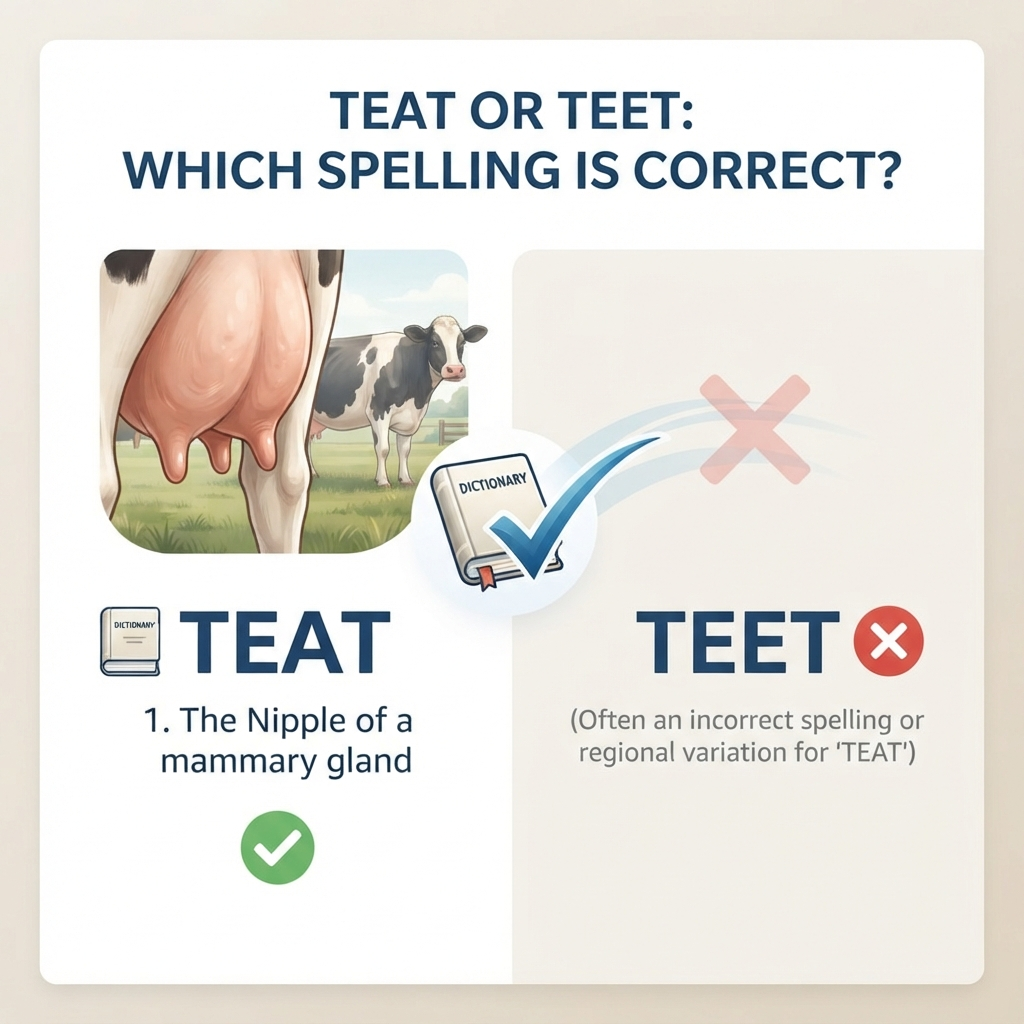
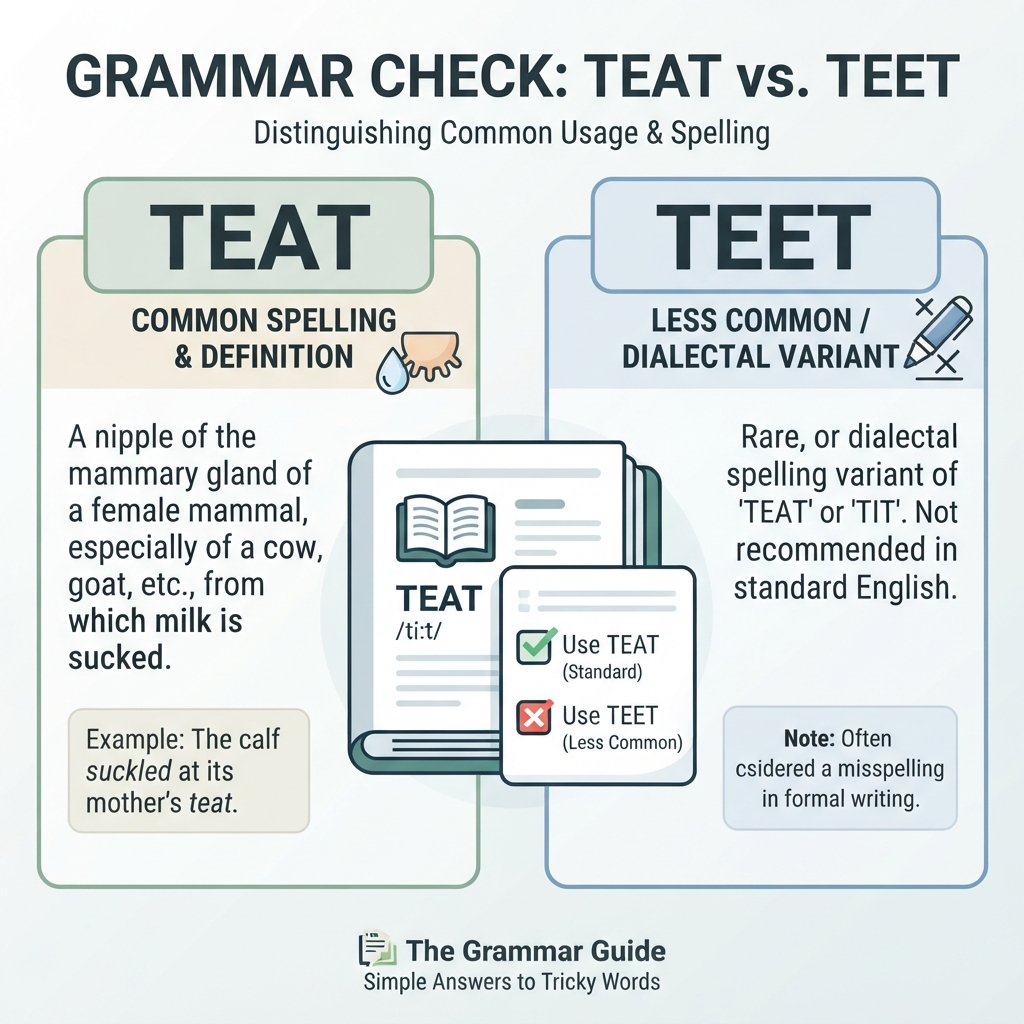
Teat is the correct spelling when referring to the nipple of a female mammal, especially an animal such as a cow or goat. Teet is not the standard spelling for this meaning.
Teat or teet—which spelling is correct? It is an easy mistake to make because both words sound almost the same, but only one is the standard English spelling for the meaning most people intend. If you are writing about cows, goats, sheep, or other female mammals, the correct word is teat. The spelling teet is generally a misspelling when used with this meaning.
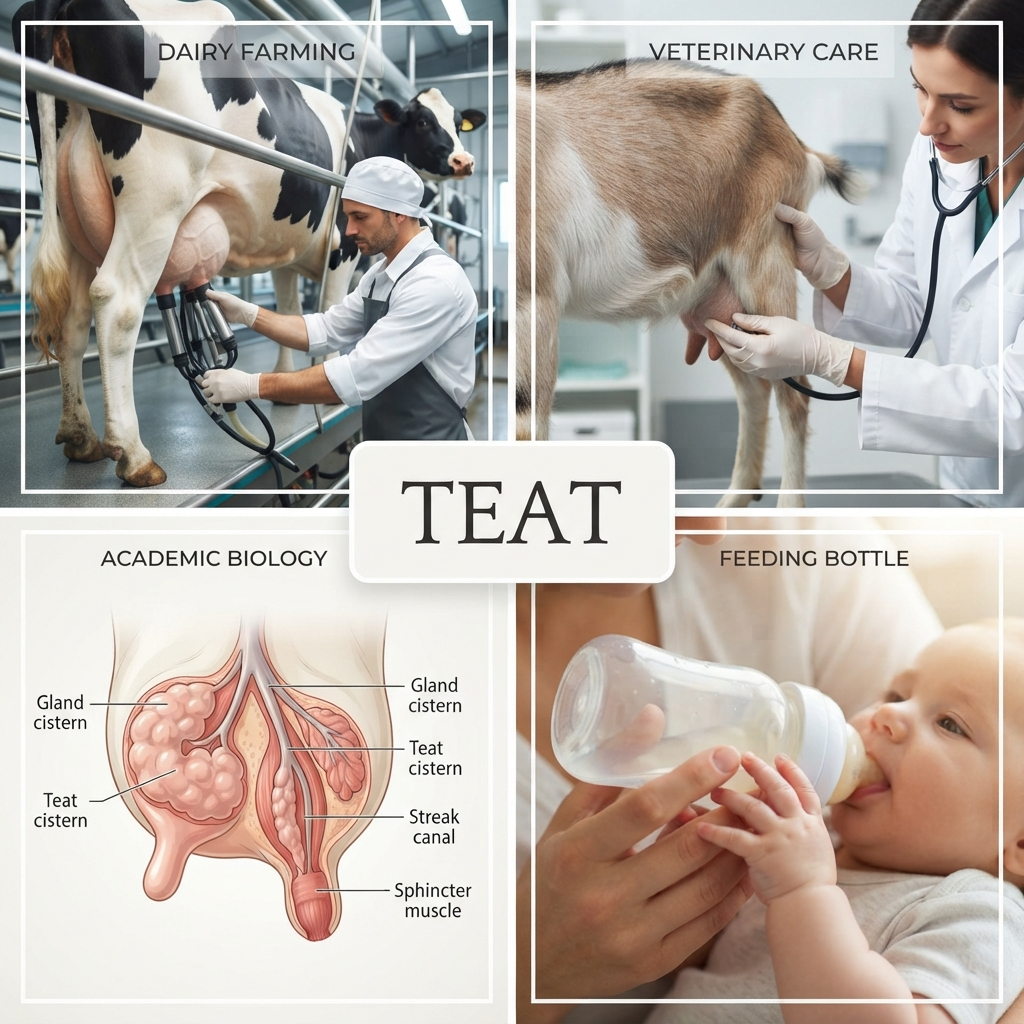
A teat is the part of a female mammal from which milk is released, making the word common in discussions about animals, farming, veterinary care, and breastfeeding in mammals. For example, you can say, “The cow has four teats.” Knowing this small spelling difference can save you from an embarrassing mistake, especially in formal writing, educational content, or articles where accuracy matters.
So, why do people confuse teat and teet? Their similar pronunciation makes the incorrect spelling tempting, particularly when someone has heard the word but has never seen it written. A single vowel can make the difference between the standard word and a spelling error.
In this guide, you’ll learn the difference between teat and teet, their meanings, pronunciation, correct usage, example sentences, common mistakes, and which spelling you should use in your writing. If you’ve ever hesitated before typing “teat or teet,” you’ll have a clear answer by the end.
Teat or Teet meanings
Teat is the standard spelling when referring to a mammal’s nipple or a bottle nipple.
- ✅ Teat — standard modern spelling
- ⚠️ Teet — uncommon or alternative form; usually not the preferred spelling
Examples
- The calf drank from its mother’s teat.
- The farmer checked each cow’s teat.
- The baby bottle needs a new teat.
Easy memory trick
Think of teat as the word connected with feeding. The spelling contains “ea,” just like eat.
So, when you mean the part used for feeding, remember:
Teat → feed → eat
The Origin of Teat or Teet
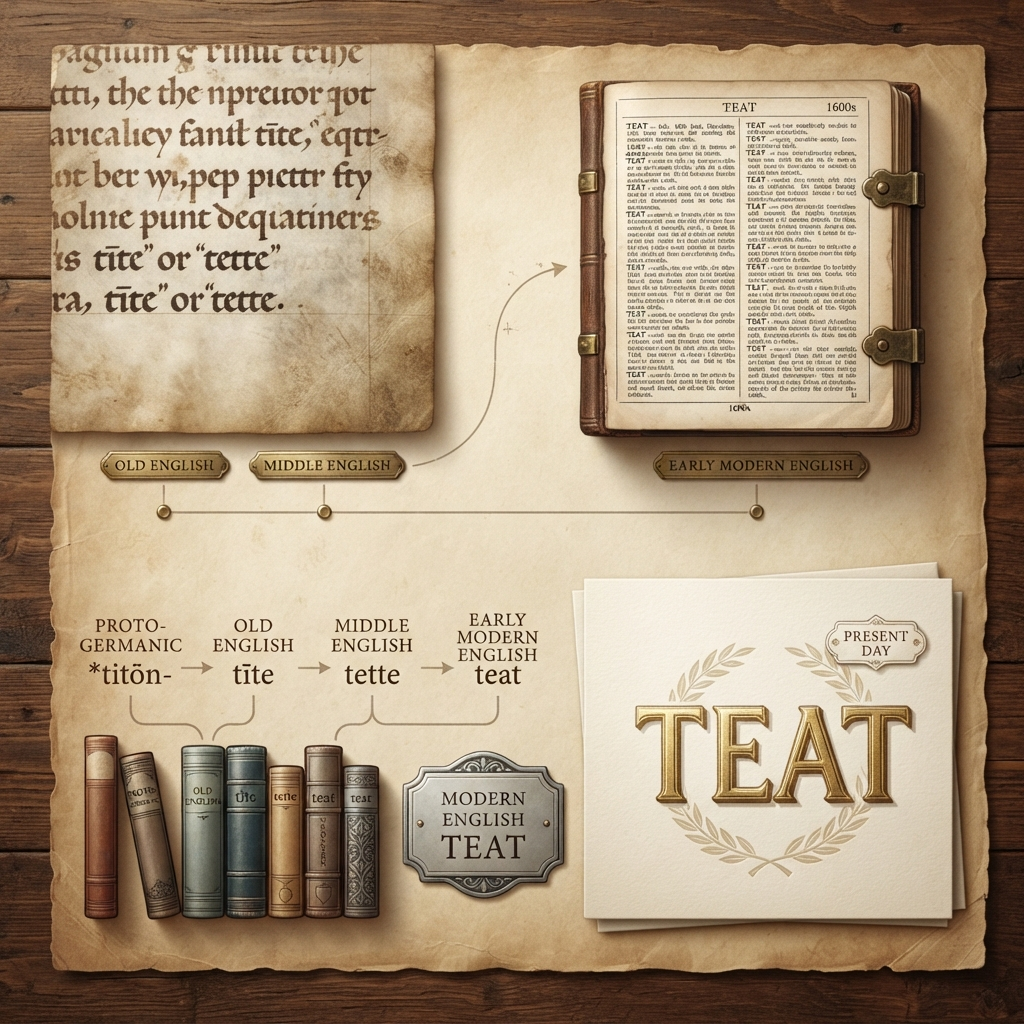
The history of teat goes back many centuries. The modern English word developed through Middle English forms such as tete and earlier French and Germanic forms connected with the idea of a nipple or breast.
Older English had several spellings. Historical records show forms such as teet, teate, tet, tete, and teat. English spelling was not always fixed, so writers could use different forms of the same word.
Over time, teat became the established spelling in modern standard English.
This explains why teet may sometimes appear in older texts, regional language, or dictionaries that record historical or alternative forms. However, seeing an old spelling does not mean it is the best spelling for modern professional writing.
Today, teat is widely understood in animal care, farming, veterinary science, and feeding-related contexts.
British English vs American English Spelling
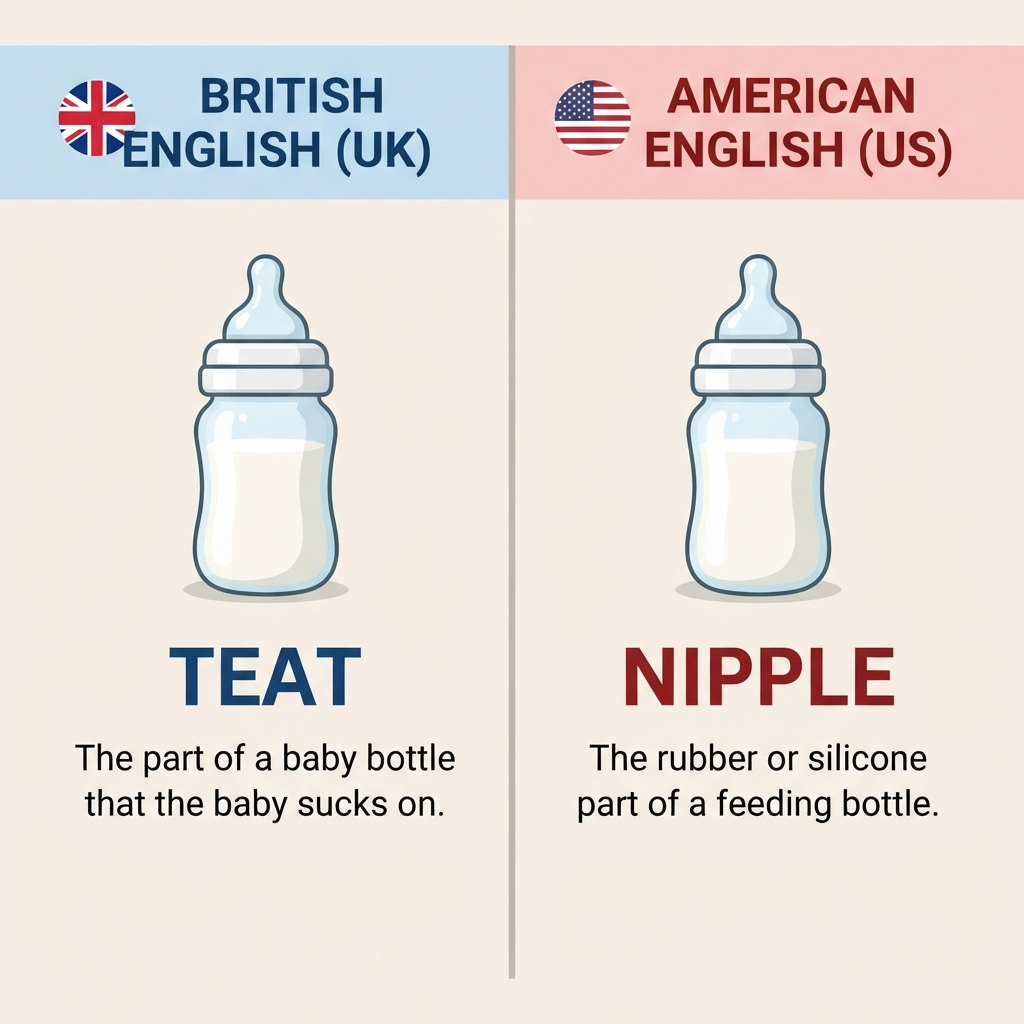
The spelling teat is used in both British and American English.
The bigger difference is often meaning and vocabulary choice, rather than spelling.
In British English, teat can commonly refer to the nipple of a feeding bottle. In American English, nipple is usually preferred for a baby bottle.
For animal anatomy, teat is widely understood in both varieties.
| Meaning | British English | American English |
|---|---|---|
| Mammal’s nipple | Teat | Teat |
| Cow’s milk outlet | Teat | Teat |
| Goat’s milk outlet | Teat | Teat |
| Baby bottle part | Teat | Nipple |
| Plural | Teats | Teats |
| Common misspelling | Teet | Teet |
Examples
British English:
The baby needs a new bottle teat.
American English:
The baby needs a new bottle nipple.
For animals, both can say:
The farmer examined the cow’s teat.
So, there is no major British-versus-American spelling change between teat and teat. The main variation is the word chosen for certain objects.
Which Spelling Should You Use?
For most modern writing, use teat.
For US readers
Use teat when discussing animal anatomy.
For baby bottles, nipple is usually the more natural American term.
For UK readers
Teat is a normal word for both animal anatomy and the nipple of a feeding bottle.
For Australian and New Zealand readers
Teat is also commonly used, especially when discussing baby bottles and animal care.
For global audiences
Choose teat when you mean the mammary nipple of an animal. If you are talking about a baby bottle, consider nipple if your audience is mainly American.
The safest professional rule is simple:
Use “teat” for animal anatomy. Use the audience’s preferred term for feeding bottles.
Common Mistakes with Teat or Teet
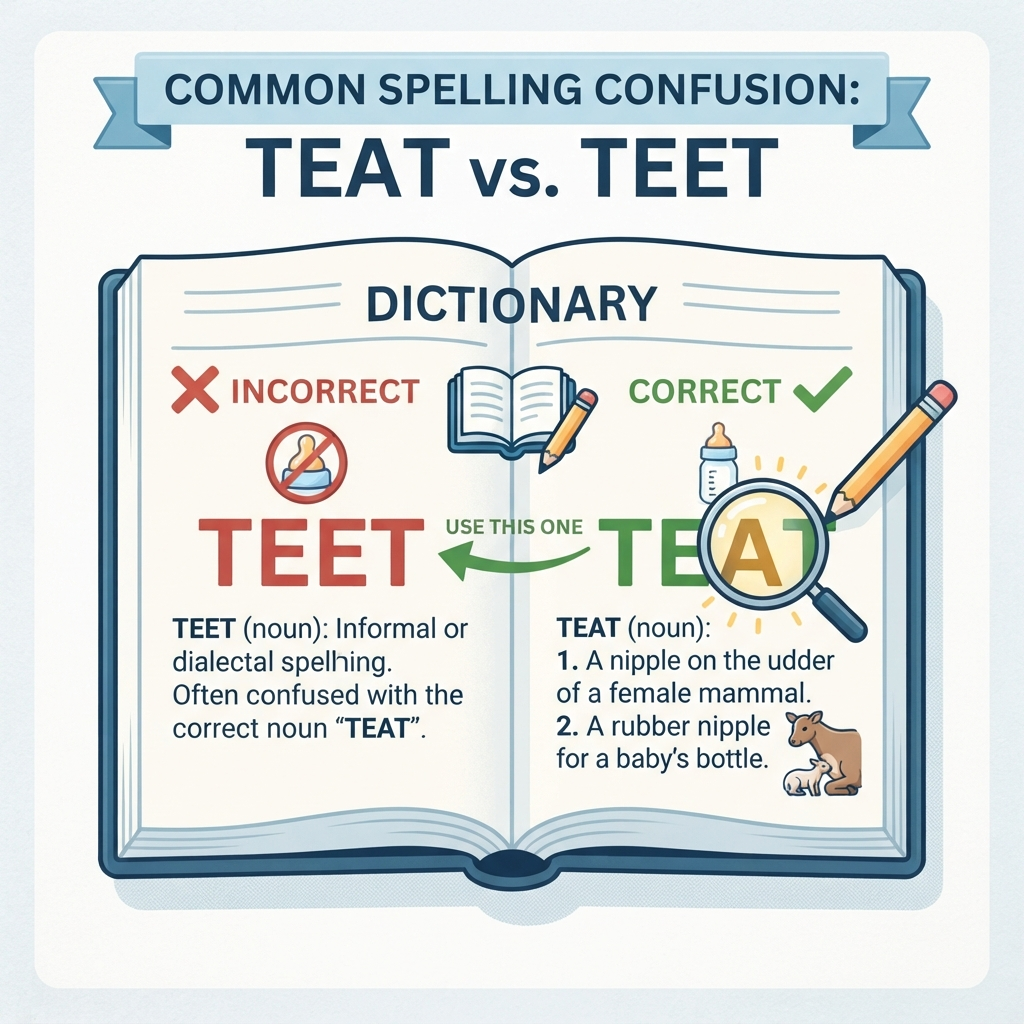
The most common mistake is writing teet when you mean teat.
Mistake 1: Using “teet” for an animal
❌ The calf fed from the cow’s teet.
✅ The calf fed from the cow’s teat.
Mistake 2: Adding an incorrect plural
❌ The farmer checked the cow’s teets.
✅ The farmer checked the cow’s teats.
The plural of teat is teats.
Mistake 3: Choosing spelling from pronunciation
Because teat sounds like words ending in -eet, some writers naturally spell it teet.
English spelling is not always phonetic, so pronunciation alone cannot tell you the correct spelling.
Mistake 4: Using “teat” when “nipple” is more natural
In American English, nipple is usually more natural for a baby bottle.
Instead of:
Replace the bottle teat.
An American writer may prefer:
Replace the bottle nipple.
🔍 Handle or Handel: Which Spelling Is Correct? Meaning & Usage
Teat or Teet in Everyday Examples
In Emails
Correct:
Please inspect each cow’s teat before milking.
This is clear and professional for farming or veterinary communication.
In News Writing
Correct:
The farmer reported an injury to one of the cow’s teats.
The word fits agricultural and animal-care reporting.
On Social Media
A farming account might write:
Checking the cows’ teats before today’s milking.
The word is simple and appropriate for the context.
In Formal Writing
Correct:
The veterinarian examined the animal’s teats for signs of infection.
This is suitable for veterinary, scientific, or academic writing.
In Parenting Content
British English:
Check the bottle teat for signs of wear.
American English:
Check the bottle nipple for signs of wear.
The preferred word depends on the audience.
Teat or Teet – Google Trends & Usage Data
Search interest around “teat or teet” mainly comes from spelling confusion. People often search the two forms together when they hear the word but are unsure how to write it.
The standard form, teat, has a much broader use because it appears in farming, veterinary medicine, animal science, biology, and feeding-related content.
Teet receives attention mainly because people question whether it is an alternative spelling or a mistake. Historical and dialectal uses can also appear in language resources.
Usage can vary by country and context:
| Search or usage context | More likely term |
|---|---|
| Animal anatomy | Teat |
| Dairy farming | Teat |
| Veterinary writing | Teat |
| Biology | Teat |
| British baby products | Teat |
| American baby products | Nipple |
| Spelling questions | Teat or teet |
| Historical texts | Teet may appear |
Overall, teat is the better choice for modern standard English when referring to the anatomical term.
Teat or Teet – Comparison Table
| Word | Standard modern choice? | Meaning | Best use |
|---|---|---|---|
| Teat | ✅ Yes | Mammal’s nipple | Modern English |
| Teats | ✅ Yes | More than one teat | Plural |
| Teet | ⚠️ Uncommon | Historical/alternative usage | Avoid in normal writing |
| Teets | ⚠️ Usually avoid | Often intended as plural of teat | Use teats instead |
| Nipple | ✅ Yes | Mammal or bottle nipple | Common, especially US English |
FAQs About Teat or Teet
1. Is it teat or teet?
Teat is the standard spelling in modern English when referring to a mammal’s nipple or a bottle nipple.
2. Is “teet” a correct English word?
Teet can appear as an alternative or historical form in some language records, but it is not the normal modern spelling. For standard writing, use teat.
3. What is the plural of teat?
The plural is teats.
Example:
The farmer examined the cow’s teats.
4. Is teat used in American English?
Yes. Teat is used in American English, especially for animal anatomy. Americans commonly use nipple instead when talking about baby bottles.
5. Is teat used in British English?
Yes. British English uses teat for animal anatomy and also commonly uses it for the nipple of a feeding bottle.
6. Why do people spell teat as teet?
The main reason is pronunciation. Teat has a long “ee” sound, so people may spell it as teet based on how it sounds.
7. What is the easiest way to remember teat?
Remember:
Teat → eat → feeding
The “ea” spelling can help you remember the correct form.
Conclusion
If you are choosing between teat or teet, the safest answer is teat. It is the standard modern spelling for the nipple of a female mammal and is widely used in farming, veterinary medicine, biology, and animal-care writing.
The word teet may appear in historical, regional, or alternative language records, but it is not the normal choice for modern standard writing. If you are writing an email, school assignment, article, report, or professional document, teat is the better option.
There is also a small difference in vocabulary between English varieties. British English commonly uses teat for a baby bottle, while American English usually uses nipple. When discussing cows, goats, sheep, or other mammals, teat is widely understood.
The easiest rule is simple: use “teat” for modern standard English, and “teats” as its plural. This choice keeps your writing clear, accurate, and professional.

Walter de la Mare writes creative English captions for funcaptionz.com, sharing short ideas, thoughtful wording, and expressive lines for modern readers.









