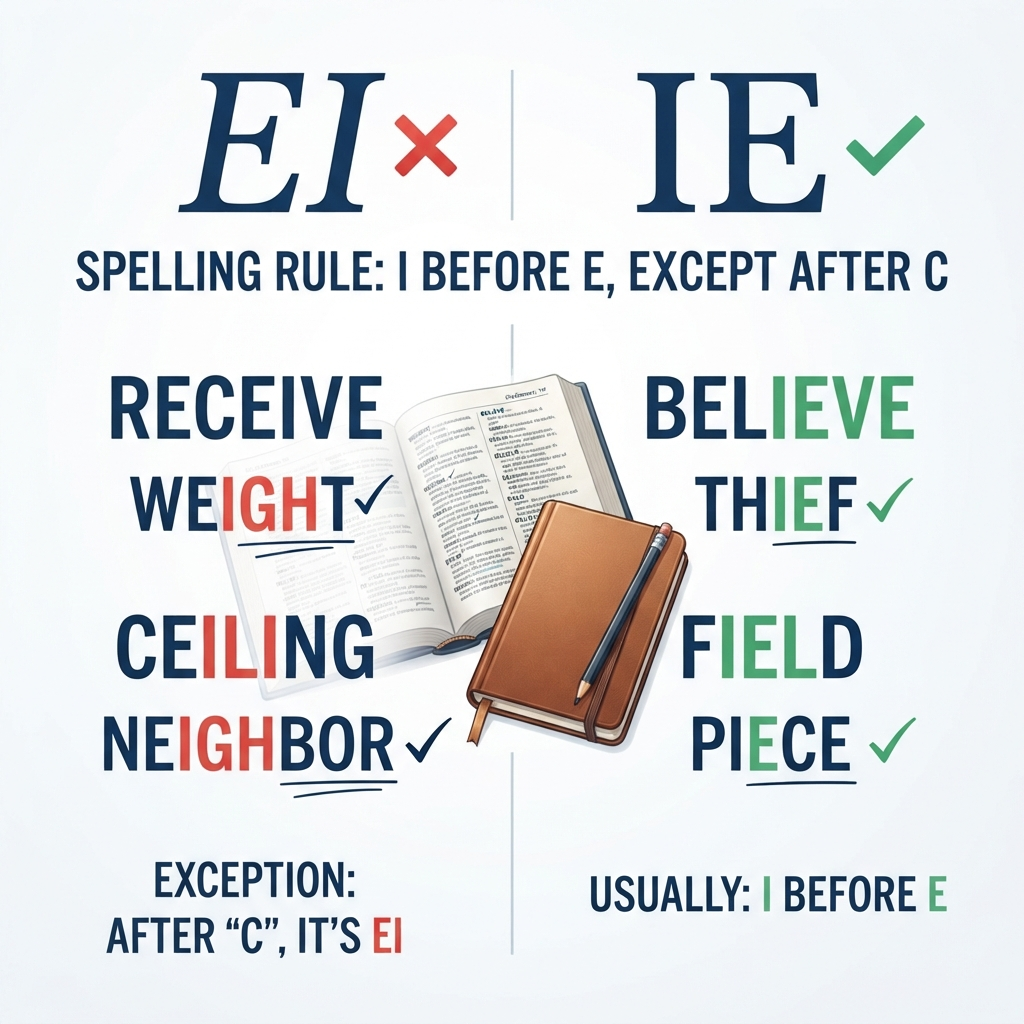
“Ei” and “ie” are common English spelling patterns, but knowing which one to use can be tricky. Words like “receive” use “ei,” while “believe” uses “ie,” and several important exceptions make the usual rule unreliable.
Ei or ie—which spelling is correct? This tiny difference can turn an otherwise simple word into a frustrating spelling mistake. You may have learned “i before e, except after c,” but English has enough exceptions to make that rule far from foolproof. For example, believe, field, and piece use ie, while receive, ceiling, and deceive use ei.
The good news is that you don’t have to memorize hundreds of confusing words blindly. Understanding the common patterns, knowing when the “i before e” rule works, and recognizing its major exceptions can make ei vs. ie much easier to handle.
Whether you’re a student, writer, blogger, or simply trying to improve your spelling, knowing the difference can help you write with greater confidence and accuracy.
In this guide, you’ll learn when to use ei or ie, the most useful spelling rules, common exceptions, confusing examples, frequent mistakes, and simple ways to remember the correct spelling—so you can stop second-guessing these tricky letter combinations.
Ei or Ie meanings
The short answer is: both “ei” and “ie” are correct, but they appear in different words.
A common rule is:
I before E, except after C.
Examples:
- believe → ie
- field → ie
- piece → ie
- receive → ei
- ceiling → ei
- receipt → ei
The rule works well in many cases, but it has exceptions.
Easy Examples
| ie words | ei words |
|---|---|
| believe | receive |
| field | ceiling |
| piece | receipt |
| chief | deceive |
| thief | perceive |
| brief | conceit |
A useful tip is to learn common words as complete spellings instead of relying only on the rule.
The Origin of Ei or Ie
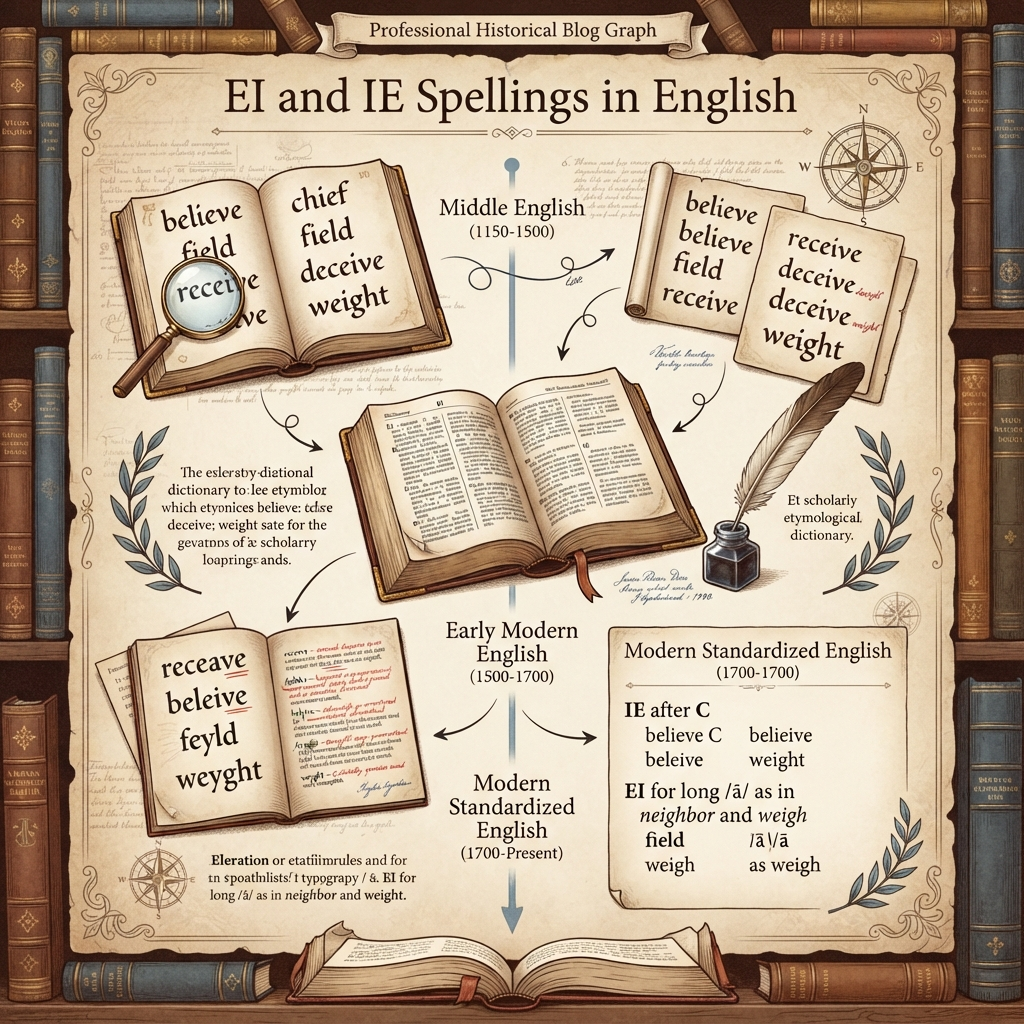
The ei or ie problem comes from the long history of the English language. English developed from several languages, including Old English, French, Latin, Norse, and Germanic languages.
As English changed, words kept different spelling patterns from their original languages. This is one reason the same sound can appear with different letters.
The famous “I before E, except after C” rhyme became a useful memory trick. It teaches writers that ie is common in words such as believe, while ei often appears after c, as in receive.
However, English has many exceptions.
For example:
- weird
- their
- foreign
- height
- science
- ancient
- leisure
This means the rhyme should be treated as a helpful guide, not a perfect spelling law.
British English vs American English Spelling
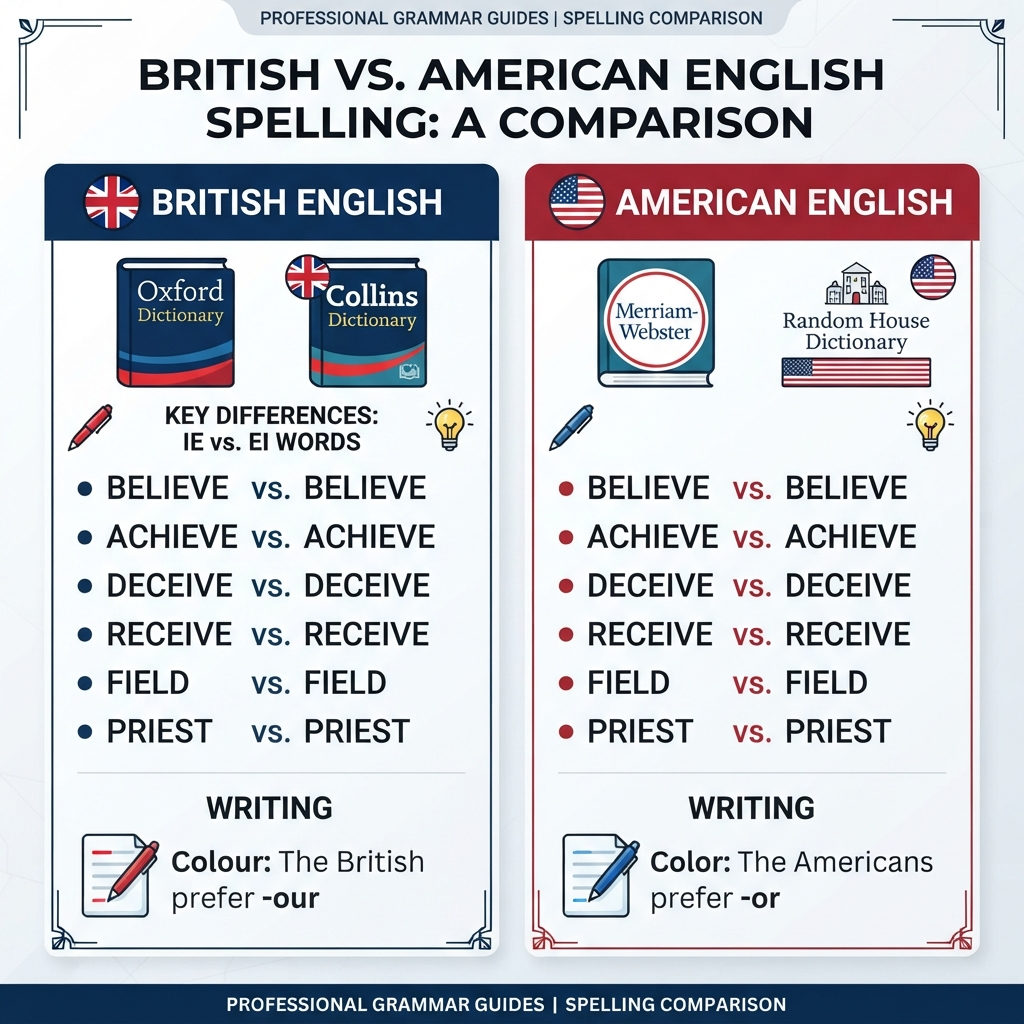
Most ie and ei spellings are the same in British and American English.
For example:
- believe → believe
- receive → receive
- field → field
- ceiling → ceiling
However, some words can have spelling differences between British and American English, even when the difference is not directly caused by the ie/ei rule.
| Word or Pattern | British English | American English |
|---|---|---|
| believe | believe | believe |
| receive | receive | receive |
| field | field | field |
| ceiling | ceiling | ceiling |
| leisure | leisure | leisure |
| weird | weird | weird |
| either | either | either |
| neither | neither | neither |
The important point is that British and American English usually agree on ie and ei spellings.
The bigger differences between the two varieties often involve endings such as -our/-or, -re/-er, and some doubled consonants.
Which Spelling Should You Use?
Your audience should guide your spelling choices.
For US Readers
Use standard American English spelling. Words such as:
- receive
- believe
- field
- either
- neither
keep their normal spellings.
For UK and Commonwealth Readers
Use standard British English spelling. The common ie and ei words normally remain the same.
For a Global Audience
Choose one English style and use it consistently.
Do not switch randomly between American and British spelling. Consistency makes your writing look cleaner and more professional.
Best Advice
If you are unsure about ei or ie, check the complete word rather than trying to force every word into one rule.
Common Mistakes with Ei or Ie
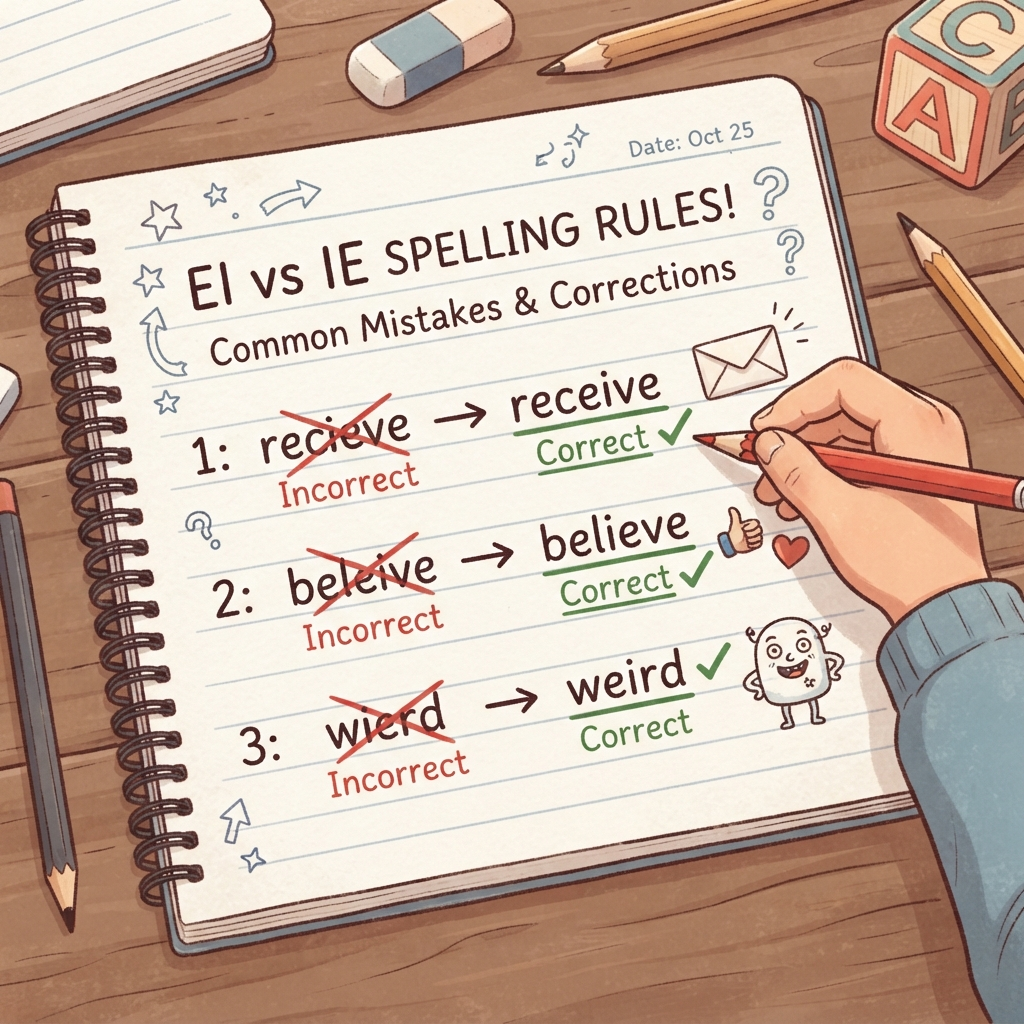
Many spelling errors happen because writers depend too much on the rhyme.
Mistake 1: “Recieve”
❌ recieve
✅ receive
The correct spelling is receive.
Mistake 2: “Believe” With EI
❌ beleive
✅ believe
Remember: believe uses ie.
Mistake 3: “Weird” as “Wierd”
❌ wierd
✅ weird
“Weird” is a famous exception to the common rule.
Mistake 4: “Their” as “Thier”
❌ thier
✅ their
“Their” does not follow the simple rhyme.
Mistake 5: “Piece” as “Peice”
❌ peice
✅ piece
Think of piece as an ie word.
Ei or Ie in Everyday Examples

Knowing the correct spelling matters in everyday writing.
In Emails
Correct:
Please confirm that you received my email.
Incorrect:
Please confirm that you recieved my email.
In News Writing
Correct:
The team achieved a major victory.
The word achieved uses ie.
On Social Media
Correct:
I finally received my new book!
Using the correct spelling makes even short social posts look polished.
In Formal Writing
Correct:
We believe the new policy will improve service.
Incorrect:
We beleive the new policy will improve service.
Correct spelling is especially important in reports, applications, business documents, and academic writing.
Ei or Ie – Google Trends & Usage Data
Search interest for “ei or ie” usually comes from people trying to solve a spelling problem. The search is less about one particular word and more about understanding the spelling pattern.
Interest tends to appear strongly in English-speaking countries and places where English is widely taught.
The topic is especially useful in:
- Schools
- English-learning websites
- Writing classes
- Spelling lessons
- Homework searches
- Grammar discussions
- Professional writing
People may also search for the rule using phrases such as:
- ie or ei
- ei vs ie
- i before e except after c
- words with ie
- words with ei
- how to spell receive
- how to spell believe
Search interest can also change with school terms, exams, and educational content.
Ei or Ie Variations Compared
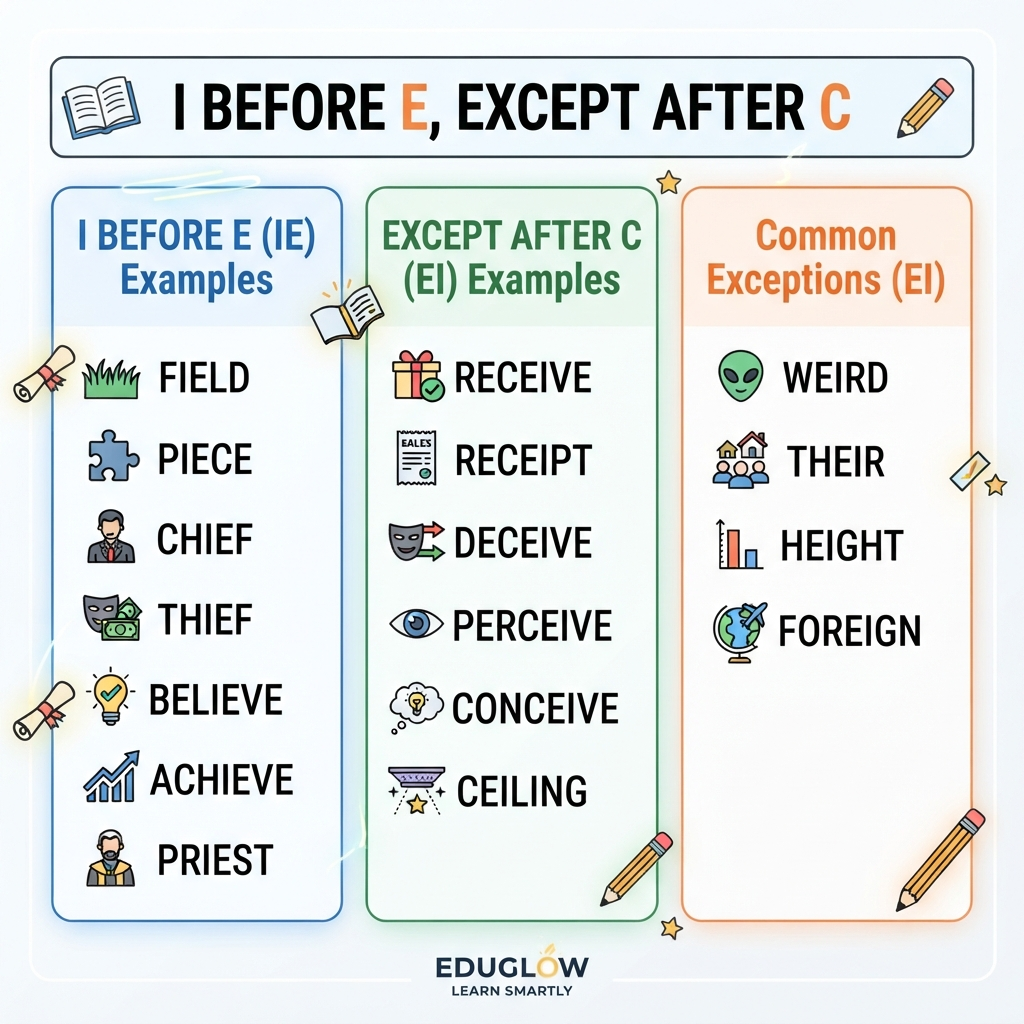
| Variation | Correct Example | Main Use |
|---|---|---|
| ie | believe | Common word pattern |
| ie | field | Common word pattern |
| ie | piece | Common word pattern |
| ie | chief | Common word pattern |
| ei | receive | Common after C |
| ei | ceiling | Common after C |
| ei | deceive | Common after C |
| ei | receipt | Common after C |
| ei | weird | Exception |
| ie | their | Exception |
The easiest method is to recognize common words rather than depending on one spelling rule for every situation.
FAQs About Ei or Ie
1. What is the basic rule for ei and ie?
The common memory rule is “I before E, except after C.” For example, believe uses ie, while receive uses ei.
2. Is “I before E except after C” always correct?
No. English has many exceptions. Words such as weird, their, foreign, height, and leisure show why the rule cannot be used every time.
3. Is it “receive” or “recieve”?
The correct spelling is receive.
4. Is it “believe” or “beleive”?
The correct spelling is believe.
5. Is “weird” an exception?
Yes. Weird is commonly taught as an exception to the basic ie/ei spelling rule.
6. Do British and American English spell these words differently?
Usually not. Words such as believe, receive, field, and ceiling are normally spelled the same in both varieties.
7. How can I remember ei and ie words?
Learn common words as complete spellings. You can also use “I before E, except after C” as a starting rule, while remembering that English has exceptions.
Conclusion
The ei or ie spelling question looks simple, but English does not always follow one perfect rule. The famous “I before E, except after C” rhyme can help with many words, especially examples such as believe, field, receive, and ceiling.
However, it is important to remember that English has exceptions. Words such as weird, their, foreign, and height show why you should not depend on the rhyme alone.
For everyday writing, the best approach is simple: learn common words by sight, check unfamiliar spellings, and keep your English style consistent. British and American English usually use the same ie and ei spellings, so this issue rarely requires choosing between the two varieties.
If you often confuse these letters, make a short personal list of difficult words. With regular reading and writing, the correct spelling will become much easier to remember.

Walter de la Mare writes creative English captions for funcaptionz.com, sharing short ideas, thoughtful wording, and expressive lines for modern readers.









