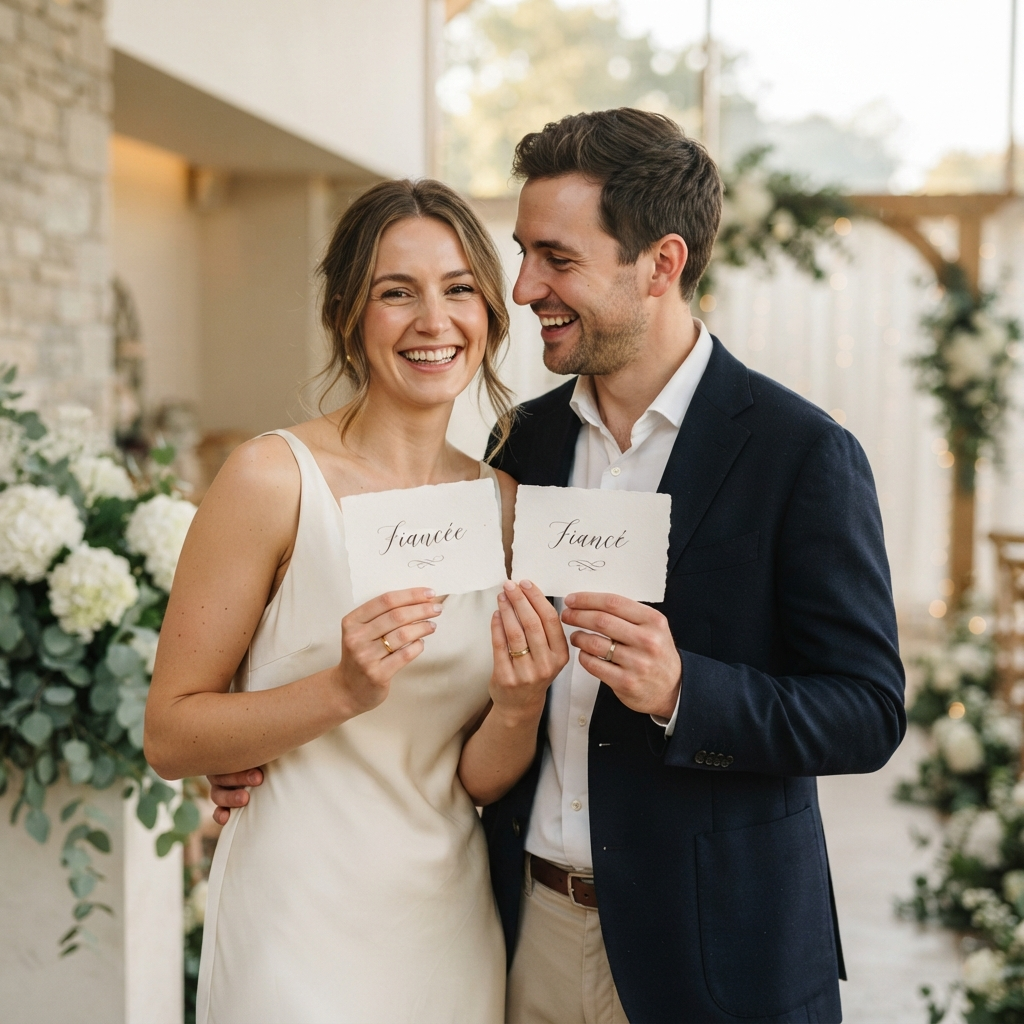
Fiancé means a man who is engaged to be married, while fiancée means a woman who is engaged. The only spelling difference is the extra “e” in fiancée.
Fiancée or fiancé—which spelling is correct? If you’ve ever hesitated before writing about your future husband or wife, you’re definitely not alone. These two words look almost identical, sound the same in most English pronunciation, and are both correct, but they are not interchangeable. One small letter tells you whether you’re referring to a man or a woman.
The easiest rule is: fiancé = man and fiancée = woman. For example, “He is my fiancé” refers to a man, while “She is my fiancée” refers to a woman. Once you know this simple distinction, choosing the right spelling becomes much easier.
But there’s more to these words than one extra letter. Their French origins explain why the spellings are different, and understanding their pronunciation, plural forms, and everyday usage can help you avoid embarrassing mistakes in wedding invitations, relationship announcements, messages, essays, and other important writing.
In this guide, you’ll get a clear and complete explanation of fiancée vs. fiancé, including their meanings, pronunciation, origins, gender difference, correct usage, example sentences, plural forms, and the most common mistakes people make. You’ll also learn a simple memory trick that makes the difference easy to remember.
So, if you’ve ever wondered whether to write fiancée or fiancé, you won’t have to guess again. By the end of this guide, you’ll know exactly which word to choose—and why.
Fiancée or Fiancé meanings

The difference is based on gender:
- Fiancé = an engaged man
- Fiancée = an engaged woman
Simple examples
My fiancé proposed to me last year.
Here, the engaged person is a man.
Her fiancée is planning the wedding.
Here, the engaged person is a woman.
The extra “e” in fiancée traditionally marks the feminine form.
Quick rule to remember
Fiancé → man
Fiancée → woman
Both words describe someone who is engaged but not yet married.
The Origin of Fiancée or Fiancé

Both fiancé and fiancée come from French.
The French word fiancé is related to the idea of being promised or engaged to someone. English adopted the word while keeping much of its French spelling.
French traditionally uses different endings for masculine and feminine forms:
- fiancé → masculine
- fiancée → feminine
The extra “e” is therefore not random. It reflects the traditional French feminine ending.
English often borrows words from French, but spelling and pronunciation can change over time. In this case, English speakers continued using both forms because the difference was useful.
Today, fiancé and fiancée are common English words, especially in conversations about engagement, weddings, relationships, and marriage.
British English vs American English Spelling
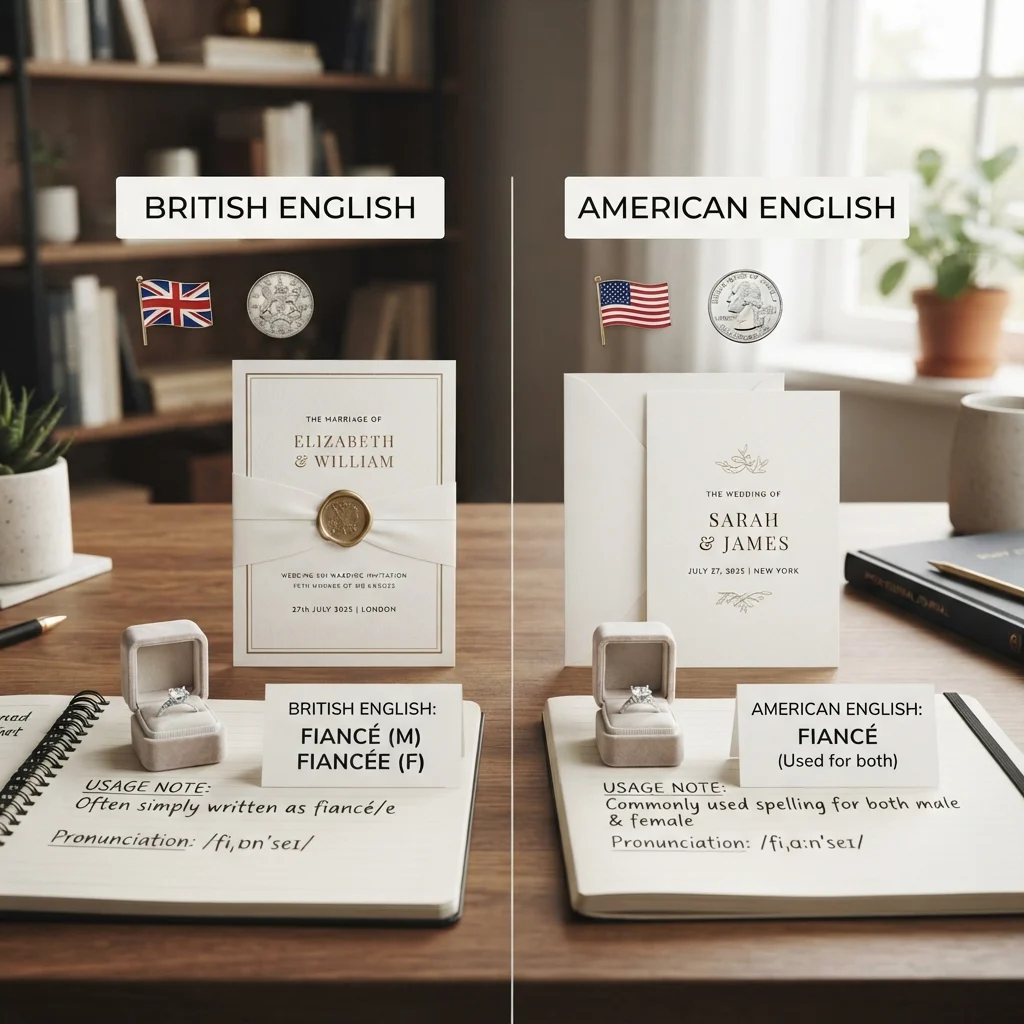
There is an important point here: British and American English generally use the same spellings for fiancé and fiancée.
The main difference is not usually between British and American spelling. Instead, the difference is between the masculine and feminine forms.
| Meaning | British English | American English |
|---|---|---|
| Engaged man | fiancé | fiancé |
| Engaged woman | fiancée | fiancée |
| Gender-neutral alternative | engaged partner | engaged partner |
| Informal alternative | future husband | future husband |
| Informal alternative | future wife | future wife |
So, unlike words such as colour/color or favourite/favorite, you normally do not need to change the spelling when switching between British and American English.
Example
British English:
“My fiancé works in London.”
American English:
“My fiancé works in New York.”
The spelling fiancé stays the same.
Fiancée or Fiancé Variations Compared
| Word | Refers to | Example |
|---|---|---|
| Fiancé | Engaged man | My fiancé loves cooking. |
| Fiancée | Engaged woman | My fiancée loves cooking. |
| Engaged partner | Gender-neutral | My engaged partner is coming tonight. |
| Future husband | Man you plan to marry | My future husband chose the venue. |
| Future wife | Woman you plan to marry | My future wife loves the beach. |
| Partner | Gender-neutral relationship term | My partner and I are engaged. |
The most important distinction is fiancé vs fiancée.
Which Spelling Should You Use?
Your choice depends on the person you are describing.
Use “fiancé” for an engaged man
Example:
“Sarah introduced her fiancé to her family.”
Sarah’s future husband is a man, so fiancé is correct.
Use “fiancée” for an engaged woman
Example:
“John is taking his fiancée to dinner.”
John’s future wife is a woman, so fiancée is correct.
Writing for a US audience
Use the standard spellings:
- fiancé for a man
- fiancée for a woman
Writing for a UK or Commonwealth audience
The same rule normally applies.
Writing for a global audience
If gender is unknown or irrelevant, engaged partner or simply partner can be clearer.
For example:
“Please bring your partner to the event.”
This avoids the masculine and feminine distinction completely.
Common Mistakes with Fiancée or Fiancé
Mistake 1: Using “fiancée” for every person
Incorrect:
“My brother’s fiancée is getting married.”
If the brother’s engaged partner is a woman, this is correct. But if the engaged partner is a man, it should be fiancé.
Mistake 2: Using “fiancé” for every person
Incorrect when referring to an engaged woman:
“My sister’s fiancé is a doctor.”
Correct:
“My sister’s fiancée is a doctor.”
Mistake 3: Removing the accents
You may see fiance or fiancee in casual online writing. However, the traditional spellings are:
fiancé
fiancée
The accent marks are part of the standard forms.
Mistake 4: Confusing fiancé with husband or wife
A fiancé or fiancée is engaged but not yet married.
After marriage, the person becomes a:
- husband
- wife
- spouse
Fiancée or Fiancé in Everyday Examples

These words appear in many types of writing.
In emails
“My fiancé and I will attend the meeting.”
“I would like to invite you and your fiancée to dinner.”
In social media posts
“So happy to celebrate this new chapter with my fiancée!”
“My fiancé surprised me with a beautiful proposal.”
In wedding writing
“The bride and her fiancé are preparing for their wedding.”
“The groom and his fiancée selected the wedding venue.”
In news writing
“The actor attended the event with his fiancée.”
“The athlete announced his engagement to his fiancé.”
In formal writing
“My fiancée will accompany me during the event.”
In formal writing, use the standard spelling rather than an informal version such as fiance.
Fiancée or Fiancé – Google Trends & Usage Data
Search interest in fiancée or fiancé is closely linked to engagement, marriage, wedding planning, and relationship writing.
The two terms can also show different search behavior because people often search for the words when they are unsure about the gender-based spelling.
Fiancé is commonly searched when people need the masculine form.
Fiancée is commonly searched when people need the feminine form.
Usage also varies by context. Wedding websites, invitations, relationship articles, dictionaries, and social media posts frequently use both terms.
Google Trends measures relative search interest, rather than showing a simple worldwide count of how many times a word is searched. Interest can also rise around wedding seasons and periods when marriage-related topics receive more attention.
For practical writing, the spelling rule matters more than trying to choose the term with higher search popularity.
FAQs About Fiancée or Fiancé
1. What is the difference between fiancé and fiancée?
Fiancé traditionally means an engaged man. Fiancée traditionally means an engaged woman. Both refer to someone who is engaged to be married.
2. Is “fiancé” male or female?
Fiancé is traditionally the masculine form. Use it when referring to an engaged man.
3. Is “fiancée” male or female?
Fiancée is traditionally the feminine form. Use it when referring to an engaged woman.
4. Do Americans use fiancé and fiancée?
Yes. American English commonly uses both spellings. The gender distinction is the same as in British English.
5. Do British people spell fiancé differently?
Usually, no. British English generally uses fiancé for an engaged man and fiancée for an engaged woman.
6. Can I use “fiancé” as a gender-neutral word?
Traditionally, no. If you want a gender-neutral option, use partner, engaged partner, or another suitable term.
7. What happens after you get married?
After marriage, fiancé or fiancée is no longer the usual relationship term. You would normally use husband, wife, or spouse.
Conclusion
The difference between fiancée or fiancé is simple once you remember the gender rule. Fiancé is traditionally used for an engaged man, while fiancée is used for an engaged woman. The extra “e” in fiancée comes from the traditional French feminine form.
British and American English generally follow the same spelling rule, so you do not need to choose a different form based on the country alone. Instead, choose the spelling based on the person you are describing.
If gender is not important or you do not know it, engaged partner or partner can be a clear alternative. For invitations, emails, social media, news writing, and formal documents, using the correct form makes your writing more polished.
The easiest memory trick is: fiancé = man, fiancée = woman. Remember that small extra e, and you will rarely confuse the two again.

Elizabeth Bowen is a creative writer at funcaptionz.com, sharing thoughtful English captions, short content, and inspiring ideas for modern readers.









