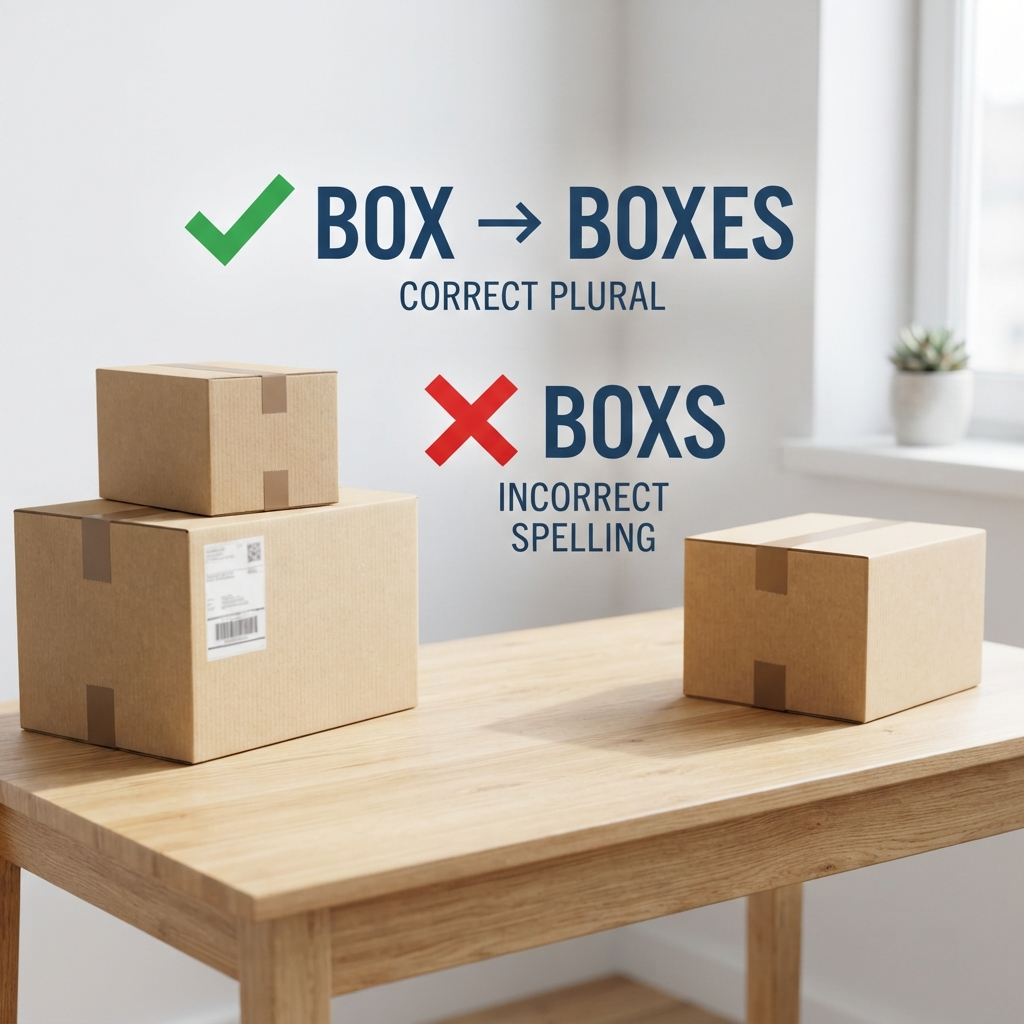
“Boxes” is the correct plural of “box,” while “boxs” is incorrect. The plural is formed by adding “-es” because “box” ends in “x.”
Boxes or boxs—which spelling should you use? If you’ve ever hesitated before writing the plural of box, you’re not alone. This tiny spelling mistake is surprisingly easy to make, especially when you’re writing quickly. The good news is that the correct answer is simple: boxes.
Why does box become boxes instead of boxs? The answer lies in a common English plural rule. Nouns ending in -x generally take -es when they become plural. So, box + es = boxes. The same pattern appears in words such as fox → foxes and tax → taxes.
For example, you would write, “I packed the books into three boxes,” not “three boxs.” You might also say, “The store received several new boxes today.”
Knowing this rule can save you from an easy-to-overlook spelling error in schoolwork, emails, blog posts, product descriptions, and everyday writing. And once you understand why the extra -es is needed, the spelling becomes much easier to remember.
In this guide, you’ll learn the clear difference between boxes or boxs, why boxes is correct, the pluralization rule behind it, common mistakes to avoid, and simple examples that make the spelling stick. By the end, you’ll never need to second-guess this common plural again.
Boxes or Boxs meanings
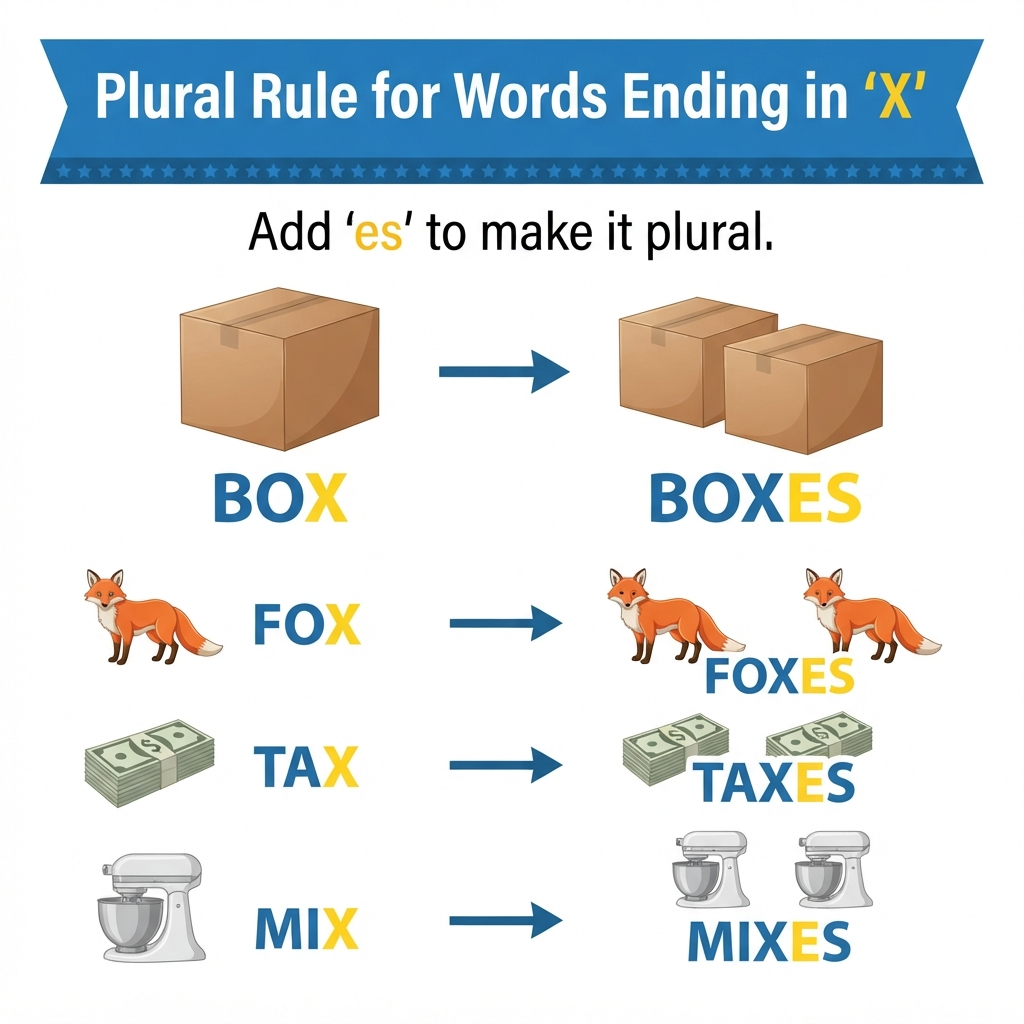
Boxes is the correct spelling.
Boxs is incorrect in standard English.
The word box is singular. When you mean more than one, use boxes.
Examples
- One box
- Two boxes
- One cardboard box
- Several cardboard boxes
Correct
I packed my books into three boxes.
Incorrect
I packed my books into three boxs.
The simple rule is:
box → boxes
Words ending in -x commonly form their plural with -es.
Other examples include:
- fox → foxes
- tax → taxes
- mix → mixes
- fix → fixes
- fax → faxes
So, if you are choosing between boxes or boxs, always choose boxes.
The Origin of Boxes and Boxs
The word box has a long history in English. It is connected with the Latin word buxus, which referred to the boxwood tree. The word later developed in English as a term for a container or similar object.
As English developed, it formed regular patterns for making nouns plural. Most nouns can simply take -s:
- book → books
- pen → pens
- table → tables
- chair → chairs
However, some word endings need -es. This includes many words ending in -x.
That gives us:
box + es = boxes
The spelling boxs does not follow the standard plural pattern.
The extra e also reflects the way the plural is pronounced. Boxes has an extra syllable, sounding roughly like “box-iz.”
This pattern makes boxes easier to pronounce than trying to say the plural as boxs.
British English vs American English Spelling
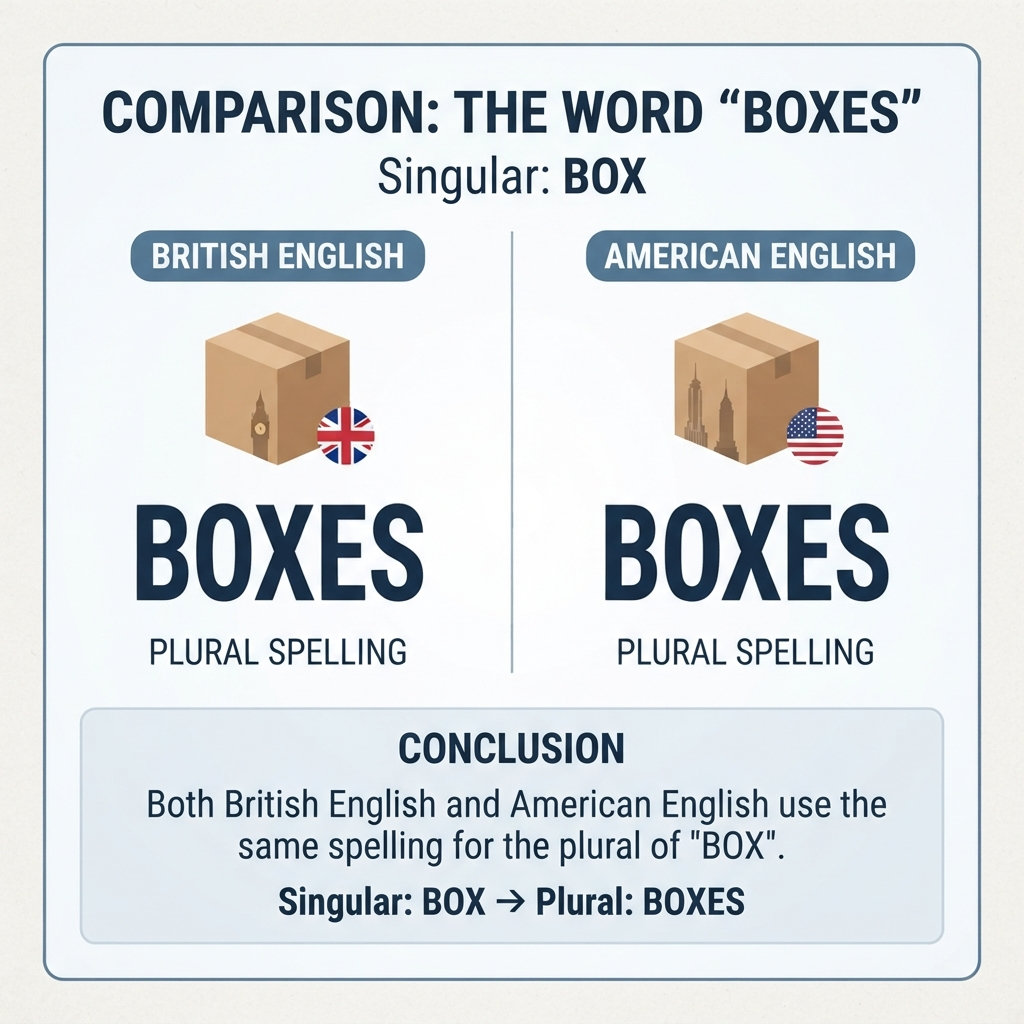
There is no spelling difference between British English and American English for this word.
Both use:
box → boxes
| Form | British English | American English |
|---|---|---|
| Singular | box | box |
| Plural | boxes | boxes |
| Incorrect plural | boxs | boxs |
So, you do not need to choose between boxes and another regional spelling.
Examples in Both Varieties
British English:
There are five boxes in the room.
American English:
There are five boxes in the room.
The spelling stays the same.
This is also true in other major forms of English, including Canadian and Australian English.
Which Spelling Should You Use?
The answer is simple: use boxes.
For a US Audience
Use:
boxes
For a UK Audience
Use:
boxes
For Canadian or Australian English
Use:
boxes
For Global English
Use:
boxes
For Professional Writing
Use:
boxes
For Social Media
Use:
boxes
There is no standard situation where boxs should replace boxes.
Whether you are writing a school assignment, business email, blog post, product description, message, or social media caption, boxes is the correct choice.
Common Mistakes with Boxes or Boxs

1. Writing Boxs
Incorrect:
We have ten boxs.
Correct:
We have ten boxes.
The noun ends in -x, so add -es.
2. Using Boxs After a Number
Incorrect:
I bought three boxs.
Correct:
I bought three boxes.
A number greater than one normally requires the plural form.
3. Forgetting the Extra E
A common typing mistake is:
boxs
Remember:
box + es = boxes
4. Confusing Box With Boxes
Use box for one.
I need one box.
Use boxes for more than one.
I need four boxes.
5. Using the Wrong Verb
Singular:
The box is heavy.
Plural:
The boxes are heavy.
The noun changes, so the verb may need to change too.
Boxes or Boxs in Everyday Examples

Knowing the correct spelling is useful in many situations.
In Emails
Please send the boxes to the new office.
We have received all the boxes.
In News Writing
Workers moved several boxes from the building.
The company shipped hundreds of boxes.
On Social Media
Finally unpacking all these boxes!
Too many boxes and not enough space!
In Formal Writing
The documents were stored in secure boxes.
The boxes were labeled before transportation.
In School Writing
The students decorated three boxes for the project.
In Online Shopping
The products arrived in separate boxes.
These examples all use boxes, never boxs.
Boxes or Boxs – Google Trends & Usage Data
People search for boxes or boxs mainly because they want to check spelling, plural rules, or the correct form of box.
Search interest can also come from students, English learners, writers, bloggers, and people checking a sentence before publishing it.
Google Trends measures relative search interest, not whether a spelling is grammatically correct. A spelling may receive searches simply because people are unsure about it.
For this keyword, the important distinction is clear:
| Search Variation | Standard English? | Use It? |
|---|---|---|
| boxes | Yes | Yes |
| boxs | No | No |
| box plural | Yes | Yes |
| plural of box | Yes | Yes |
| boxes meaning | Yes | Yes |
Search behavior can vary by country and language-learning context, but the spelling rule does not change. Whether someone is writing in the US, UK, Canada, Australia, or another English-speaking environment, the standard plural is boxes.
Boxes vs Boxs: Side-by-Side Comparison
| Feature | Boxes | Boxs |
|---|---|---|
| Correct spelling | ✅ Yes | ❌ No |
| Plural of box | ✅ Yes | ❌ No |
| Standard English | ✅ Yes | ❌ No |
| Used in US English | ✅ Yes | ❌ No |
| Used in UK English | ✅ Yes | ❌ No |
| Suitable for formal writing | ✅ Yes | ❌ No |
| Suitable for schoolwork | ✅ Yes | ❌ No |
| Common spelling mistake | ❌ No | ✅ Yes |
The easiest rule to remember is:
Box → Boxes
FAQs About Boxes or Boxs
1. Is it boxes or boxs?
Boxes is correct. Boxs is incorrect.
2. What is the plural of box?
The plural of box is boxes.
3. Why do we write boxes instead of boxs?
Words ending in -x commonly form their plural by adding -es. Therefore:
box → boxes
4. Is boxes correct in American English?
Yes. Boxes is the standard plural spelling in American English.
5. Is boxes correct in British English?
Yes. British English also uses boxes.
6. How do you spell the plural of box?
It is spelled:
B-O-X-E-S
7. Is boxs ever correct?
No. Boxs is not the standard plural spelling of box.
8. What are similar words to boxes?
Similar examples include:
- fox → foxes
- tax → taxes
- mix → mixes
- fix → fixes
- fax → faxes
9. Is “box’s” the plural of box?
No. Box’s is a possessive form, not the normal plural.
For example:
The box’s lid is broken.
For more than one box:
The boxes are broken.
Conclusion
When choosing between boxes or boxs, the correct answer is boxes. The word box is singular, while boxes is its standard plural form. Boxs is a spelling mistake and should not be used in standard English.
The main rule is easy to remember: many nouns ending in -x take -es when they become plural. That gives us box → boxes, just as we have fox → foxes, tax → taxes, and mix → mixes.
There is also no British-versus-American spelling difference here. Both varieties use boxes, so the same spelling works for US, UK, Canadian, Australian, and global English.

Robert Walser creates meaningful English captions for funcaptionz.com, delivering creative wording, short ideas, and expressive lines for everyday inspiration..









